
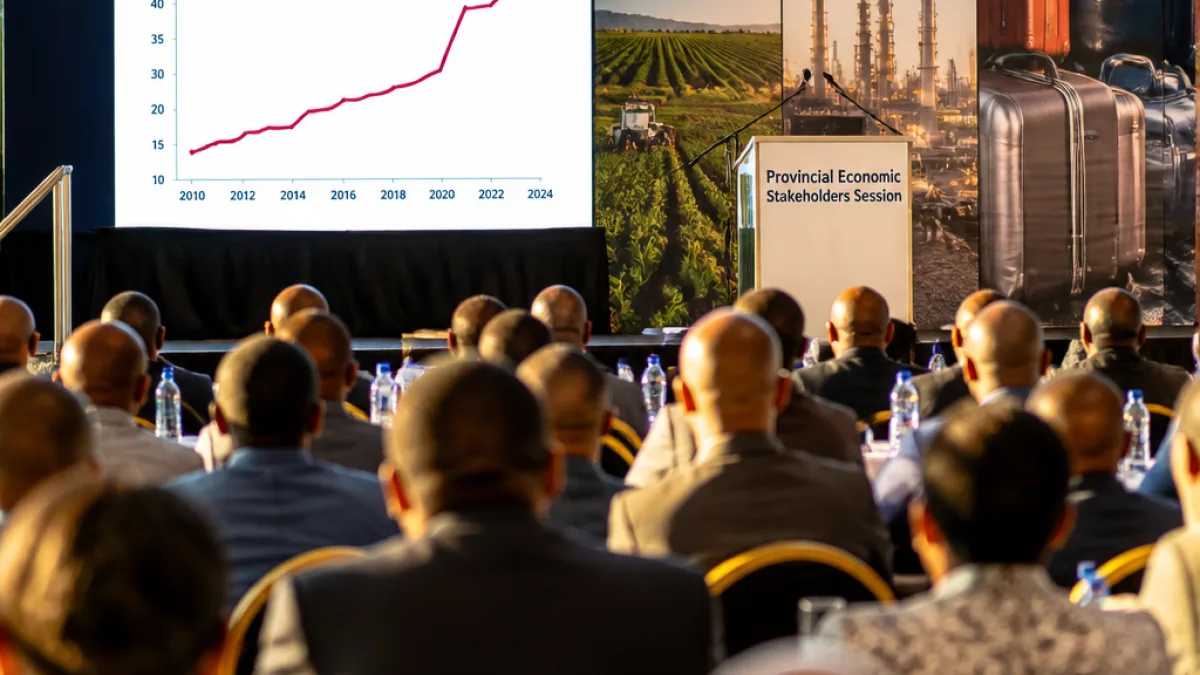
Former Statistician‑General Dr Pali Lehohla told provincial economic stakeholders in KuGompo City that the Eastern Cape has untapped capacity to become an economic powerhouse, but it remains constrained by a historic pattern of exporting labour and failing to retain value locally.
Structural legacy limits job creation, says Lehohla
Speaking at the Eastern Cape Provincial Economic Stakeholders Session, Lehohla linked the province’s weak job creation to a long history of out‑migration for work. He said this legacy—rooted in the colonial and apartheid eras when the province supplied labour to mines, industry and other economic centres—has prevented the Eastern Cape from capturing the benefits of local production and investment.
“No, well, there are major constraints for Eastern Cape to produce create jobs. The first one is it’s been an old migration province that supported South Africa’s growth all the time, from the mines... So, most of the time it has exported its own people from the province outward. So, it has not been able to retain any value in the Eastern Cape,”
Lehohla also raised agriculture as an area where the province has failed to convert potential into local jobs and food production, saying the Eastern Cape has lost opportunities to become more self‑reliant.
Unemployment figures deepen concern
The former Statistician‑General’s remarks came as Statistics South Africa released a Quarterly Labour Force Survey showing a sharp rise in unemployment in the province. According to the report cited at the forum, unemployment in the Eastern Cape increased to 75% from just over 44%.
| Measure | Reported value |
|---|---|
| Eastern Cape unemployment (latest quarter) | 75% |
| Eastern Cape unemployment (previous reference) | Just over 44% |
The Quarterly Labour Force Survey and comments by Statistics South Africa’s Statistician‑General Risenga Maluleke were referenced during the event, underscoring the depth of the employment crisis.
Implications for policy and investment
Lehohla’s diagnosis suggests the province must address both structural and policy weaknesses if it is to shift from a labour‑sending economy to one that creates and retains value. That requires action across several fronts:
- Local industrialisation: moving beyond low‑value activities to higher‑value manufacturing and agro‑processing that keep jobs and profits in the province.
- Agricultural renewal: re‑investing in farming and processing to produce food locally and create rural jobs.
- Skills and labour markets: aligning training and education with growth sectors to reduce out‑migration.
At the same time, the province faces immediate pressures. A sudden jump in unemployment poses risks to household incomes, public services and municipal fiscal stability. It also complicates efforts to attract investment if potential investors see an economy in decline rather than transition.
Voices in the room and next steps
The Provincial Economic Stakeholders Session brought together business, government and civil society actors to examine the province’s trajectory. While Lehohla set out a broad structural diagnosis, practical responses will require co‑ordinated planning, aligned budgets and quick wins to restore investor confidence and stem the migration of working‑age people.
Speakers at the session cited the labour survey as a wake‑up call. The challenge for provincial government and local municipalities is to convert strategic plans into measurable projects that create jobs, retain value and rebuild a productive base within the Eastern Cape.
Lehohla’s intervention reframes the debate about the province’s problems from short‑term fixes to a longer‑term question of economic structure. How the Eastern Cape responds will determine whether it remains a source of labour for other regions or becomes the engine of its own recovery.
Further detail on proposed policy changes and specific initiatives discussed at the forum were not available at the time of reporting.














