
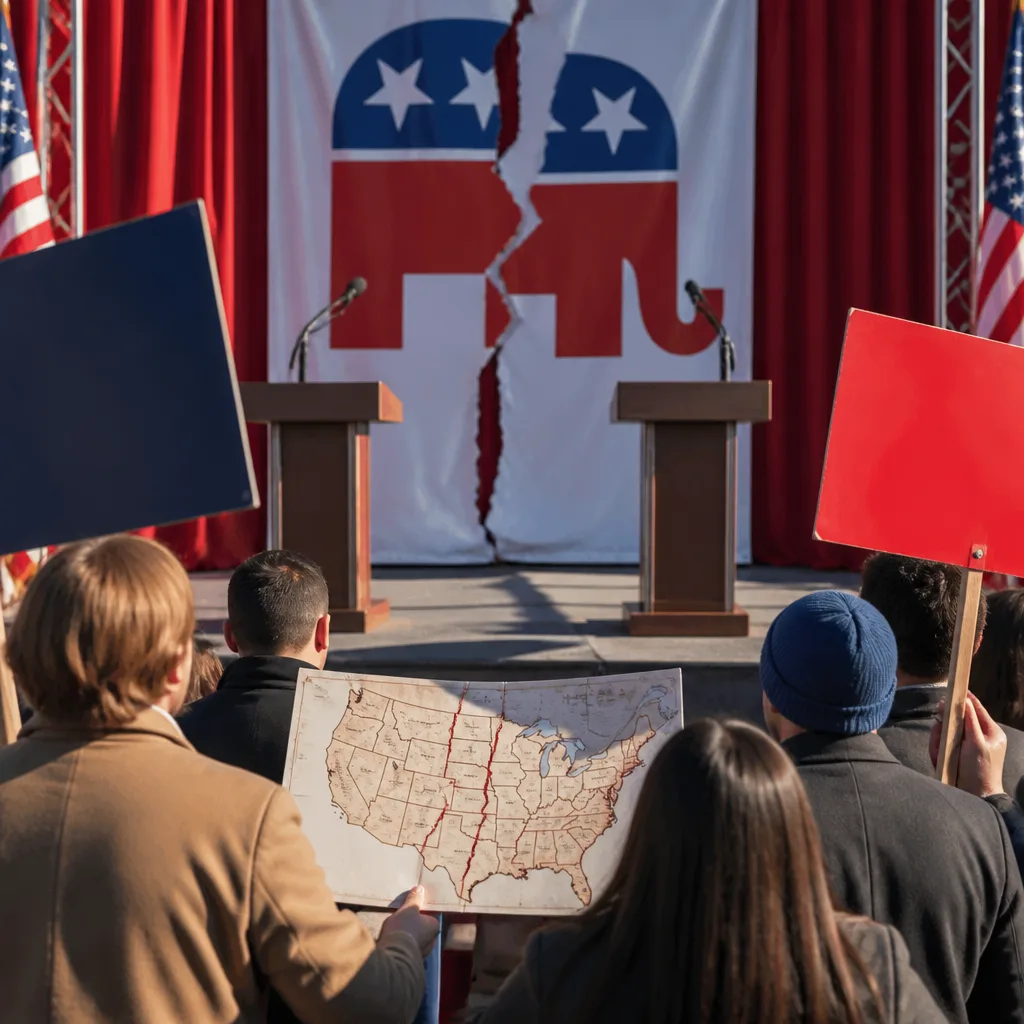
WASHINGTON — A growing number of Republican officeholders running for re‑election are publicly stepping back from former President Donald Trump, recalibrating positions on foreign policy, technology policy and intra‑party discipline as the midterms approach.
Who is changing course and why
Reporting from the NBC News Politics Desk shows prominent Republicans in competitive districts are distancing themselves from Trump-era priorities to blunt voter anxieties over the economy and regional concerns. Two Iowa representatives considered especially vulnerable — Mariannette Miller‑Meeks and Zach Nunn — voted to end US involvement in the Iran conflict after previously supporting measures that kept US engagement open. NBC said the shift responded to constituent unease about the conflict’s effect on energy prices.
At the same time, Republican leaders in the House moved swiftly on a bill aimed at shifting some utility‑cost burdens for data centres onto the companies that operate them. The measure passed the House overwhelmingly, 417-3, illustrating how lawmakers are trying to reconcile pro‑business rhetoric about artificial intelligence with voter frustration over rising bills tied to large server facilities.
- Foreign policy: Vulnerable Republicans are altering votes on war powers and military engagement.
- Economic concerns: Lawmakers are emphasising measures that address the local cost impacts of big tech infrastructure.
- Party management: Leadership moved to end an internal fight over an impeachment push against a defence official rather than force a divisive vote.
Horse‑trading on the floor and in the districts
House Speaker Mike Johnson cut the congressional week short after Representative Thomas Massie attempted to force a vote on impeaching Defence Secretary Pete Hegseth. GOP leaders said privately they had enough votes to block the impeachment effort, but chose not to put the question to a floor test — a decision NBC characterised as avoiding forcing battleground Republicans into a politically risky position ahead of the election.
"Maybe they didn’t actually have the votes or maybe they didn’t want battleground Republicans to have to take a position on Hegseth before the midterms."
The same internal calculus surfaced around tech and energy policy. NBC reported President Trump has been promoting artificial intelligence and the data centres it requires; Republicans in Congress responded by advancing a bill that would encourage data‑centre operators to shoulder increased utility charges tied to their operations. The House vote, passed nearly unanimously, underscored how lawmakers are attempting to show voters they can protect local ratepayers even while courting tech‑industry investment.
Consequences for the midterms
For incumbents in tight districts, public separation from Trump can be a double‑edged sword. It may placate moderate and suburban voters alarmed by national rhetoric, but risks alienating the president’s loyal base. NBC’s reporting suggests many vulnerable Republicans are betting the immediate reward — less exposure to swing‑voter anger about inflation and war — is worth the longer‑term risk of a rift with Trump.
How the strategy plays out will influence not only individual races but the GOP’s ability to govern if it regains or retains control of the House and Senate. The party’s leadership appears focused on short‑term vote preservation: minimise internal fights, pick high‑visibility bills that resonate locally and avoid national flashpoints that could mobilise opposition turnout.
The coming weeks will show whether this pragmatic distancing reshapes the electoral map, or whether the party’s base and Trump’s influence remain decisive factors in close contests.












