
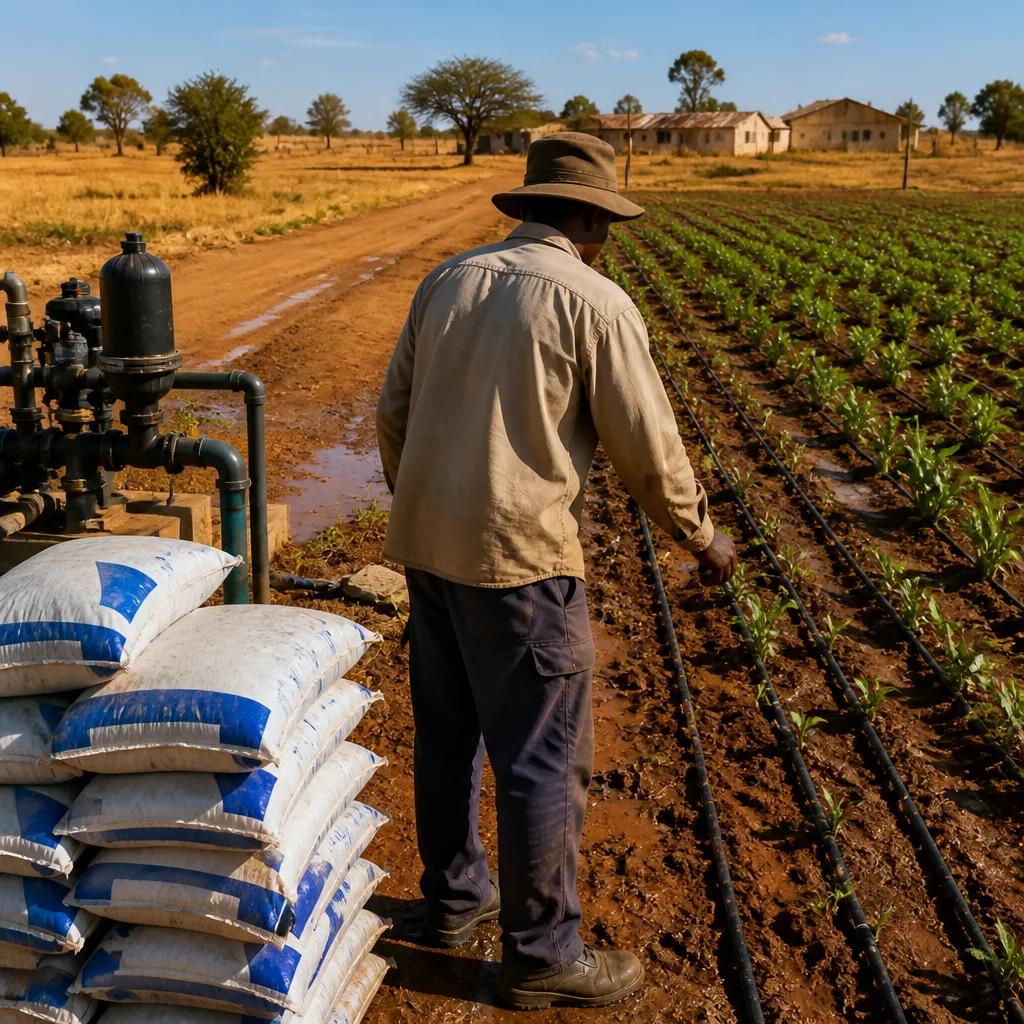
A global study published on 14 August 2026 projects the specialty fertiliser market, valued at USD23.5 billion in 2025, will grow at a compound annual growth rate (CAGR) of 7.8% to reach USD49.9 billion by 2035. The report highlights rising adoption of water‑soluble fertilisers, fertigation systems, and precision nutrient management as the main drivers of expansion.
What the report says
The analysis evaluates product technologies — including water‑soluble, controlled‑release, slow‑release, micronutrients and liquid formulations — and application methods such as fertigation, foliar and soil application. It identifies the water‑soluble fertiliser segment as the market leader, accounting for roughly 35% of demand in 2025 because of compatibility with modern irrigation and precision delivery systems.
Regional growth is dominated by the Asia‑Pacific, according to the study. Broader forces cited include declining soil quality, constrained water resources, and tighter environmental regulations, which are encouraging farmers to shift from conventional fertilizers to advanced nutrient delivery technologies designed to improve efficiency and reduce losses.
Relevance to South Africa
For South African agriculture, the trends flagged by the study carry immediate operational and policy relevance. Farmers in commercial horticulture and high‑value crop production already use fertigation and greenhouse systems that benefit from water‑soluble and controlled‑release products. The global shift towards quality‑focused crop nutrition mirrors local efforts to raise yields and reduce input waste amid recurring droughts and pressure on water supplies.
Key implications for South Africa include:
- Efficiency gains: Water‑soluble fertilisers combined with fertigation can deliver nutrients directly to the root zone, potentially lowering losses to runoff and leaching — important where water and soils are stressed.
- Investment in infrastructure: Adoption at scale requires modern irrigation networks, dosing equipment and digital management platforms that may be beyond the reach of smallholder and emerging farmers without support.
- Environmental compliance: Tighter domestic and export market standards on nutrient management could favour high‑efficiency formulations that reduce environmental harm.
These shifts also intersect with national priorities on climate resilience and sustainable intensification. Policymakers, input suppliers and extension services will need to align technical assistance and finance to ensure equitable uptake of new products and systems.
Market structure and technology
The report notes continued deployment of precision farming technologies and digital agriculture platforms as a structural support for specialty fertiliser demand. Precision nutrient management enables targeted application rates, timings and placements linked to crop needs — a key rationale behind the forecasted growth.
| Metric | Value |
|---|---|
| Market value (2025) | USD23.5 billion |
| Projected market value (2035) | USD49.9 billion |
| Forecast CAGR (2025–2035) | 7.8% |
Water‑soluble products lead demand because of their compatibility with fertigation and drip irrigation systems widely used in high‑value fruit, vegetable and some row‑cropping operations. Controlled‑release and micronutrient formulations are also highlighted as important for improving nutrient use efficiency and crop quality.
For South African suppliers and multinational fertiliser companies operating in the country, the market signals both commercial opportunity and responsibility. Increased sales of high‑efficiency products should be paired with training and monitoring to ensure proper application and to avoid unintended environmental impacts.
Finally, the forecast underlines that long‑term adoption of specialty fertilisers depends not only on product availability but also on broader agronomic support: soil health diagnostics, irrigation reliability, access to finance for equipment upgrades, and channels that reach smallholders who form an important part of the national agricultural landscape.









