
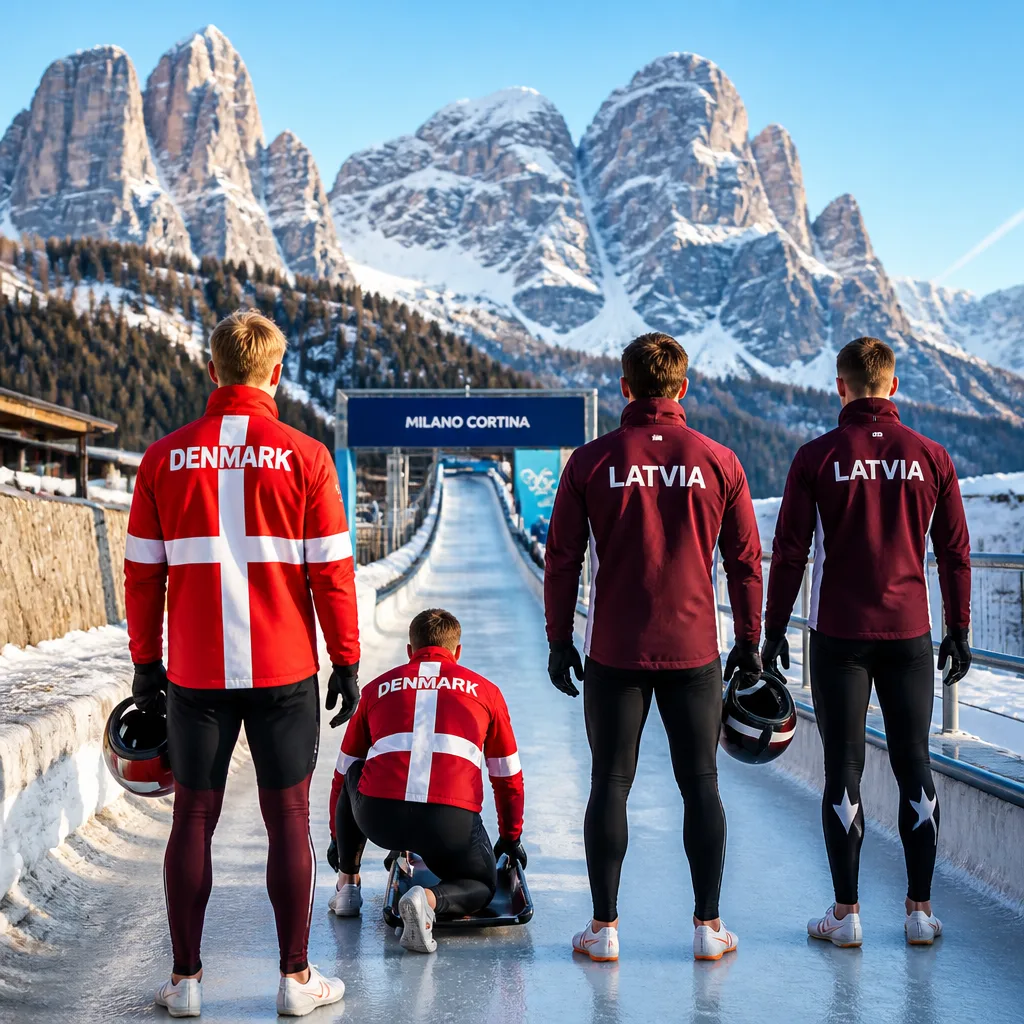
Four athletes who featured at the Winter Youth Olympic Games in Gangwon in 2024 progressed to the senior Winter Olympic stage at Milano Cortina 2026, illustrating the Youth Olympics’ value as a development pathway for winter-sport nations.
From Youth podiums to Olympic tracks
The quartet comprises two Danish athletes — Nanna Vestergaard Johansen and Maja Voigt — and two Latvians — Marta Andžāne and Emils Indriksons. Each made their Olympic debuts at Milano Cortina in February 2026 after competing at Gangwon 2024.
Johansen, a skeleton athlete who finished fourth in Gangwon, became the first Danish woman to compete in Olympic skeleton at Milano Cortina. Her appearance on the Olympic track had added resonance: she shared the experience with her brother, creating a rare family milestone in the sport.
Voigt transitioned from Youth Olympic success to the senior bobsleigh field. After winning Youth Olympic gold in Women's Monobob at Gangwon 2024, she was selected for Denmark’s Olympic bobsleigh team at Milano Cortina and, at 18 years old, was the youngest competitor in the women’s Olympic bobsleigh event.
Latvia’s young skeleton contingent also advanced rapidly. Marta Andžāne marked her 18th birthday in late January 2026 and then lined up in Cortina as one of the youngest skeleton athletes at the Games. Emils Indriksons, the Gangwon 2024 men’s skeleton champion, was 19 years old as he made his senior Olympic debut.
“International Youth Day is a wonderful opportunity to celebrate the young athletes who are shaping the future of our sports,” said Nicola Minichiello, IBSF development lead.
The quartet also took part in the inaugural Olympic Skeleton Mixed Team event at Milano Cortina, a programme addition designed to broaden participation and spotlight younger athletes.
What this means for winter sport development
The rapid elevation of athletes from Gangwon 2024 to Milano Cortina 2026 underlines several points relevant to national sport planners and federations:
- Youth pathway effectiveness: A Youth Olympic appearance can accelerate progression to senior competition within a short timespan when supported by coaching and competition exposure.
- Talent identification: Success at youth events can identify athletes capable of transitioning quickly to elite senior ranks, even from countries without deep winter-sport traditions.
- Event legacy: Hosting Youth Olympic competitions contributes to a pipeline of athletes who may become Olympic representatives within two cycles.
For South African winter-sport observers, the story is a reminder that structured youth competition — combined with targeted support — can produce Olympic-level athletes from non-traditional winter nations. While South Africa does not field large winter teams, improved talent pathways and international exposure remain central to developing competitive experience for niche disciplines.
| Athlete | Country | Discipline | Notable detail |
|---|---|---|---|
| Nanna Vestergaard Johansen | Denmark | Skeleton | Finished 4th at Gangwon 2024; first Danish woman in Olympic skeleton |
| Maja Voigt | Denmark | Bobsleigh (Women's Monobob) | Youth Olympic gold medallist; youngest competitor (18) in Olympic women's bobsleigh |
| Marta Andžāne | Latvia | Skeleton | Turned 18 in January 2026; among the youngest skeleton athletes in Milan |
| Emils Indriksons | Latvia | Skeleton | Gangwon 2024 men’s skeleton champion; 19 at Milano Cortina 2026 |
The forthcoming Dolomiti Valtellina 2028 Winter Youth Olympic Games will return bobsleigh and skeleton events to the Eugenio Monti Sliding Centre in Cortina. Organisers expect another cohort of young athletes to use the Youth Games as a springboard, maintaining a cycle of talent development across successive editions.
That cycle — from Youth Olympic debut to senior Olympic competition in just two years — highlights how investment in junior sport and international competition opportunities can yield tangible success within a short timeframe. For sports administrators and national federations, the lesson is clear: early exposure, targeted development and pathways to senior events are critical for converting youth promise into Olympic representation.
At a time when many federations reassess talent-development models, the Gangwon-to-Cortina stories provide a practical example of how youth-focused events contribute to long-term athlete progression.









