
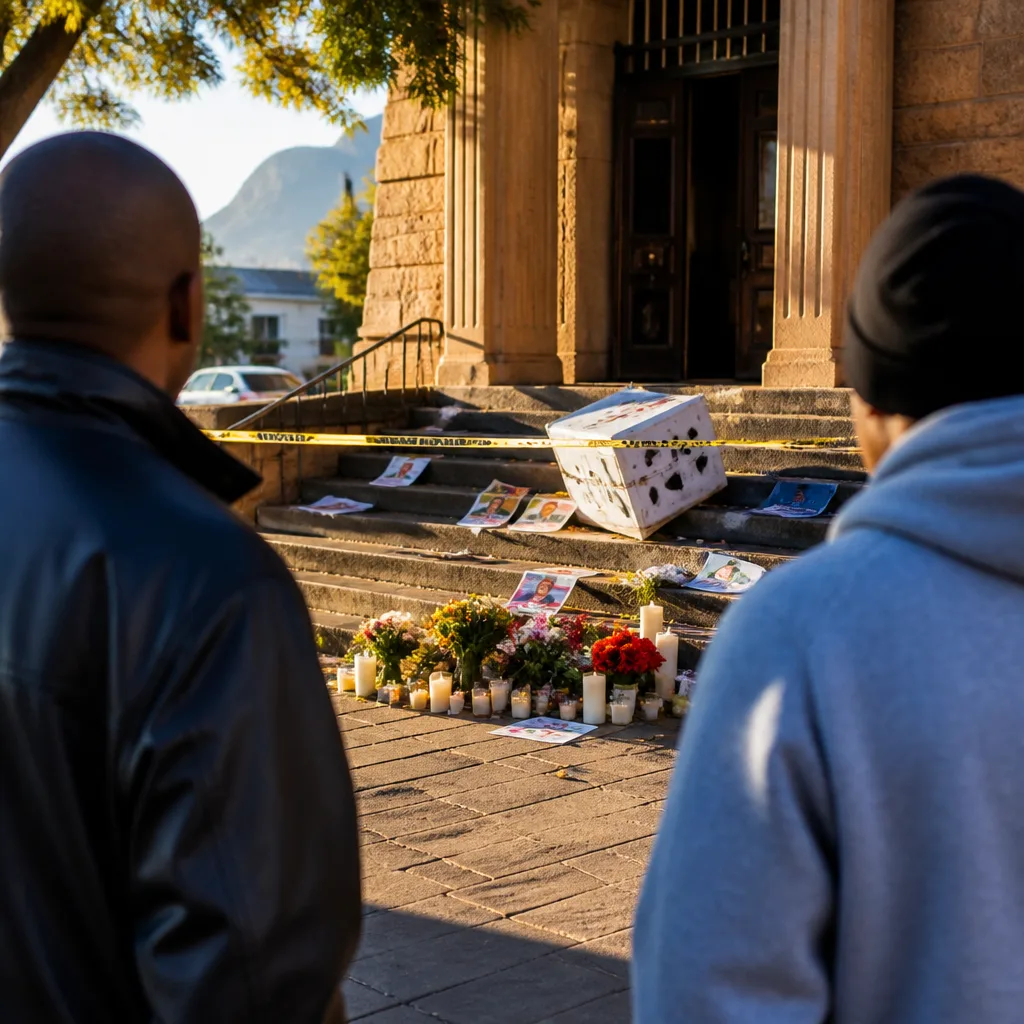
South Africa is facing a worrying rise in politically motivated killings as it approaches local government elections, a crime expert has warned. Julian Rademeyer, senior advisor at the Global Initiative Against Transnational Organised Crime, said 26 people have been shot dead in suspected political hits since 1 January 2026, and that the problem is part of a longer, entrenched trend.
Long-term pattern and election links
Rademeyer told reporters that since 2000 there have been close to 200 cases tied to political killings, and that 56% of those occurred in election years. He said the spike is connected to competition over municipal control and access to contracts, but also sometimes functions as an effort to eliminate opposition.
“It’s a period when there’s contestation over resources in municipalities; it’s when tensions over access to tenders come to a head, but it is also, in some instances, a way of eradicating opposition.”
Rademeyer noted that victims are not limited to elected officials; activists from civic movements have also been targeted. He stressed that the phenomenon cuts across the political spectrum. Parties cited as affected include the ANC, MK Party, EFF, DA, IFP and BOSA, which underlines the broad reach of the problem.
State response and capacity questions
The expert pointed to existing efforts such as the Political Killings Task Team but cautioned that the state is "sorely underequipped" to address the scale of assassinations. He warned of the corrosive effect on political life and said the situation has reached an inflexion point that requires action at a national level.
“I think that we have reached an inflexion point in some way in our politics, and I think in some ways a realisation at a national level that something has to be done here.”
The warning arrives as local government elections typically concentrate contestation over municipal resources, staffing and procurement — arenas in which organised crime, patronage and violent enforcement sometimes intersect. Rademeyer linked the seasonality of killings to these structural pressures.
Implications for voters, parties and municipalities
Several practical consequences follow from the trend highlighted by Rademeyer:
- Increased fear among candidates and activists could depress participation by opposition figures and volunteers, altering campaign dynamics.
- Municipal governance may be further weakened where violence shapes who controls tenders, staffing and service points.
- Law-enforcement capacity and specialised investigative resources will face renewed scrutiny if the number of politically linked killings grows.
Rademeyer’s assessment frames political killings as both a law-enforcement and a governance problem: those who gain local control through intimidation or violence can consolidate access to municipal budgets and contracts, while citizens ultimately bear the cost in poorer services and weaker accountability.
| Measure | Figure |
|---|---|
| Suspected political killings in 2026 (since 1 Jan) | 26 |
| Cases since 2000 | ~200 |
| Share occurring in election years | 56% |
Rademeyer’s commentary underlines a policy dilemma for the state: how to protect the integrity of local politics and the safety of participants while confronting the organised and often clandestine networks that profit from violence. He urged a stronger, better-resourced response, while highlighting the difficulty of matching capacity to the scale and political breadth of the killings.
As the country approaches municipal polls, the warning is stark: without meaningful reinforcement of investigative capacity and a coordinated political response, violence may continue to shape who governs at local level — and at what cost to public trust and service delivery.












