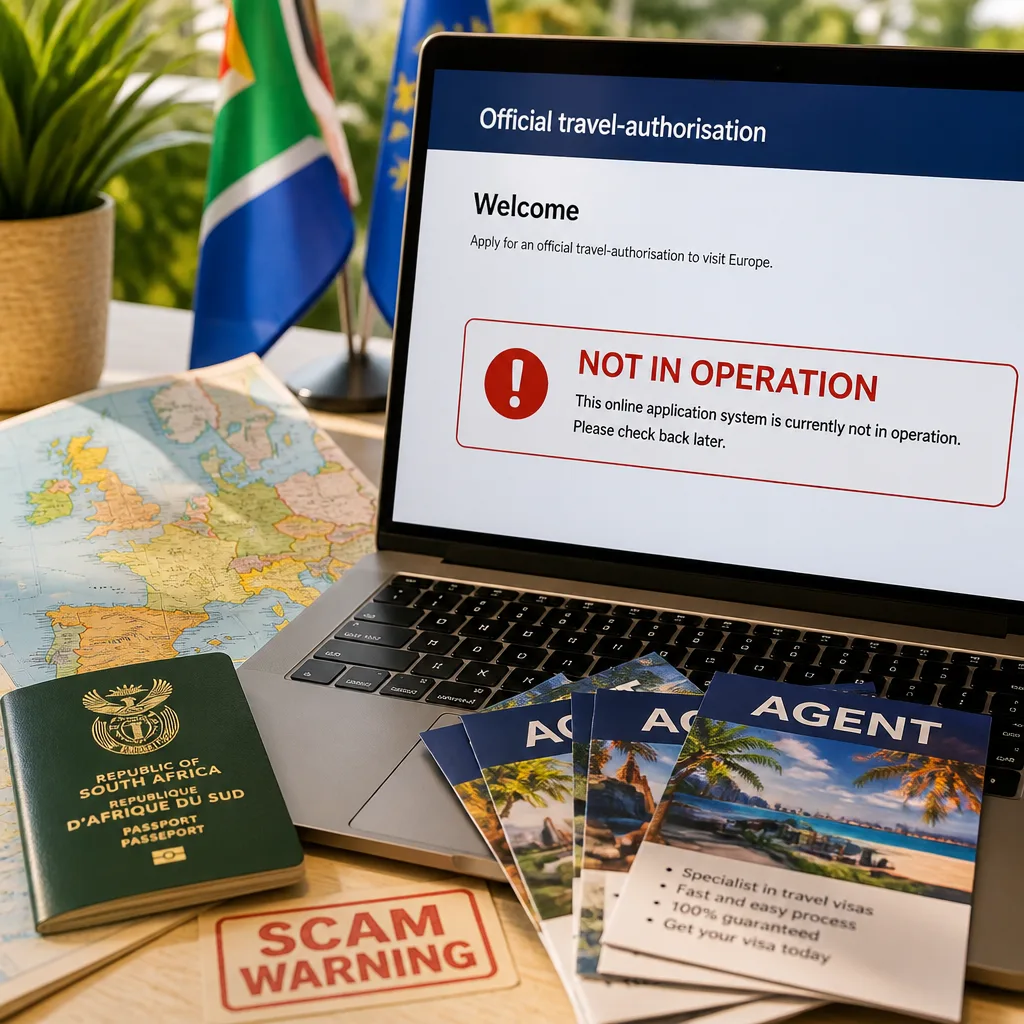
The European Union has confirmed that the new European Travel Information and Authorisation System — ETIAS — is currently not in operation and its launch has been postponed indefinitely, the system's official website says. Travellers are being warned not to hand over money or personal details to any third-party websites or travel agents claiming to offer ETIAS applications.
What the EU has said
A notice on the official ETIAS website states plainly that “ETIAS is currently not in operation and no applications for travel authorisations are collected at this point,” and that the EU will announce a start date “several months prior to its launch.” There is no new target date on the site.
Fraud risks and consumer warnings
Industry bodies and the EU have cautioned travellers that scammers are already exploiting confusion around the delayed system. The association of travel agents and tour operators ABTA and the European Union have previously warned that fake websites and agents offering to process ETIAS applications pose a real risk of financial loss and of exposing personal data.
“People who try to apply for an ETIAS now may be at risk of fraud, with a loss of money and possibly personal data too,” ABTA Director of Public Affairs Luke Petherbridge said.
The clear practical advice from official channels is: do not apply and do not pay anyone claiming to offer ETIAS if you find such services online. Instead, check the official EU ETIAS website for updates and only use the one official channel once the system becomes operational.
Who will need ETIAS (when it launches)
The ETIAS scheme is designed to require a digital travel authorisation from visitors who previously did not need visas to enter much of Europe. According to reporting, once it launches travellers from 60 nations — including Australia — who until now did not usually need visas will have to apply for ETIAS to visit a group of European countries.
The source material specifies that ETIAS will cover travel to 30 specific European countries when it is implemented, and gives examples of countries that will require the authorisation.
- Examples of countries listed: Austria, Belgium, Bulgaria, Croatia, Cyprus, Czech Republic, Italy.
- Key consumer action: Do not apply through unofficial sites; check the official ETIAS website for the launch notice.
| Detail | What the source says |
|---|---|
| Status | Not in operation; no applications accepted |
| Launch date | No new date announced; EU will give notice several months beforehand |
| Scope | Will apply to travellers from 60 nations visiting 30 European countries (examples listed) |
Practical tips for South African travellers
While the reporting references Australia among the 60 nations that will need ETIAS, the broader message is useful for all international travellers including those from South Africa: be cautious, verify official sources and avoid paying intermediaries for a system that is not yet live.
Check the official ETIAS website before making any payments or sharing sensitive identity documents. If you find a site or agent charging for ETIAS applications now, treat it as suspicious. Industry groups and the EU advise waiting until an official launch announcement before attempting to apply.
For now, travellers should continue to follow current visa and entry rules for their destinations in Europe and factor in an extra step for future trips once ETIAS is launched — but only when the EU confirms the system is operational.
This delay will give travellers more time to prepare, but it has also created an opening for fraudsters. Staying informed via the official EU channel is the safest course.