
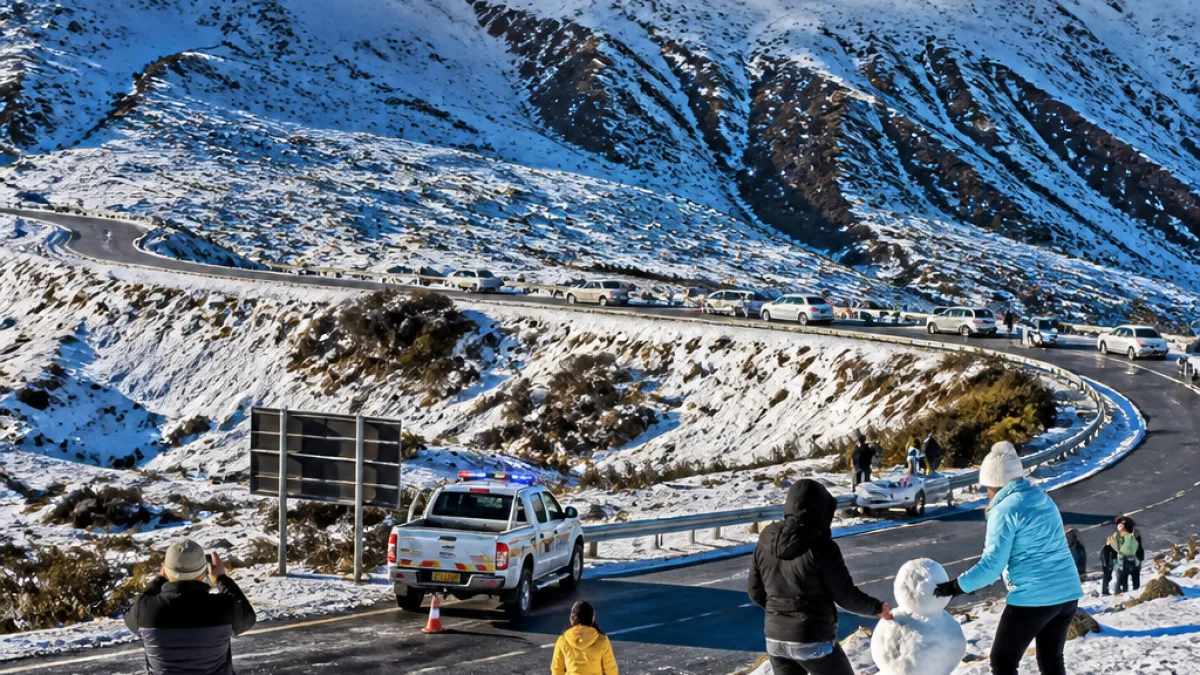
Families in the Eastern Cape took advantage of a short-lived but notable snowfall over the weekend, turning a weather warning into an impromptu community outing at Penhoek Pass and neighbouring high-ground areas. The South African Weather Service (SAWS) had issued a level 6 warning for expected snowfall across multiple municipalities, prompting heightened traffic and safety measures on key routes and mountain passes.
Snowfall, celebrations and safety
On 10 August, local residents and visitors parked along roadside verges at Penhoek Pass to watch and play in the snow. Among them was a family who had brought their six-year-old to experience snow for the first time. SABC News reported live from the pass as the weather event unfolded.
“Every year we are lucky to have snow. We bring the kids all the time to come and play. That’s something that you experience maybe once in your lifetime, but we’re lucky to stay around here,”
The father, identified as Eddie Murray, told SABC News they regularly travel to snowy areas when cold fronts move through. His wife, Tamara, said their daughter’s first snowfall would be a memory to keep as she grows older.
“We also come from the Eastern Cape (Craddock), and we’ve never seen snow before. So being around the area that snows is genuinely something that is amazing,”
Transport response and road conditions
Provincial authorities prioritised public safety during the cold spell. The Department of Transport deployed law enforcement to manage traffic and to help motorists adapt their routes in response to icy conditions. The cold also forced diversions near the Kimber Bridge, where drivers were advised to exercise caution.
By Tuesday, 11 August, most of the mountain passes that had been affected were reported to have reopened as conditions eased. Motorists were urged to remain vigilant: sudden thawing can leave residual patches of ice, and localised drifts may still affect visibility on higher ground.
What residents should know
Snow in the Eastern Cape, while not unprecedented on the higher mountain passes, creates a mix of opportunities and hazards for residents and visitors. Practical guidance from transport officials and emergency services typically includes:
- Check SAWS forecasts and warnings before travel.
- Allow extra time for journeys and avoid high passes if possible during a warning.
- Carry warm clothing, blankets and a charged phone; ensure vehicle fuel is adequate.
- Obey instructions from traffic officers and do not stop in places that obstruct emergency response or create hazards for other road users.
Local impact and context
The snowfall event briefly drew visitors to highland areas, offering economic opportunities for small-scale traders and commuters who service tourism on weekends. At the same time, the weather underlined the fragility of some rural transport links when cold fronts move through the province. Authorities have in recent years emphasised maintenance and contingency planning for mountain passes that serve as critical conduits between towns.
While the current event caused no widespread disruption after the passes reopened, it highlights the continuing need for clear communication from SAWS and provincial departments to ensure residents, commuters and the emergency services are prepared when colder weather systems are forecast.
| Event | Date |
|---|---|
| Snowfall observed at Penhoek Pass | 10 August |
| Most affected passes reopened | 11 August |
| SAWS warning level | Level 6 |
Residents planning to travel through high-lying areas in the days following a snow event should continue to consult SAWS updates and observe travel advisories from the provincial Department of Transport. The combination of spectacle and safety on Penhoek Pass offered a reminder that weather events can quickly become community moments — but that preparedness remains essential.












