The Democratic National Committee (DNC) has finalised a 2028 presidential primary calendar that elevates states with diverse electorates and removes Iowa from the early lineup, a decision party officials say will better assess candidates’ appeal to Black and Latino voters ahead of the open White House contest.
New order and dates
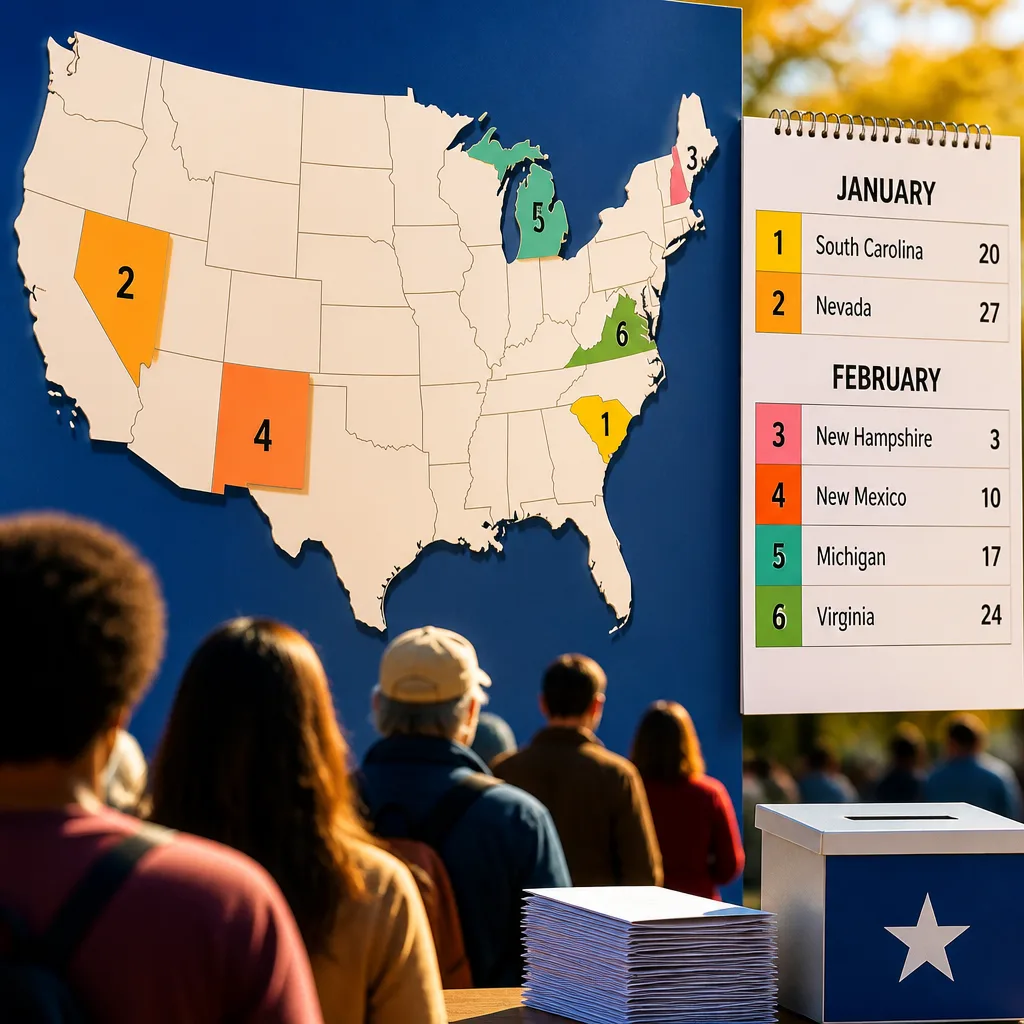
At its summer meeting in Austin, DNC members approved a six-state early voting slate. The sequence and dates are:
- South Carolina — 22 January 2028
- Nevada — 1 February 2028
- New Hampshire — 8 February 2028
- New Mexico — 15 February 2028
- Michigan — 22 February 2028
- Virginia — 29 February 2028
The vote officially removes Iowa from the early contest positions it has traditionally occupied.
| State | Date | Notable |
|---|---|---|
| South Carolina | 22 Jan 2028 | Substantial Black population; remains first |
| Nevada | 1 Feb 2028 | Western battleground; larger Latino share |
| New Hampshire | 8 Feb 2028 | Traditional early state |
| New Mexico | 15 Feb 2028 | Elevates Latino voters in early tests |
| Michigan | 22 Feb 2028 | Midwestern industrial state |
| Virginia | 29 Feb 2028 | Suburban and diverse electorate |
Why the change matters
Party officials framed the reshuffle as an effort to ensure early contests reflect the Democratic coalition. By placing states with sizable Black and Latino electorates early on the calendar, the DNC intends to force candidates to demonstrate appeal beyond traditional early-state constituencies.
"It's going to battle‑test our nominee with key parts of our coalition and key parts of the country in a way that we've never seen before," DNC chair Ken Martin said, calling the schedule the party's "most diverse" in history.
The inclusion of Nevada and New Mexico, both with significant Latino populations, was cited as a deliberate response to 2024, when the Republican incumbent made inroads among Latino voters. South Carolina retains the lead role because of its substantial Black electorate.
Internal dynamics and timing
The calendar adoption comes as Democrats navigate an intra‑party debate between progressive insurgents and moderates — a contest that has already surfaced during the midterm primary season. DNC officials signalled that while ideological differences exist, the party must present a united front into the November general elections that will determine control of the US Congress.
The decision to re‑order the early states also reflects broader strategic calculations: early contests shape momentum, fundraising and media narratives. Moving away from a calendar that privileged smaller, less diverse early states alters where candidates will invest time and resources.
Leadership under scrutiny
Ken Martin, who leads the committee, has faced criticism over his leadership and the DNC's finances. During the meeting he emphasised inclusivity, saying the party remains a "big tent" and welcoming all factions. The chair's stewardship of both the calendar and broader party strategy will be watched closely as the 2028 cycle proceeds.
For candidates, the new schedule presents practical and political consequences: they will need to craft messaging and ground campaigns that resonate across racially and regionally varied electorates much earlier in the nominating process than in past cycles.
Observers who follow US politics note that frontloading diverse states may favour campaigns with stronger national organisations and broader outreach capabilities, while reducing the outsized influence of traditional early states.
As the 2028 primary season approaches, the calendar will be an early test of whether the DNC’s gamble — prioritising demographic diversity over longstanding early‑state tradition — alters the trajectory of the Democratic nomination fight.