
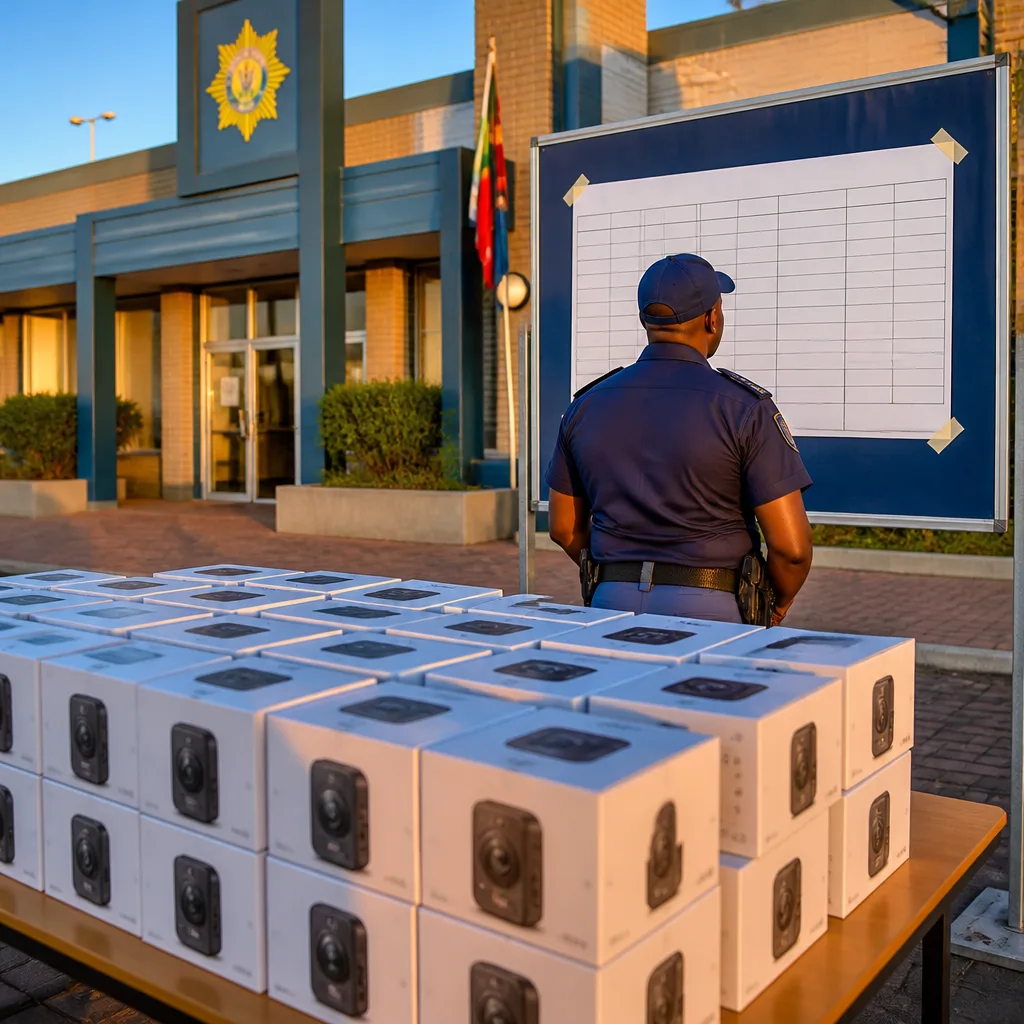
The Democratic Alliance (DA) has called on the acting Police Minister, Professor Firoz Cachalia, to provide urgent clarity after the Department of Police confirmed it has no firm national timeline for the rollout of body‑worn cameras for the South African Police Service (SAPS).
Opposition presses for procurement and implementation details
DA NCOP member and Select Committee on Security and Justice member Mzamo Billy said the party will continue to press for the nationwide deployment of the technology after Cachalia acknowledged the absence of a clear timetable. Billy argued that body‑worn cameras could improve transparency, preserve evidence, protect officers against false allegations and deter misconduct.
"Where are the cameras, to fight crime and keep officers safe?"
The party highlighted that the Police Ministry had earlier indicated an intention to begin deploying body cameras during the 2025/26 financial year, and questioned why that schedule has apparently been delayed.
Experts cite benefits but stress careful implementation
Professor Mpho Matlala of UNISA’s College of Law and School of Criminal Justice was cited emphasising the potential of body‑worn cameras to act as both a deterrent to misconduct and an accountability mechanism. Matlala noted that digital footage can be a reliable form of evidence and that cameras could help rebuild the trust deficit between communities and police amid high levels of crime and allegations of corruption.
Opposition figures and academics alike warned, however, that the effectiveness of body‑worn cameras depends on robust policy for activation, storage, access, privacy protections and independent oversight.
- DA demand: Clear procurement timeline and implementation plan from the Department of Police.
- Stated benefit: Improved transparency, evidence preservation and officer protection, according to stakeholders cited by the DA.
- Outstanding concerns: Procurement delays, rollout scope and governance mechanisms to manage footage and privacy.
Context: trust, corruption allegations and prior commitments
The call for answers comes amid wider scrutiny of SAPS following a number of high‑profile inquiries into police conduct and corruption. The DA linked the delayed rollout to broader governance challenges, saying that failure to implement body cameras could undermine attempts to restore public confidence.
According to the information put forward by the DA, the Police Ministry previously indicated that an initial deployment was planned for the 2025/26 financial year. The party has urged the acting minister to finalise procurement to ensure a swift and properly regulated national rollout.
Officials and stakeholders have stressed that, if implemented, body‑worn cameras must be accompanied by clear rules on when devices must be activated, how footage will be retained and who may access recordings, to balance transparency with privacy and operational needs.
| Issue | Current position |
|---|---|
| National rollout timeline | No firm timeline, according to the acting minister |
| Previously indicated start | 2025/26 financial year (as earlier communicated by the Police Ministry) |
| Key demands | Finalise procurement; publish implementation and oversight policy |
The DA has signalled it will continue to press the acting minister and parliamentary oversight structures for specific dates and procurement milestones. The party framed the issue as central to both officer safety and community trust in the policing service.
As the debate continues, practical questions remain about funding, procurement timelines, training, data management and independent oversight — all aspects stakeholders say are essential to ensure that body‑worn cameras deliver on promised gains in transparency and accountability.













