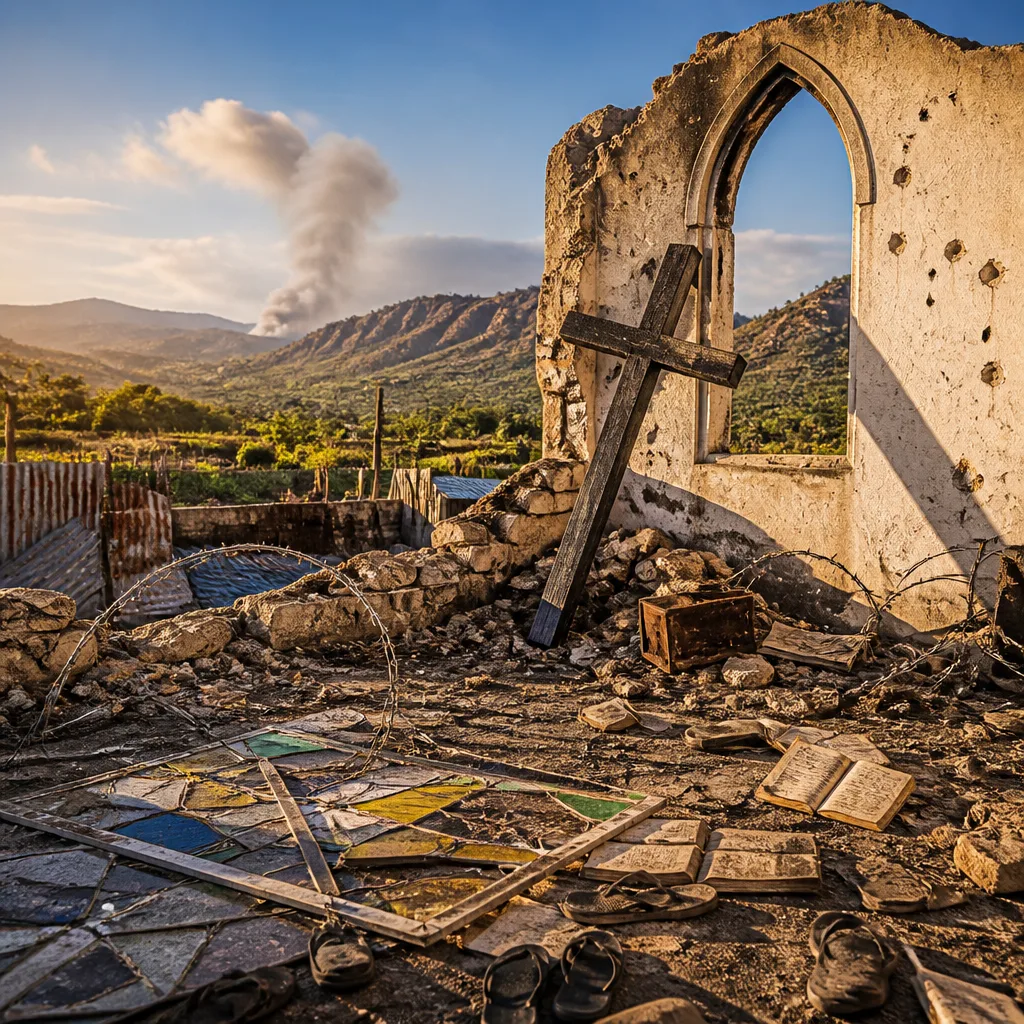
Armed factional fighting in Sudan’s Nuba Mountains has placed Christian leaders and congregations under mounting threat, with recent incidents including extrajudicial executions, abductions and large-scale damage to church property, International Christian Concern reported.
Leaders killed and seized amid escalating violence
On 23 July, members of the Sudan People’s Liberation Movement–North (SPLM/N) detained Rev. Adil Idris Jangoul at his residence in Heban, the report said. His body was later discovered on a road together with six other members of the Otoro ethnic community — all of whom had been extrajudicially executed. That same day, an attack in Heban killed at least 10 people and resulted in more than 20 hostages, including Rev. Yakoub Brahim Tia, a former general secretary of the Sudanese Church of Christ; Tia and other hostages were eventually released. A further abduction, that of church leader Zakaria Suliman Jana, occurred in Heban on 31 July.
These incidents form part of a broader pattern of pressure on Christian communities as the conflict between the Sudanese Armed Forces (SAF) and the Rapid Support Forces (RSF) enters its fourth year, the organisation said.
- Extrajudicial executions: Seven members of the Otoro community found executed alongside Rev. Jangoul.
- Abductions: Multiple clergy members seized during attacks in Heban, with at least one still reported abducted as of late July.
- Mass casualty incidents: An attack on 23 July left at least 10 dead and more than 20 taken hostage.
Churches destroyed, occupied or closed
Beyond assaults on individual leaders, the campaign of violence has severely affected church infrastructure across Sudan. The reporting states that at least 165 churches have been forced to close since the outbreak of hostilities in April 2023; the true number may be substantially higher. Many places of worship have been bombed, looted, or converted for military use — serving as bases or weapons depots — while others have been completely destroyed by the fighting.
In the capital region of Omdurman, the Rapid Support Forces allegedly attacked people sheltering in St George Coptic Orthodox Church, assaulting congregants, stealing property and targeting vulnerable individuals on the church compound. Marmina Coptic Orthodox Church was reported damaged, with destruction to its sanctuary, cemetery and fittings.
| Item | Reported figure |
|---|---|
| Churches forced to close | 165 |
| People executed with Rev. Jangoul | 7 |
| Casualties in Heban attack (23 July) | At least 10 killed; 20+ taken hostage |
The targeting of religious sites and leaders compounds the humanitarian crisis already affecting millions inside Sudan and those displaced across the region. Attacks on places of refuge — such as churches and their compounds — undermine community coping mechanisms and raise the threat of further displacement, especially of vulnerable groups including women, children and older people.
Regional ramifications and the international response
Sudan’s conflict has long carried consequences beyond its borders, placing pressure on neighbouring states, refugee systems and humanitarian responders. The growing scale of attacks on religious communities may also complicate mediation efforts and harden sectarian or ethnic divisions, heightening the risk of protracted instability.
International Christian Concern documented the incidents and consequences; its reporting highlights the need for urgent protection of civilians, accountability for abuses and unimpeded humanitarian access. The information paints a stark picture of how civil conflict can swiftly erode the protection normally afforded to religious institutions and their leaders.
For South African readers and policymakers, the unfolding violence in Sudan is a reminder of the fragility of peace in the region and the humanitarian obligations that accompany civil conflict. Robust diplomatic engagement, support for neutral humanitarian corridors and increased monitoring of rights abuses will be critical if further deterioration is to be averted.
The figures and incidents summarised here are drawn from the reporting by International Christian Concern.