
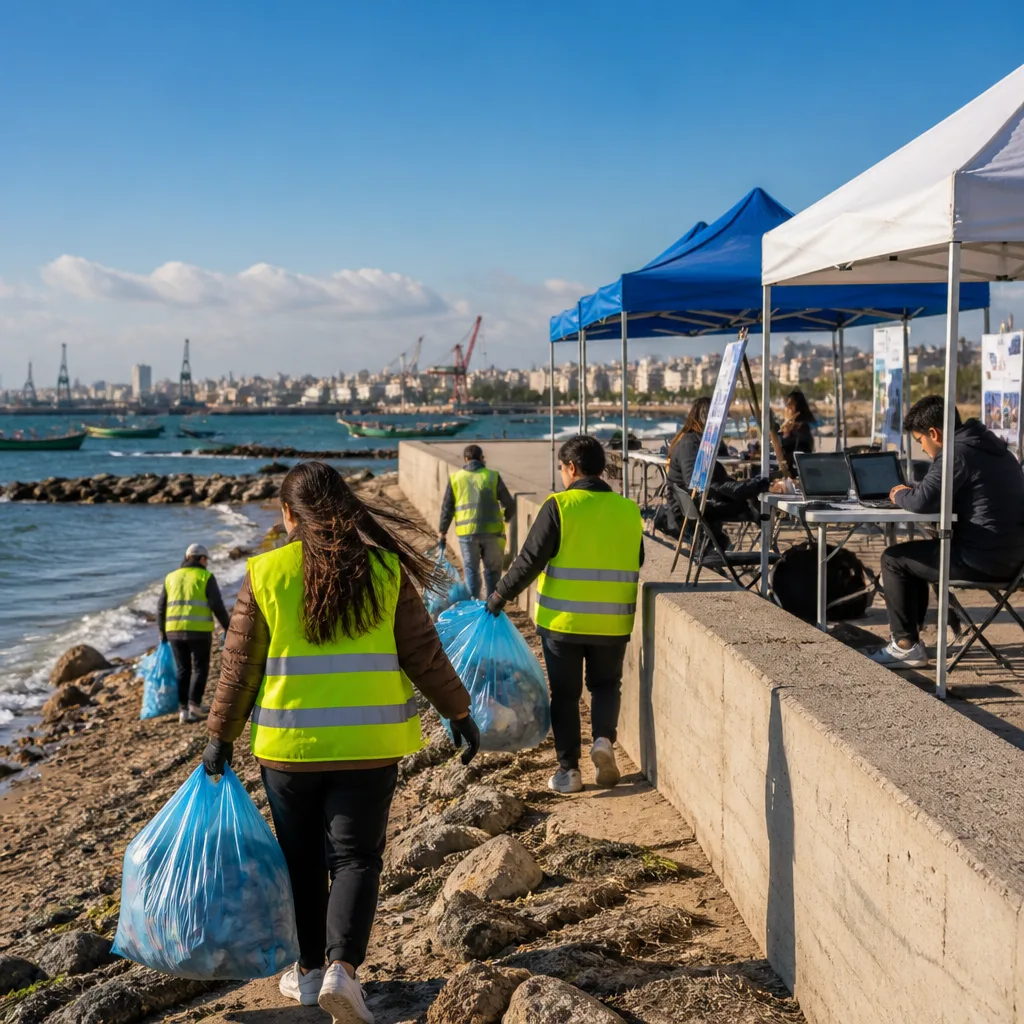
Caspian Sea Action Week 2026 drew to a close in Kazakhstan on 12 August, coinciding with International Caspian Sea Day, after a week of scientific exchanges, volunteer coastal clean‑ups and a technology‑focused hackathon designed to strengthen regional cooperation on protecting the Caspian Sea’s unique ecosystem.
Regional participation and aims
The week’s events assembled delegations from the five Caspian littoral states — Azerbaijan, Russia, Iran, Turkmenistan and the host, Kazakhstan — alongside participants from Uzbekistan, Kyrgyzstan and Tajikistan. Organisers framed the programme within Kazakhstan’s “New Kazakhstan” environmental culture concept and the broader observance of the International Year of Volunteers.
Established in 2006 to mark the entry into force of the Framework Convention for the Protection of the Marine Environment of the Caspian Sea, International Caspian Sea Day provided a backdrop for discussions aimed at reinforcing multilateral research, monitoring and volunteer action.
What took place
- 6–7 August: An international seminar and roundtable on contemporary environmental monitoring technologies and scientific research, bringing together scientists, experts and civil society to exchange methodologies and explore joint projects.
- 8 August: The Caspian Clean Challenge — a large‑scale volunteer coastal clean‑up in Aktau where participants collected and sorted coastal waste. On the same day the organisers established the “Alley of Friendship of Caspian Region Volunteers,” planting more than 80 trees and interring a time capsule intended for future generations.
- 10–11 August: The Caspian Innovation Lab hackathon, which challenged teams to design technology‑driven solutions to protect regional ecosystems.
- 12 August: The week concluded with the international Caspian Talks volunteer summit, which included a panel discussion on current environmental challenges and an awards ceremony for hackathon winners.
Scientific cooperation and volunteerism
Organisers emphasised both scientific and civic dimensions: technical sessions addressed modern monitoring methods while volunteer activities translated that knowledge into practical coastline restoration and public engagement. The hybrid focus — combining research, youth participation and technological innovation — aimed to create scalable approaches for pollution control, biodiversity protection and early warning systems relevant across the littoral states.
| Event | Date | Focus |
|---|---|---|
| International seminar & roundtable | 6–7 August | Monitoring technologies, scientific research |
| Caspian Clean Challenge & Alley of Friendship | 8 August | Coastline clean‑up, tree planting, time capsule |
| Caspian Innovation Lab hackathon | 10–11 August | Technology solutions for ecosystem protection |
| International Caspian Talks | 12 August | Volunteer summit, awards, panel discussion |
The series of activities reflects an approach increasingly common in transboundary environmental governance: pairing technical exchange with grassroots mobilisation to foster ownership and sustainment of environmental measures.
Why it matters beyond the region
The Caspian Sea is a unique inland water body with complex legal, ecological and economic dimensions. Cooperative monitoring and joint research are essential to manage shared risks such as pollution, invasive species and habitat degradation. The inclusion of volunteers and youth in both cleanup and innovation work highlights an emphasis on building a constituency for long‑term stewardship.
For South Africa and other coastal nations, the week offers lessons in combining scientific collaboration with civic engagement and technological innovation. Governments and civil society that link monitoring, policy and on‑the‑ground action are better placed to respond to coastal pollution and biodiversity loss.
Authorities in Aktau documented planting of over 80 trees and the placement of a time capsule as symbolic commitments to future stewardship, while the hackathon rewarded prototype ideas that may inform later interventions across the Caspian basin.
As climate change, industrial activity and population pressures continue to challenge marine and inland water ecosystems globally, events such as Caspian Sea Action Week underline the value of regional dialogue, shared science and volunteer mobilisation in preserving vital water resources.









