
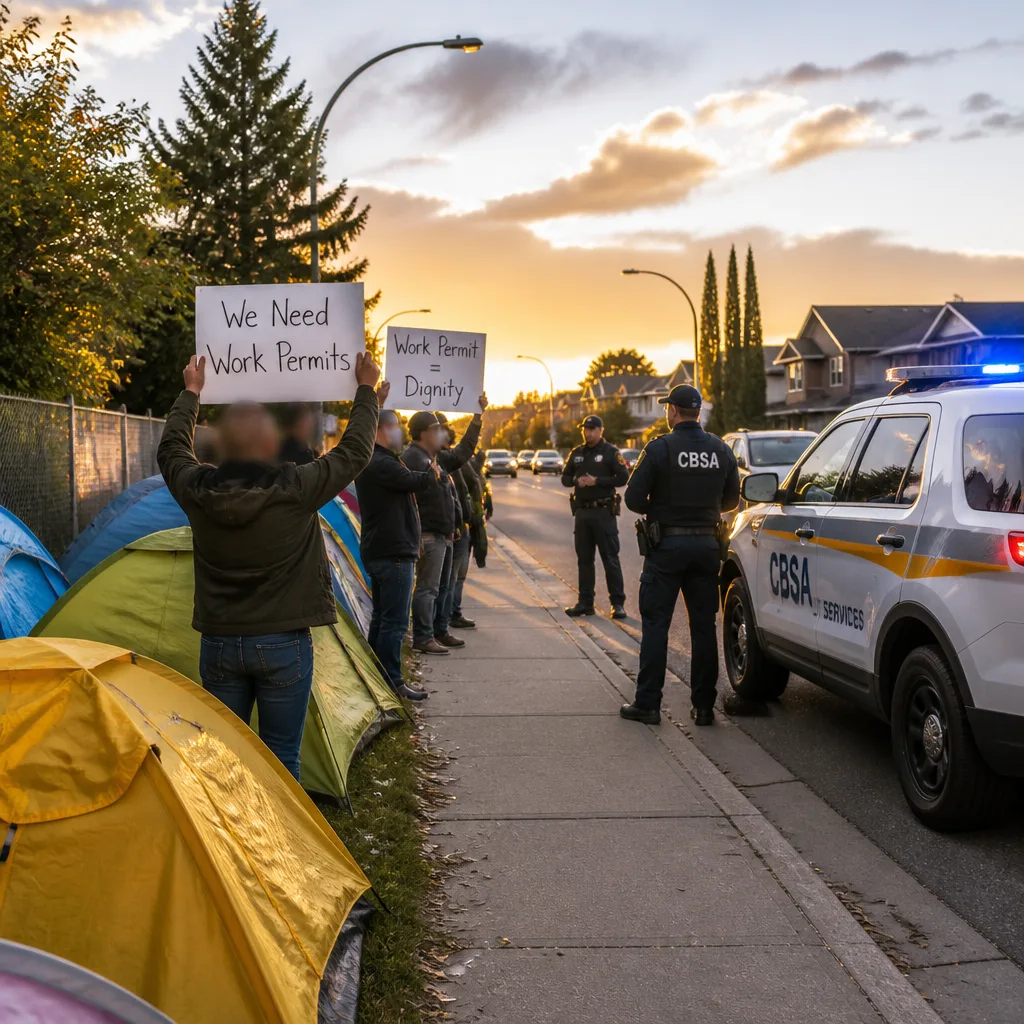
A prolonged protest in Calgary by international graduates who say they were wrongly denied Post‑Graduation Work Permits (PGWPs) has ended after federal immigration authorities moved to check the status of several demonstrators.
Checks follow complaints about tents on city property
The demonstration, which lasted 22 days in a northeast neighbourhood of Calgary, drew largely Indian graduates who had attended programs delivered through partnerships with Portage College. Protesters say they paid substantial fees under the impression their courses would qualify them for a PGWP, the permit that allows eligible international students to remain and work in Canada after completing studies.
Calgary Police Service intervened on 12 August after receiving complaints that the encampment was obstructing pavements and impeding pedestrians. Officers asked those occupying tents and makeshift structures to provide identification and, after concerns were raised about the documents presented, contacted the Canada Border Services Agency (CBSA) to verify immigration status. Police said no criminal offences were committed during the interaction.
Border agency expands checks; some flagged
CBSA initially checked four people at the scene but widened its review to include 20 attendees after determining two individuals did not comply with immigration requirements. In total the agency identified 12 people as “
possibly inadmissible” under Canada’s Immigration and Refugee Protection Act and requested that they attend follow‑up interviews.
CBSA has not disclosed whether those individuals subsequently attended interviews or whether any formal enforcement orders have been issued. The agency said anyone subject to immigration enforcement action would retain access to due process.
Legal risks and potential consequences
Calgary immigration lawyer Jatin Shory, who is representing about a dozen students contesting PGWP refusals in federal court, advised to media that people found to be without status could face exclusion orders and be required to leave Canada. An exclusion order typically bars return for one year.
The case exposes the legal risks that can follow from enrolment in partner‑delivered programmes. The Portage College student union has estimated that around 1,500 graduates may be affected by PGWP refusals tied to courses run in partnership with private providers, including the Canadian Institute of Osteopathic Therapy in Calgary and Campbell College in Edmonton.
- Duration of protest: 22 days
- People initially checked by CBSA: 4
- Total attendees checked: 20
- Flagged as possibly inadmissible: 12
- Graduates estimated affected by refusals: c. 1,500
Wider context
The dispute ties into broader scrutiny of post‑study work eligibility for students who complete programmes delivered through arrangements between public colleges and private providers. Federal immigration authorities tightened rules in recent years around which programmes qualify for PGWPs, particularly where delivery involves third‑party partners. The changes have led to legal challenges by students and to administrative reviews of partner arrangements.
For South African readers, the case underlines the importance of verifying the immigration consequences of transnational education arrangements. Students who travel for study should seek clear confirmation that their qualification and programme delivery model satisfy the receiving country’s post‑study work criteria before enrolling and incurring fees.
At the same time, the situation raises questions for colleges and private providers about transparency in recruitment and the contractual arrangements that determine whether a course will underpin a PGWP application.
CBSA, Portage College, and Immigration, Refugees and Citizenship Canada (IRCC) have previously been involved in assessing eligibility rules for PGWPs in cases involving partner‑delivered courses. This Calgary episode may prompt further legal and administrative scrutiny of how information about work‑permit eligibility is communicated to international students and what remedies are available to those who say they were misled.
The immediate next steps for those flagged are follow‑up interviews with immigration authorities; beyond that, any measures will depend on the outcomes of those processes and on court proceedings currently challenging some refusals.









