
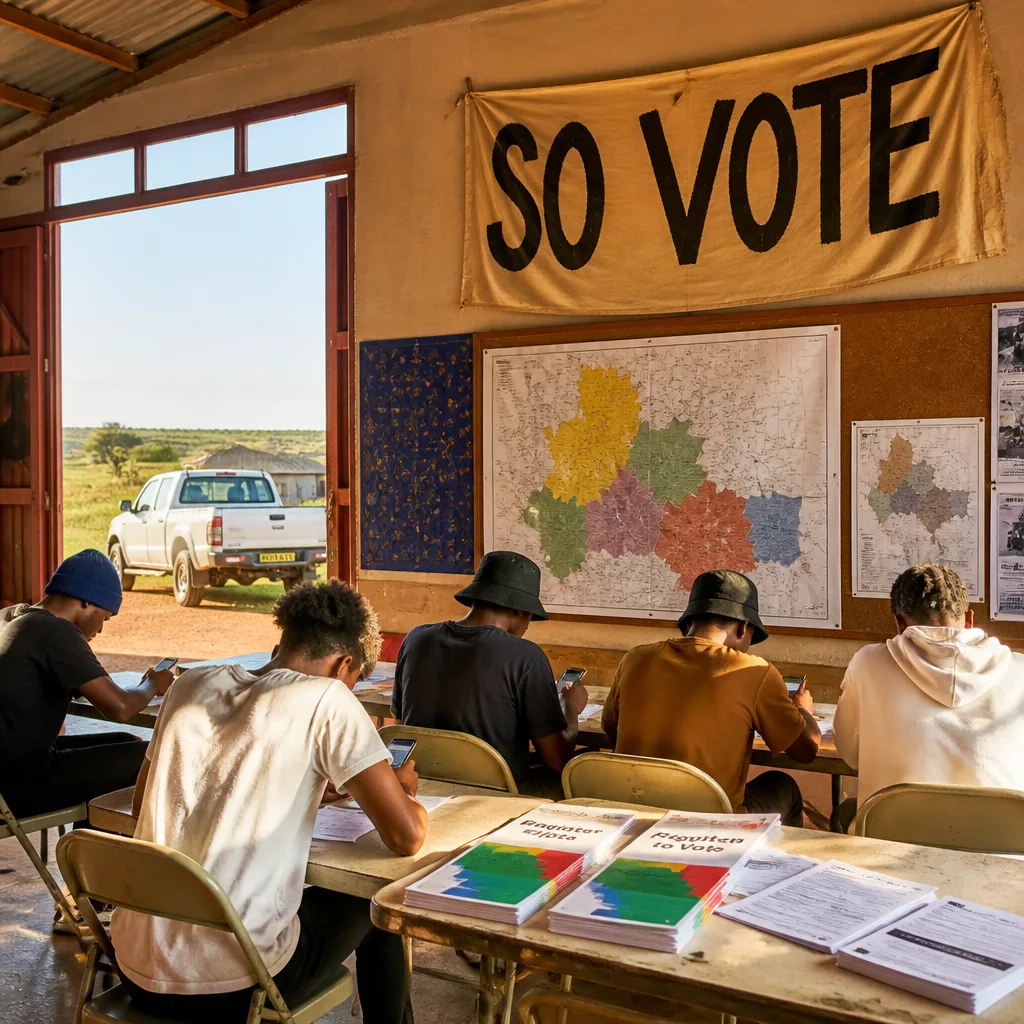
WASHINGTON — The Congressional Black Caucus Institute has launched a multimillion‑dollar voter‑engagement campaign, dubbed SO VOTE, aimed at registering and mobilising lower‑propensity voters in key districts that could decide control of the US House of Representatives, the Associated Press reported.
Targeting young, rural and majority‑Black communities
The campaign, run by a nonprofit arm of Black federal lawmakers, will concentrate its efforts on young voters and communities that are majority‑Black or rural across the South, Midwest and West. It will work through partnerships with dozens of local civic groups and community institutions that national campaigns often overlook.
“For decades, as far as I can remember, there are those of us who have always complained about the fact that neither party spends the significant and requisite time with Black and brown and poor and rural communities,” said Marcia Fudge, a former Democratic congresswoman from Ohio and a leader of the initiative, according to the AP.
Fudge, who described the effort as filling a longstanding gap in how campaigns reach communities, is spearheading SO VOTE alongside former Congressional Black Caucus colleagues, the AP reported. The initiative will combine traditional grassroots outreach — convening churches, fraternities, sororities and local civic organisations — with modern digital techniques, reflecting how political campaigning has evolved.
Mixing old tactics with new technology
Instead of relying on national television advertising, the programme will emphasise in‑person contact and online engagement tailored by geography. Components identified by the AP include:
- Partnerships with houses of worship and community groups to conduct face‑to‑face outreach.
- Targeted online ads using geotargeting to reach likely voters where they get news and information.
- Collaborations with local content creators to reach audiences primarily active on digital platforms.
The campaign plans work in states including Georgia and Mississippi, and will focus on 16 congressional districts that campaign analysts view as pivotal for the balance of power in the House.
| Focus | Detail |
|---|---|
| Geographical scope | South, Midwest and West (including Georgia and Mississippi) |
| Primary targets | Young voters, majority‑Black communities, rural voters |
| Key metric | 16 congressional districts identified as likely to determine control of the House |
Nonpartisan label, partisan consequences
The institute says the voter engagement work is officially nonpartisan. Yet the AP notes that many of the targeted districts are those where Black turnout could be decisive in close contests — a reality that gives the new effort immediate political significance amid tight fights for House control.
Cedric Richmond, a former Democratic congressman from Louisiana who served as a senior adviser to President Joe Biden, is also associated with the initiative, the AP reported. The campaign’s focus on communities that parties have often under‑resourced reflects longstanding complaints from civil‑rights leaders about outreach gaps.
Implications for tactics and funding
SO VOTE’s approach — blending door‑to‑door and community‑based mobilisation with digital micro‑targeting — mirrors strategies that have been refined in recent cycles but also signals a renewed emphasis on labour‑intensive voter contact. For Democratic strategists, boosting turnout among young and Black voters in the right districts could blunt Republican gains. For opponents, the initiative will be framed as targeted mobilisation that benefits one side in competitive districts, even as it carries a nonpartisan legal status.
The AP did not provide a precise dollar figure for the campaign’s budget in its initial report, only describing it as multimillion‑dollar. Details on exact spending plans, staffing and the list of the 16 congressional districts were not listed in the AP dispatch.
As the midterm season progresses, campaign watchers will be watching whether SO VOTE’s combination of traditional community engagement and digital tactics produces measurable shifts in turnout in the districts that will determine the House majority.












