
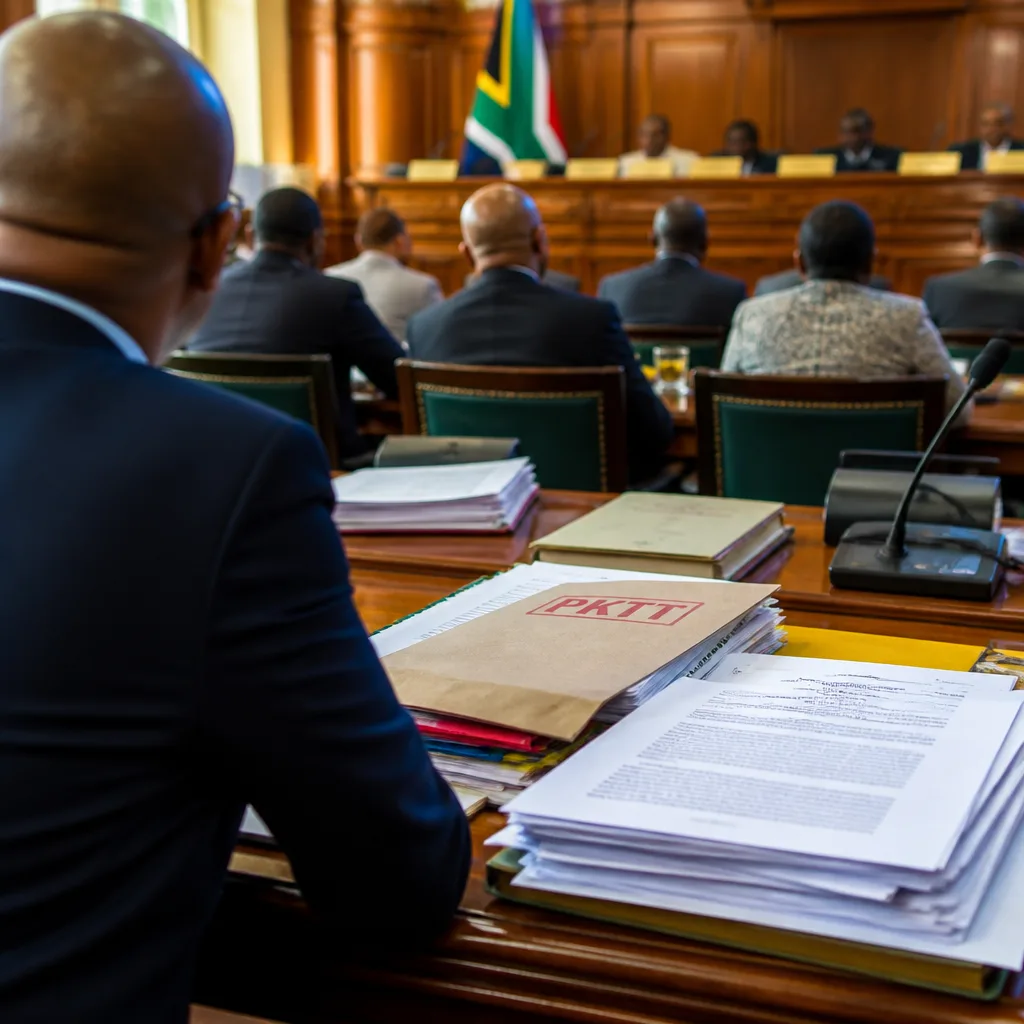
The African National Congress (ANC) in Parliament has rejected assertions that Police Minister Senzo Mchunu was influenced by external actors when he decided to disband the Political Killings Task Team (PKTT), the party said during a meeting of an ad hoc committee investigating allegations of police corruption.
ANC stands by minister's decision
Speaking in the committee, ANC Chief Whip Mdumiseni Ntuli said the minister’s decision followed consideration of a range of factors presented to him. The ANC’s submission came as members continued to deliberate on a revised draft report by the ad hoc committee, which contains a number of amendments and party submissions.
“I don’t quite agree with the strong assertion that the minister has been influenced by external forces. My own reading of events, as they were presented, and reports before us is that the minister, in his overall consideration of the situation before him, also looked at interventions of different kinds,”
That statement was recorded as part of the committee’s proceedings. The ad hoc committee is charged with probing allegations of corruption within the police service and has been examining, among other matters, the role and disposition of specialised units and task teams.
Context and the committee process
The PKTT was established to investigate politically motivated killings. The decision to disband the task team has become a flashpoint in broader scrutiny of policing and internal accountability. The ad hoc committee is drafting a report that will record its findings and recommendations; during Monday’s sitting members debated proposed amendments and received submissions from parties represented in Parliament.
The ANC’s position, as set out in the committee, is that the minister weighed various inputs and interventions before arriving at his course of action. The party did not accept that external influence — whether political or otherwise — was the decisive factor in the minister’s decision.
Who benefits and who pays
There are competing priorities at play. Those who favour a dedicated unit to investigate politically linked murders argue that a specialised task team concentrates expertise and institutional memory, which can aid prosecutions and protection of witnesses. Conversely, officials who support disbanding the unit may say, as the ANC implied, that broader structural interventions or alternative mechanisms were considered necessary.
- ANC: Asserts the minister acted after weighing many factors and rejects claims of external influence.
- Ad hoc committee: Continuing to finalise a draft report on alleged police corruption with amendments and submissions under consideration.
- Minister Senzo Mchunu: Has taken the administrative decision to disband the PKTT, a move supported by some civil society groupings, according to committee citations.
| Actor | Position in committee |
|---|---|
| ANC | Rejects claims of external influence; says minister considered multiple interventions |
| Ad hoc committee | Investigating allegations of police corruption; finalising a draft report with amendments |
| Police Minister | Has disbanded the Political Killings Task Team |
Questions remain about the next steps. The committee’s final report could recommend reinstating the task team, creating a replacement mechanism, or endorsing the minister’s decision, depending on the evidence and arguments summarised in the report. Parliament will then decide whether to accept, reject or act on the committee’s recommendations.
The debate highlights the tension between specialised units and broader reform of policing structures — and who ultimately carries the political and operational cost of those choices. The ANC’s defence shields the minister politically for now, but the committee’s final findings will test whether that shield endures in Parliament.
Further hearings and the adoption process of the ad hoc committee’s report are expected to determine the practical outcomes for investigations into politically linked killings and broader accountability within the police service.












