
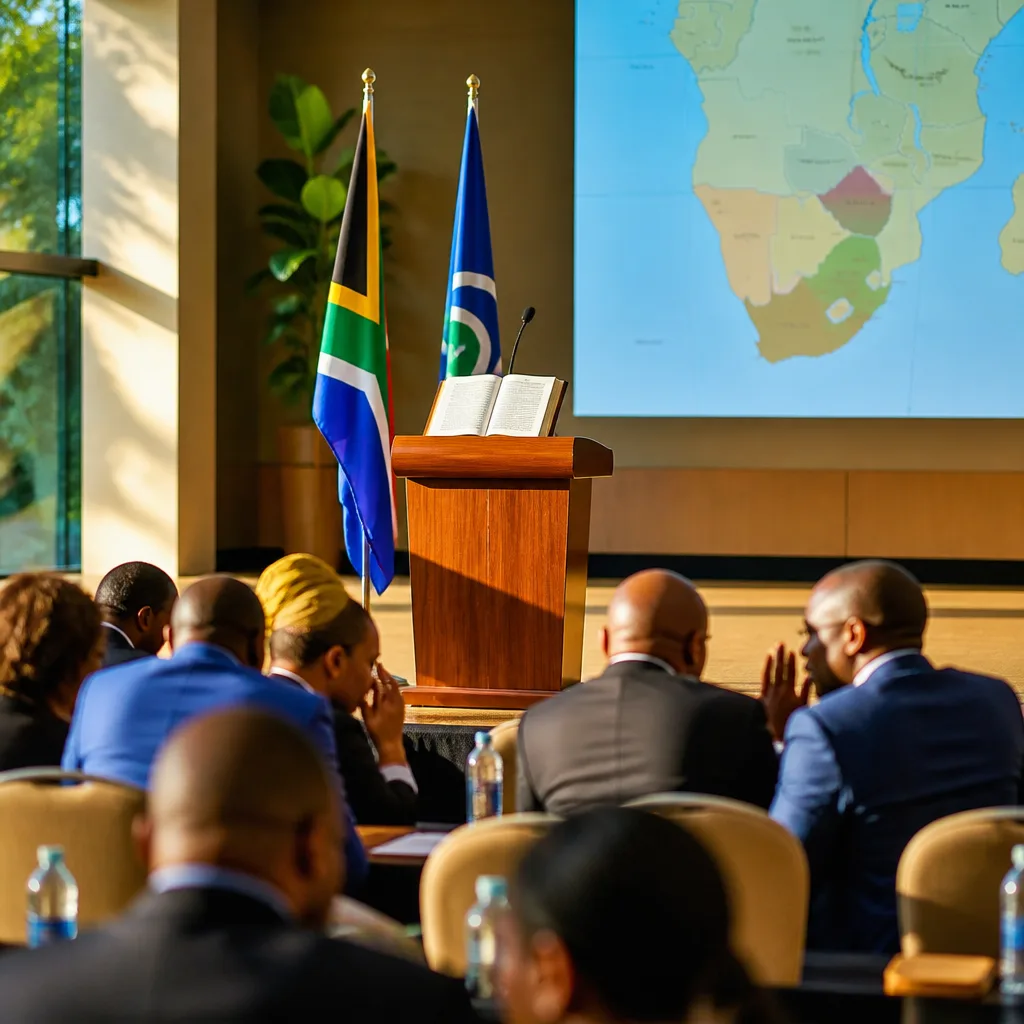
A Durban-based political analyst has warned that President Cyril Ramaphosa’s conciliatory posture at the Southern African Development Community (SADC) summit exposes a decline in South Africa’s regional influence. The remarks came as heads of state met for the 46th Ordinary Summit of SADC in Durban on 17 August 2026.
Analyst links apology to loss of leverage
Professor Sipho Seepe said the President’s public apology — delivered during a lecture at the University of KwaZulu-Natal for recent xenophobic attacks against foreign nationals, including Mozambicans — underscored a growing inability by South Africa to shape regional debate and hold other governments to account.
Seepe argued that South Africa should be pressing its neighbours more directly on governance failures that drive irregular migration to South African cities and informal settlements. He said regional integration must go beyond trade corridors and tackle instability through "an intergovernmental commitment."
“The President should confront his counterparts regarding governance failures in their countries, making it clear that they bear responsibility for illegal migration,”
Those remarks, cited by the South African weekly newspaper The National, were delivered in the context of the SADC summit attended by regional leaders in Durban, KwaZulu-Natal.
What the analyst recommends
Seepe set out a series of policy priorities he believes the summit should adopt or debate:
- Make regional integration address political and security instability, not only economic links.
- Use SADC fora to confront governance failures that contribute to migration pressures.
- Address instability observed within South Africa — including the governance and enforcement gaps — rather than focusing on diplomatic apologies.
He also criticised what he described as repetitive summit behaviour, saying meetings often become forums for mutual congratulation instead of producing tangible action.
“SADC summits are like broken records, as leaders meet only to congratulate one another while real problems are plain to see,”
Seepe added that South Africa’s domestic enforcement of laws influences migration flows, saying: “South Africa’s failure lies in its inability to enforce the laws. If our laws were properly enforced, we wouldn’t be dealing with illegal immigrants.”
Context and implications
The remarks come amid heightened scrutiny of South Africa’s handling of xenophobic incidents that have targeted African foreign nationals. The President’s apology at a university lecture appears to have been intended to address domestic outrage and regional sensitivities ahead of the SADC summit.
If Seepe’s diagnosis is accepted by policymakers, the implications are twofold:
- South Africa may need to adopt a firmer diplomatic posture at regional meetings to reclaim influence and push for intergovernmental responses to instability in the region.
- Domestically, sharper enforcement of immigration and security laws — and clearer public policies on migration and integration — would be required to reduce tensions that produce periodic outbreaks of violence.
How other SADC member states respond to calls for tougher regional coordination on governance and migration remains unclear. The summit agenda includes routine items on trade and integration; Seepe’s comments suggest he wants political instability and cross-border causes of migration elevated on that agenda.
| Item | Detail |
|---|---|
| Event | 46th Ordinary Summit of SADC Heads of State and Government |
| Date | 17 August 2026 |
| Location | Durban, KwaZulu-Natal, South Africa |
| Main issues raised by analyst | Xenophobic violence, migration, governance failures, enforcement of laws, regional instability |
This coverage is based on reporting attributed to Professor Sipho Seepe and cited by The National; further reporting is required to confirm how summit decisions may change in response to these criticisms.














