
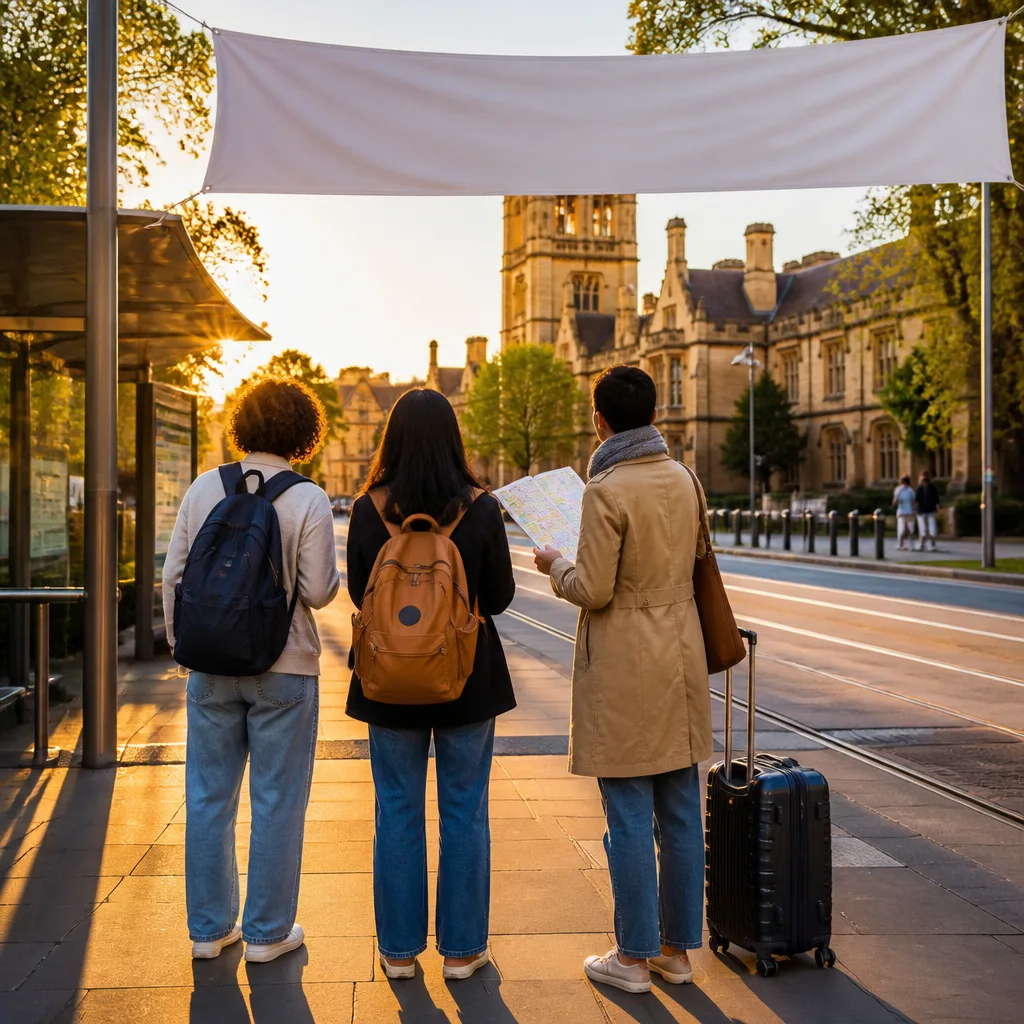
The University of Melbourne’s long-running Welcome to Melbourne programme pairs returning alumni with newly arrived international students, offering practical orientation and human contact as students adapt to life in a new city. Launched in 2009, the initiative has become a sustained channel for alumni to support scholars from across the globe.
Alumni bridge cultural and practical gaps
Programme organisers say the scheme each year matches as many as 300 incoming students — many of them recipients of International Australia Award scholarships — with volunteer hosts drawn from the university’s alumni community. The matched students represent around 70 countries, according to programme information.
Hosts provide a low‑pressure introduction to Melbourne life: meeting for coffee, sharing a meal, attending a sporting event or taking a walk in the Royal Botanic Gardens. They also act as a point of contact for straightforward questions about local customs, transport and services, or signposting to university support when issues are beyond their scope.
“What was so amazing about Sir Edward… was that he’d been a prisoner of war... and yet he harboured no bitterness. Quite the opposite – he wanted to build bridges.”
The reflection comes from David Fong, who traces his own motivation back to being welcomed years earlier into the Toorak home of Colonel Sir Edward ‘Weary’ Dunlop. Fong, a graduate of the university’s Graduate Diploma of Education (1980), now volunteers as a host for postgraduate students, describing his involvement as a way to ‘pay that kindness forward’.
Volunteer hosts bring lived experience
Long‑standing volunteers describe the role as reciprocal. Keri Whitehead, who holds a Bachelor of Arts and a Bachelor of Social Work (1983), has hosted 22 students since she began volunteering in 2010. Whitehead had lived on campus herself as a student and previously participated in a youth exchange in Indonesia, experiences she says inform her empathy for newcomers.
Another alumna, Annette Clarey (Bachelor of Science, Hons, 1977), joined the scheme in 2015. Hosts bring a mixture of local knowledge and hospitality, helping new students navigate everyday tasks and introducing them to social networks outside the university bubble.
- Programme launch year: 2009
- Typical annual matches: up to 300 students
- Scholarship coverage: students on International Australia Awards from 70 countries
- Examples of host activities: coffee, meals, sports events, walks in the botanic gardens, zoo visits
| Aspect | Detail |
|---|---|
| Hosts | University alumni |
| Students | International postgraduate scholars (including International Australia Award recipients) |
| Typical annual matches | Up to 300 |
Organisers say matching is flexible: alumni may provide one or a series of meetings depending on availability and the student’s needs. Hosts are not a substitute for professional services but can be an immediate, humanised resource at a stressful time of adjustment.
Why the model matters beyond Melbourne
The Welcome to Melbourne programme illustrates a simple, low‑cost mechanism for universities to leverage alumni goodwill to improve the student experience. For South African universities and student affairs practitioners, similar alumni‑driven orientation efforts could complement institutional support, particularly for students arriving from remote provinces or international contexts where adjusting to an unfamiliar city exacerbates isolation.
Alumni hosts provide practical orientation as well as an early social anchor. For institutions aiming to boost retention and wellbeing among international cohorts, the model offers a tested template: recruit and train a volunteer alumni pool, match hosts with incoming students, and emphasise signposting to campus services when needed.
For hosts, the rewards are not merely philanthropic. Several volunteers in Melbourne describe the experience as enriching, offering fresh perspectives and renewed connections to the university community.
As global student mobility increases, programmes that humanise the first days in a new country — and that harness alumni networks to do so — will remain a compelling tool for universities seeking to help students settle and thrive.









