Prime Minister Anthony Albanese on Wednesday pushed back against public criticism from the US administration over Australia’s proposed digital duty of care, insisting the measure is designed to give people control over content on their devices rather than to hand more power to government.
Albanese frames duty of care as user protection, not censorship
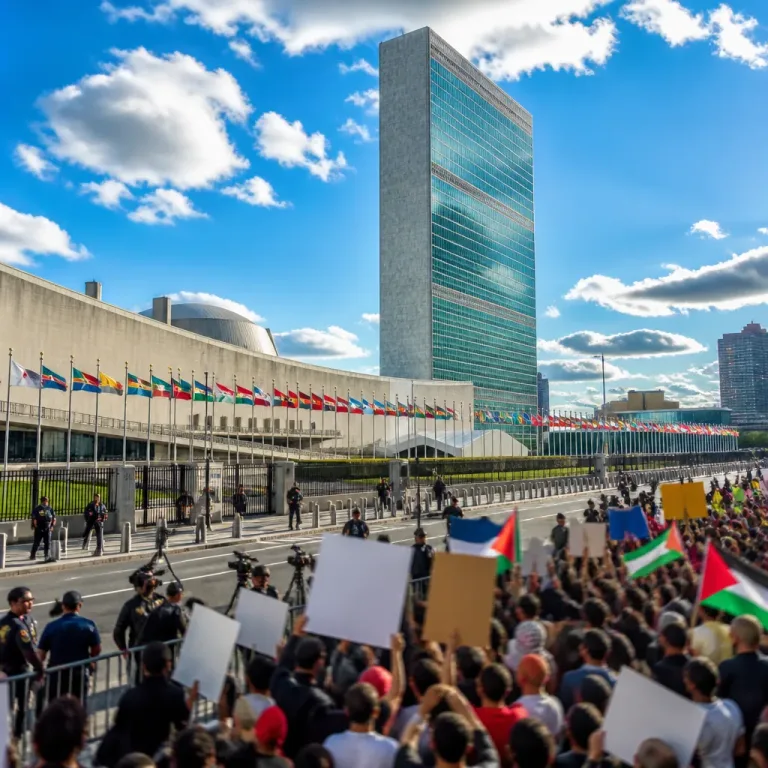
The US government had raised what it described as “serious concerns” about the Australian proposal, arguing it could facilitate censorship. Speaking on the sidelines of a United Nations meeting in New York, Mr Albanese rejected that characterisation and described the policy as the “inevitable next stage”.
“I will always stand up for Australia’s national interests and the digital duty of care is something we’ve foreshadowed for some period of time,” he said.
He said the legislation would require social media companies to provide an opt‑out measure to users and stressed the aim was to return control over what people receive on their devices to individuals. The prime minister said the policy was never intended to give the government control over online speech.
Global AI talks and the US‑China meeting
Mr Albanese also declined to say whether he was disappointed that President Donald Trump rejected a proposal that Australia and 21 other middle powers had put forward seeking global guardrails on artificial intelligence. He said he would await the outcome of a meeting between President Trump and Chinese President Xi Jinping, which he welcomed as an opportunity to place AI on the international agenda.
The prime minister echoed his domestic arguments that safety measures for AI should ensure the technology remains under human control. He has used his visit to the US and the UN forums to press the case for international co‑ordination on AI risks while also promoting Australia as a destination for data centres.
What’s at stake
The exchange illustrates several fault lines:
- Domestic regulation versus international pushback — Canberra argues for stronger duties on platforms to protect users, while the US criticised aspects of the proposal as potentially restrictive.
- AI governance — Australia sought international guardrails, but its initiative met resistance from the US administration, underscoring the challenge of building consensual rules among states with competing strategic interests.
- Diplomatic balancing — Mr Albanese signalled he would continue to press Australia’s position while also valuing high‑level diplomatic engagement between the US and China on technology issues.
| Issue | Australian position | US reaction |
|---|---|---|
| Digital duty of care | Opt‑out for users; return control to individuals | Raised “serious concerns” about censorship risks |
| AI guardrails | Support for global guardrails; co‑ordination urged | Did not back Australia’s proposed initiative |
The exchange is also politically charged at home. Mr Albanese has framed his digital agenda around protecting children and restoring user agency, while critics — including international actors — warn against unintended limits on online expression. The prime minister characterised his stance as measured: he said Australia had “put forward a strong position” and would watch developments from the Trump‑Xi meeting closely.
Observers of international tech policy will be watching whether the US‑China discussions yield common ground on AI safety, and whether Australia’s proposals gain traction with likeminded middle powers. For Canberra, the immediate task is to progress domestic legislation that aligns with its stated objectives while managing diplomatic friction with Washington.
For South African readers, the episode is a reminder that debates over platform regulation and AI governance are now part of high‑level diplomacy. As countries craft their own rules, they face the familiar trade‑offs: who benefits from regulation, who bears the costs, and how national initiatives fit into a fragmented global framework.