Political parties are due to sign the Electoral Commission of South Africa’s (IEC) Code of Conduct on Wednesday as the commission ramps up formal safeguards for the 4 November local government elections.
What the signing means
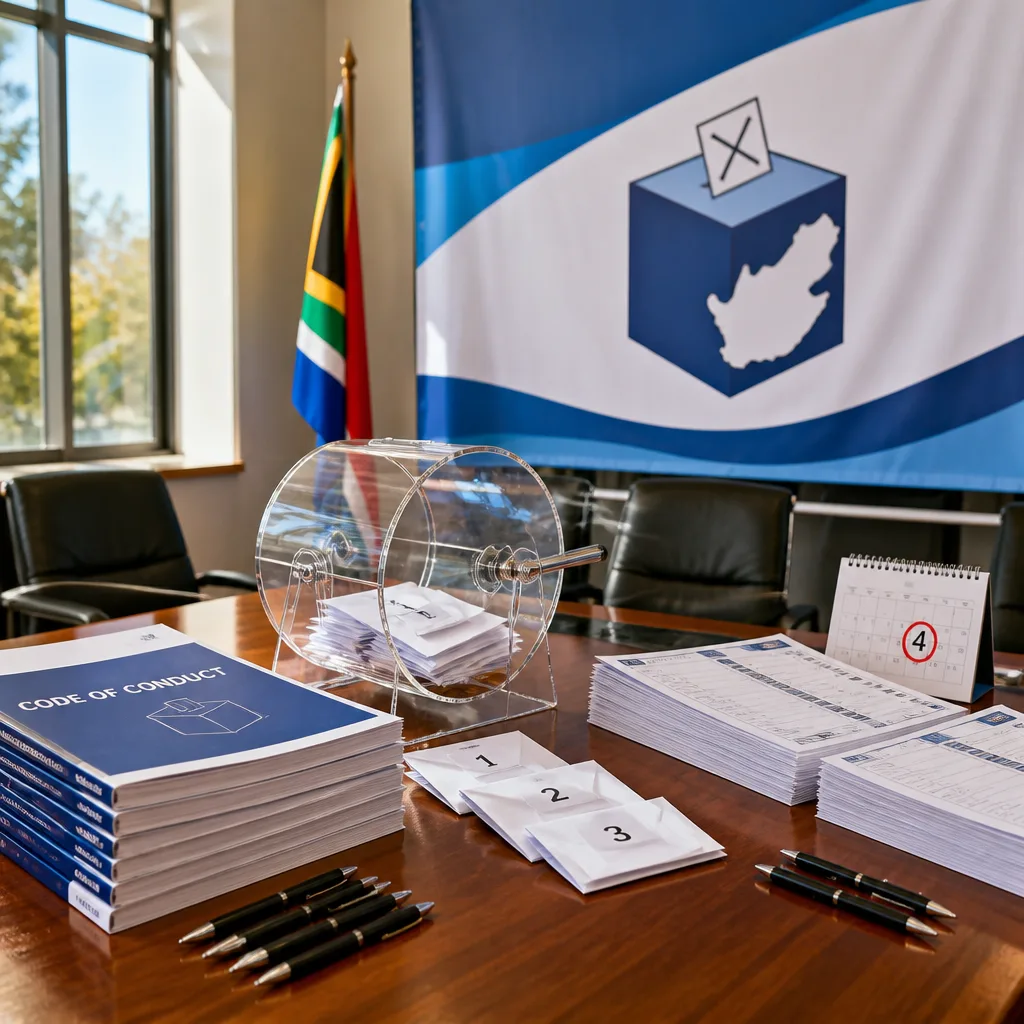
The signing ceremony will see contesting parties formally undertake to uphold a set of rules intended to protect a free and fair campaign period. The code forbids political intimidation, incitement to violence and the deliberate spread of false information, and is legally binding until the final election results have been declared, the IEC said.
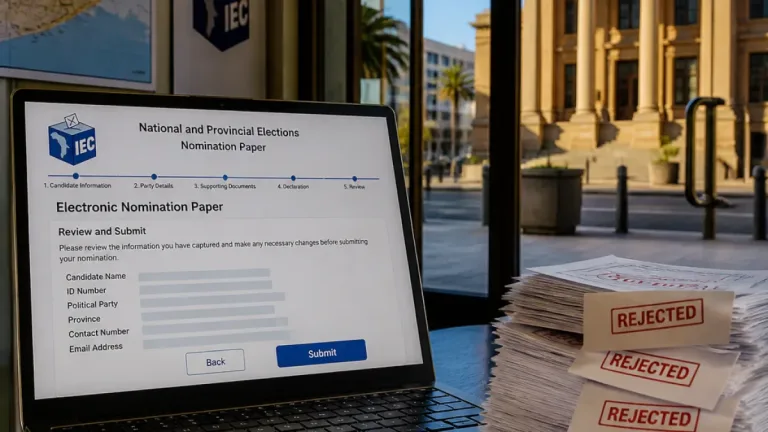
At the same event the IEC will hold a ballot draw to determine the order in which parties appear on the various ballot papers — a detail that can matter in tightly contested municipal races where voter recognition and ballot position influence results.
- Election date: 4 November
- Code binding: Until final results are declared
- Ballot draw: Order of parties on ballot papers to be determined at the ceremony
Disinformation rules and a 36-hour correction window
The signing comes after the IEC gazetted a separate disinformation code aimed at curbing the spread of false claims during the campaign. Under those rules, parties and candidates are given a strict timeframe to address inaccuracies: they will have 36 hours to correct false claims made by them or by persons acting on their instructions.
The combination of a general Code of Conduct and a targeted disinformation code marks an attempt by the IEC to regulate both behaviour and content in the run-up to polls where heated messaging, social media and rapid information flows complicate oversight.
“The code prohibits political intimidation, incitement to violence and the spread of false information, while protecting the right of all contestants to campaign freely,” the IEC said.
Logistics and context
The IEC is proceeding with a number of preparations for the elections. In related communications the commission said it had secured over 23,000 voting stations and will use measures such as double-column ballot papers in high-contestation metros — adaptations intended to manage busy polling places and multiple contests on the same day.
| Measure | Purpose |
|---|---|
| Code of Conduct | Set behavioural standards; legally binding until results declared |
| Disinformation code | Require correction of false claims within 36 hours |
| Ballot draw | Determine party order on ballot papers |
| Double-column ballots | Manage high-contestation metropolitan ballots |
Why it matters
South Africa’s local elections are often decided by small margins in wards and metros. The Code of Conduct and the disinformation rules aim to reduce the kinds of unlawful pressure and misleading campaigning that can distort those margins. By making the code legally binding until the declaration of results, the IEC seeks both to deter violations and to give itself a clearer basis for enforcement.
Who benefits and who pays is a simple calculus: parties that campaign cleanly and manage their communications will gain relative advantage, while those that rely on aggressive or deceptive tactics face the risk of formal sanction and reputational damage. The IEC’s logistical steps — more voting stations and ballot design adjustments — are intended to reduce congestion and error, but they add to the complexity of administering a single-day nationwide poll.
The ballot draw could influence voter behaviour in close contests, because ballot order has been shown elsewhere to affect recognition and first-choice selection. Political parties will therefore be watching the draw closely, as will municipal election managers preparing polling-day staffing and resources.
The IEC’s dual emphasis on conduct and content reflects broader international concerns about electoral integrity in an environment of rapid information flows. Whether the measures will be sufficient to prevent intimidation and the spread of falsehoods will depend in part on enforcement capacity, the willingness of parties to comply and the speed with which the commission can act on complaints during the campaign.
Parties signing the code will be publicly committing to its standards. The upcoming ballot draw will then fix the technical detail that affects everyday voters when they walk into the booth on 4 November.