
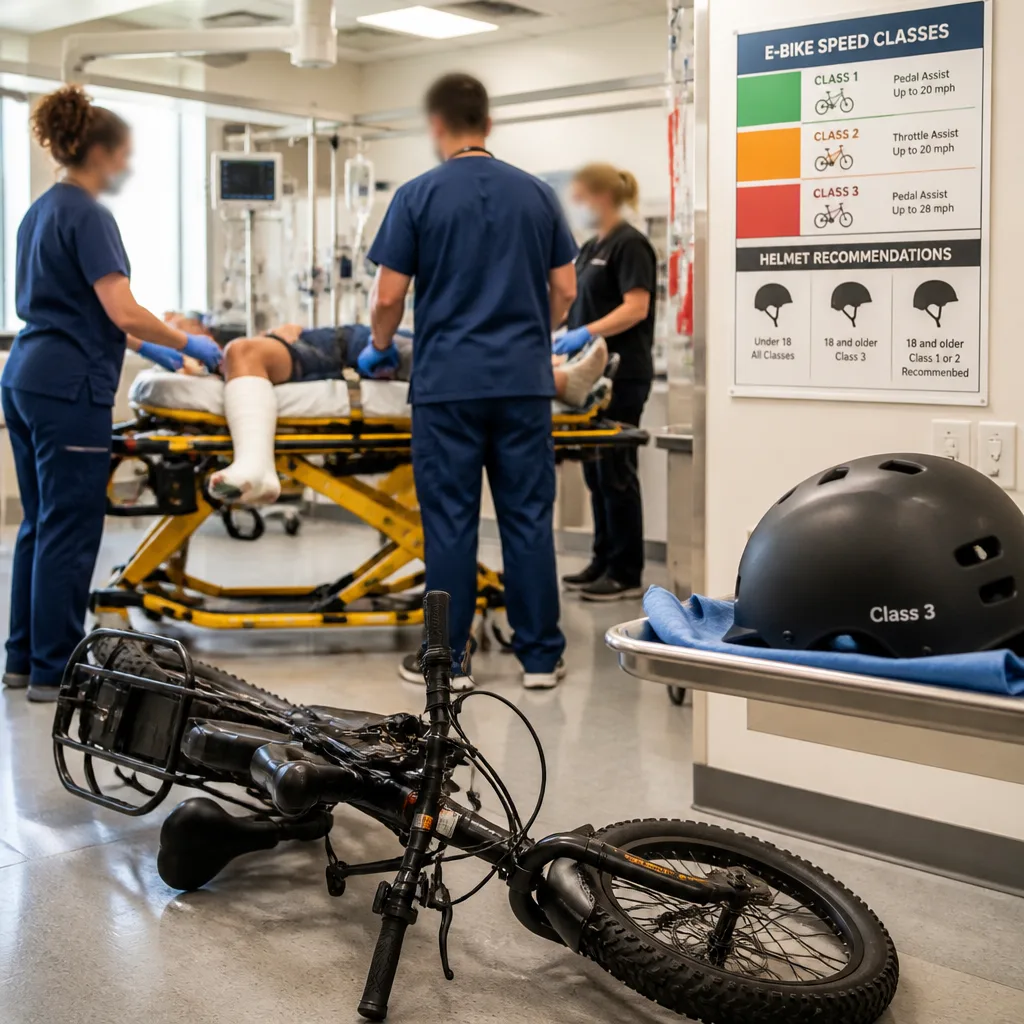
Hospitals are treating an increasing number of patients with major injuries tied to electric bicycles and scooters, prompting clinicians to warn that the growing popularity of these vehicles is outpacing public understanding of their speed, handling and safety requirements.
Trauma centers see more high‑impact crashes
Clinicians at Novant Health and other trauma centers report an upswing in admissions for long‑bone fractures, head and neck trauma and other significant wounds linked to e‑bikes and e‑scooters across age groups. Medical staff point to a mix of unfamiliarity with how the vehicles operate, inadequate protective gear and failure to follow traffic rules as central drivers of the trend.
“We have seen a ton of all ages, long bone injuries, head injuries, neck injuries, pretty significant as well too,”
That assessment came from Toni Scollins, Novant Health’s injury prevention and trauma outreach coordinator, in a recent interview. Scollins said many purchasers—and caregivers buying devices for children—do not fully grasp that electric bicycles are not a single, uniform category but are divided into distinct classes with different performance characteristics.
Classes, speeds and why they matter
Understanding the classifications is essential to matching a rider’s skill level and intended use to the vehicle’s capabilities. Experts stress that a misalignment—such as an inexperienced rider on a high‑speed model—can quickly lead to loss of control and severe injury.
| Class | Motor behavior | Top assisted speed |
|---|---|---|
| Class 1 | Pedal assist only; motor assists only while pedaling | 20 mph |
| Class 2 | Throttle drive allowing propulsion without pedaling | 20 mph |
| Class 3 | Pedal assist with higher speed capability | 28 mph |
Scollins warned that the higher acceleration and top speeds of Class 3 machines can be especially hazardous for older adults and children who lack prior experience with motorized vehicles.
- Equipment mismatch: Many riders use standard bicycle helmets or child helmets that are not designed for crashes at motorized speeds.
- Traffic compliance: Riders frequently fail to treat e‑bikes like other vehicles, neglecting stop signs and right‑of‑way rules.
- Vehicle differences: Throttle operation and rapid acceleration of some models require different handling skills than pedal‑only bikes.
Safety gear and road rules emphasized
Health professionals highlight helmet selection as the single most important protective step. Helmets specifically rated for motorized biking are designed to offer additional coverage over the temples and the lower rear of the skull, areas at higher risk during higher‑speed impacts. Standard bicycle helmets, while better than nothing, may not provide adequate protection at velocities common to e‑bikes and e‑scooters.
Beyond helmets, trauma specialists are urging riders to follow the same traffic laws that apply to other vehicles, to use lights and reflective gear when riding at night, and to seek training or supervised practice when transitioning to a higher‑powered model. They also recommend that parents confirm a child’s physical and cognitive readiness before allowing them to operate motorized vehicles.
Public‑health advocates say clearer labeling at the point of sale, community education programs and stronger consumer guidance from manufacturers and retailers could reduce mismatches between rider ability and vehicle performance. Some hospitals and safety organizations are also calling for broader data collection on e‑bike crashes to better inform prevention strategies and regulatory choices.
As micromobility options proliferate, clinicians say the balance between convenient short‑trip transportation and rider safety will depend on better information, appropriate protective equipment and wider adherence to the rules of the road.