The National Science Foundation will invest $90 million over the next five years to support three new Science and Technology Centres designed to accelerate American research and innovation across multiple high-priority fields.
Federal investment aims to unite academia, labs and industry
The awards will fund collaborative centres that bring together researchers at universities, national laboratories, private industry and other partners to pursue large-scale, interdisciplinary research. Each centre is slated to receive roughly $6 million a year for an initial five-year period, with the opportunity to compete for an additional five years of support.
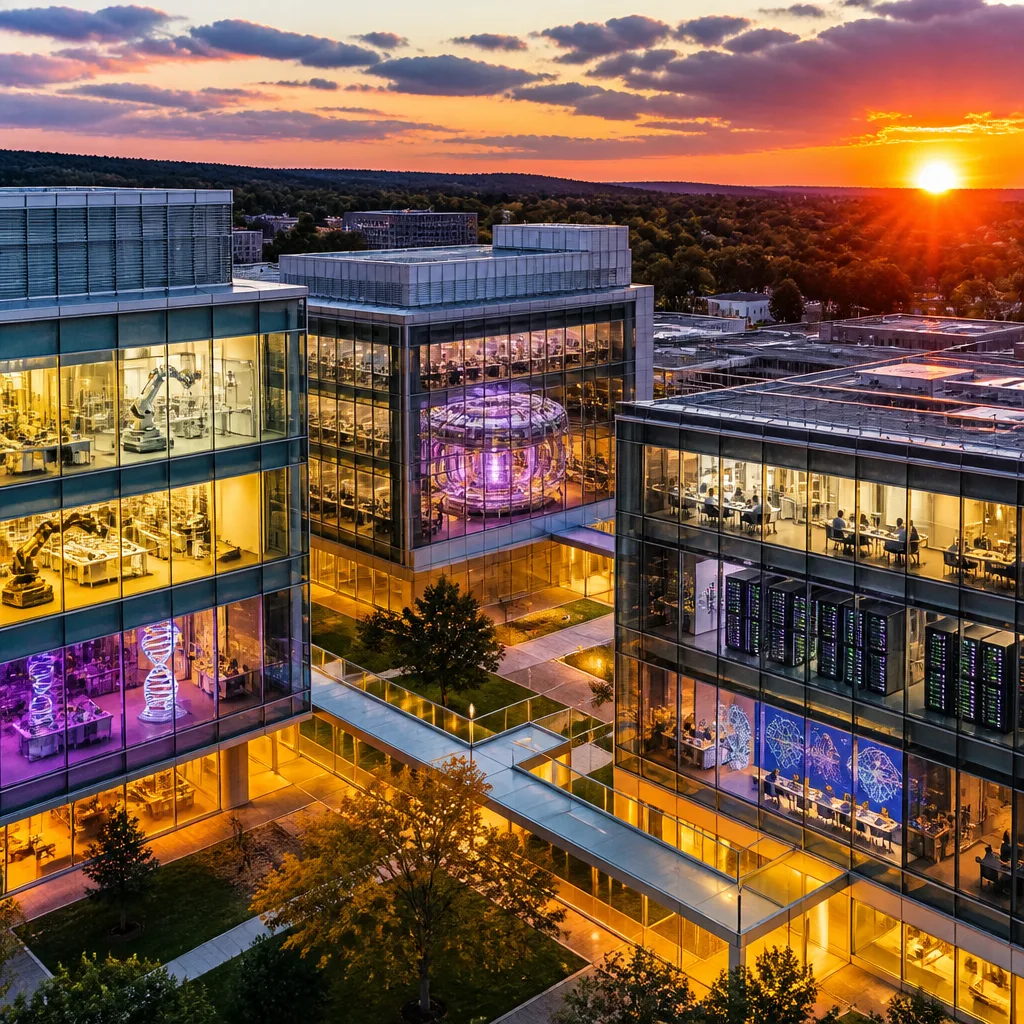
The NSF said the centres are intended to advance U.S. leadership in areas ranging from artificial intelligence and biotechnology to fusion energy and robotics, as well as to strengthen the nation’s STEM workforce and speed the transition of research toward real-world applications.
"Maintaining the United States’ leadership in science and technology requires bold research, strong partnerships, and a skilled workforce," said Brian Stone, performing the duties of the NSF director.
Since the program began in 1987, NSF Science and Technology Centres have supported ambitious, high-risk research that the agency says has catalyzed new fields, produced breakthrough technologies and helped train generations of scientists and engineers. The centres typically pair foundational research with concerted efforts to translate discoveries into innovations and startups.
Program goals and expected impacts
NSF described the new centres as vehicles to:
- Support multidisciplinary teams to tackle complex scientific problems
- Grow a skilled scientific and technical workforce through hands-on training for students and early-career researchers
- Forge stronger partnerships among universities, national labs and industry to accelerate technology development
The agency emphasized that the STC program is intended to take on high-risk, transformational projects that are difficult to pursue within typical single-investigator grants. By combining expertise across organizations and sectors, the centres are meant to move promising ideas faster toward applications that could benefit the public and the economy.
Funding structure and program history
The NSF will provide approximately $6 million annually per centre for the five-year initial awards, with the potential for renewal for up to five more years following competitive review. The total committed funding announced for the three new centres is $90 million.
| Item | Amount/Term |
|---|---|
| Total announced funding | $90 million |
| Annual funding per centre (approx.) | $6 million |
| Initial award term | 5 years |
| Possible extension | Up to 5 additional years (competitive) |
The STC program has a decades-long track record of fostering collaboration across institutions and sectors. According to NSF, centres supported under the program historically have spawned startups, opened new research frontiers and trained numerous early-career scientists.
Details and next steps
NSF named three awardees in this round. One of the centres is the Centre for Transformative Explorations in Multi-Physics and Engineering of Scientific Turbulence, known as TEMPEST. The agency said each centre will develop partnerships with industry and other organizations to expand the reach and potential societal impact of their research.
As the centres begin work, NSF and project teams will face the practical challenges of coordinating large, multidisciplinary efforts and demonstrating measurable outcomes in workforce training and technology translation. The potential payoff, agency officials contend, is accelerated scientific discovery, new tools and economic activity rooted in federally supported research.
The awards reflect a continuing federal emphasis on channeling research dollars into collaborative structures intended to hasten innovation and maintain competitive advantage in critical technologies.
Additional details on the centres’ research agendas, participating institutions and timelines are expected in NSF announcements and project websites as the centres ramp up.