The Idaho Department of Fish and Game announced adjustments to the state’s chronic wasting disease (CWD) testing requirements for the 2026 hunting season, adding two mandatory testing units near Idaho Falls, removing two units from the list and reiterating strict rules on how harvested deer, elk and moose may be transported.
New testing zones, some removed
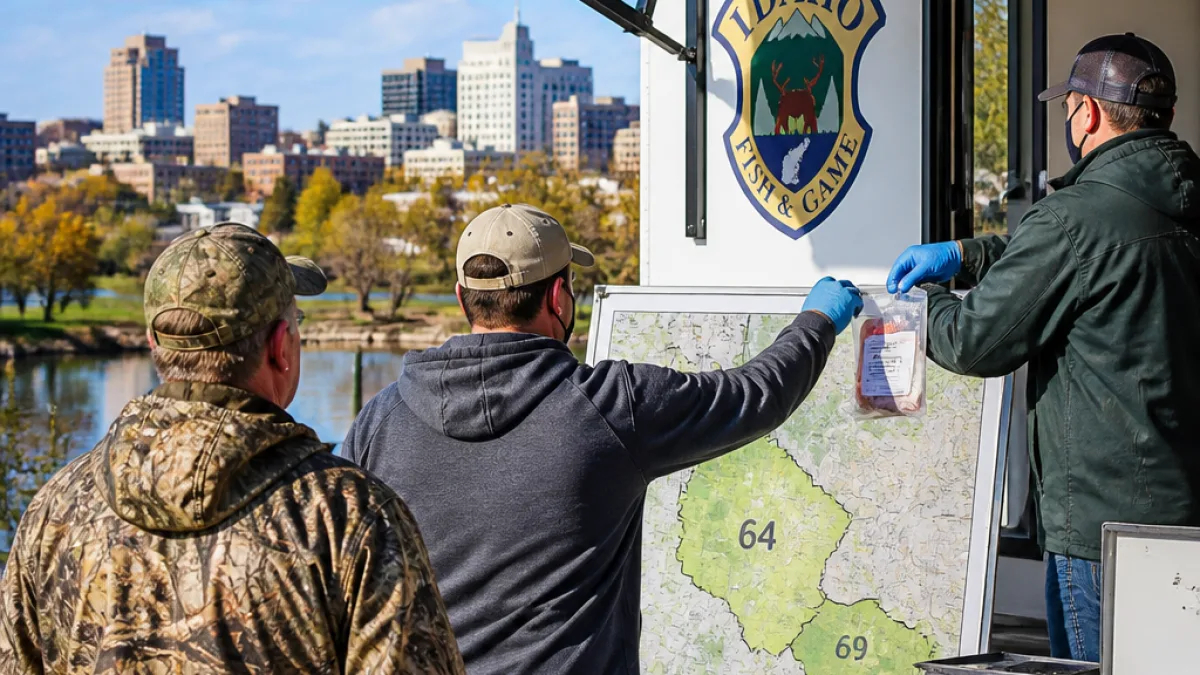
Fish and Game said Units 64 and 69, in the vicinity of Idaho Falls, have been added to the list of areas where deer must be submitted for CWD testing. The agency also removed Units 24 and 32A from mandatory testing after those areas recorded two consecutive years with no CWD detections.
Testing remains mandatory in Unit 23, where a mule deer buck tested positive for CWD in the fall of 2023, the agency said.
| Category | Units |
|---|---|
| CWD Management Zones | Unit 14, Unit 18, a portion of Unit 1 |
| Mandatory testing units (2026) | Unit 23, Unit 63A, Unit 64, Unit 69 |
What hunters must do
Hunters who harvest deer in any mandatory-testing unit are required to submit a sample for CWD testing within 10 days of the animal’s harvest. Fish and Game accepts head or lymph node samples for analysis; regional offices, check stations and designated sampling locations are available for submissions.
- Submit a head or lymph node sample within 10 days of harvest.
- Follow special transport restrictions in CWD Management Zones (Units 14, 18 and part of Unit 1).
- Work with Fish and Game staff when keeping antlers or skull caps after sampling.
Beyond submitting samples, hunters traveling through or out of certain CWD management zones face additional limits on transporting whole carcasses and portions of animals. In Units 14, 18 and the portion of Unit 1 designated as a CWD Management Zone, it is unlawful to transport a whole carcass of deer, elk or moose out of the zone.
Fish and Game clarified permissible and prohibited movements of parts and remains in those zones:
- Heads or lymph nodes may be taken to Fish and Game for sampling.
- After Fish and Game staff collect the required sample, antlers or skull caps may be retained, but the remainder of the head must be left for proper disposal.
- If lymph nodes are removed in the field for delivery to Fish and Game, the head should remain in the field.
- Caped animals with the skull may be taken to a taxidermist or meat processor but may not leave the CWD Management Zone before being presented for sampling.
- Hunters who keep quarters should double-bag bones and nonedible portions and dispose of them in a landfill after processing.
Where to submit samples
Fish and Game has set up multiple paths for hunters to submit CWD samples. Regional offices and temporary check stations remain common options. Hunters should consult the department’s website or contact local offices for current hours and locations before traveling, since availability can vary by region and season.
The department’s changes reflect ongoing monitoring and response to CWD detections and surveillance results. Adding units near Idaho Falls to the mandatory-testing list signals concern about disease presence or risk in that area, while the removal of two units from mandatory testing follows consecutive seasons without detections.
Implications for hunters and communities
Chronic wasting disease affects deer, elk and moose and can have long-term impacts on cervid populations and hunting opportunities. Mandatory sampling helps wildlife managers track the disease’s distribution and informs future management decisions intended to limit spread. For hunters, the immediate impacts are procedural: more trips to sample stations, stricter handling and transport protocols, and careful disposal of nonedible parts.
Hunters should plan ahead: know which unit they are hunting in, carry materials for double-bagging remains if keeping meat, and allow time to present heads or lymph nodes to Fish and Game staff when required. Failure to comply with testing and transport rules can result in legal penalties.
For the most accurate, up-to-date information on units, sampling sites and hours, and other CWD-related guidance, consult the Idaho Department of Fish and Game’s official resources before heading into the field this fall.