
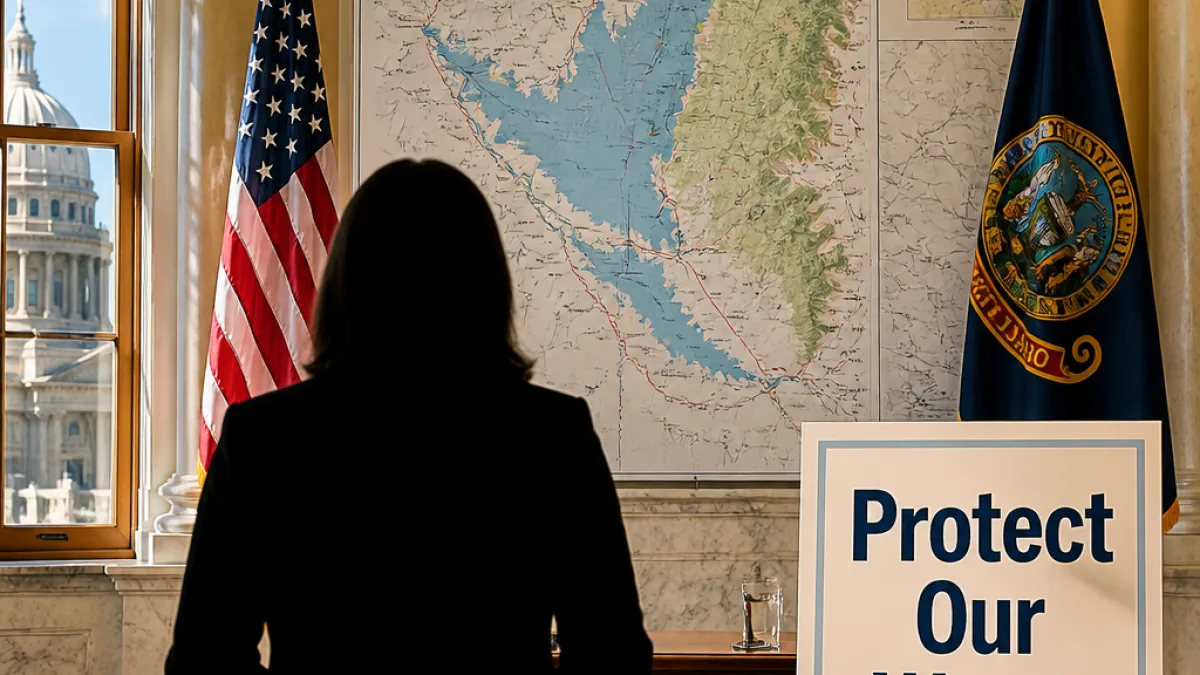
Gov. Brad Little said Wednesday that Idaho will not agree to the disposal of spent nuclear fuel over the Eastern Snake Plain Aquifer as formal talks continue about potentially hosting a new federal Nuclear Lifecycle Innovation Campus.
Governor: aquifer protection is nonnegotiable
Little made the comments during an interview at the Idaho State Capitol in Boise, emphasizing the state’s priority on protecting water resources and public health as conversations with the U.S. Department of Energy move forward. The federal agency announced in July that Idaho is one of five finalists under consideration to host an innovation campus.
“I’ve had this direct conversation with Secretary (of Energy Chris) Wright: Disposal of spent fuel over the aquifer in Idaho – that’s a nonstarter,”
The governor also cautioned that documents signed to date only put Idaho at the negotiating table and are not binding commitments to host the facility or to accept nuclear material.
“There’s a long way to go before this happens,”
Little said. He noted that while federal officials may seek to identify candidate sites by year’s end, any preliminary selection would not constitute a final agreement.
What Idaho has agreed to so far
State and federal officials have moved through several steps in the past months. Key milestones included a March response to a federal Request for Information and a July memorandum of understanding with the Department of Energy to enter formal discussions.
- March: Idaho signed and submitted a Request for Information response describing an accelerated timeline for initial campus capabilities.
- July: The governor signed a memorandum of understanding with the DOE to begin formal negotiations after Idaho was named a finalist.
- DOE requirement: The federal government has said a host state would need to accept shipments of spent nuclear fuel and radioactive waste from other states.
Documents cited in public statements have described an accelerated process that could bring “initial capabilities” online in 2027 — characterizing that buildout as occurring in “months rather than decades.” When asked about that timeline, Little reiterated that the process is far from complete.
Negotiations, not obligations
Little said the legal papers the state signed do not bind Idaho to accept nuclear waste. Instead, they enable negotiations and give state officials a seat at the table to press protections and conditions should a campus be sited here.
“The documents I signed do not obligate Idaho to host an innovation campus or accept nuclear fuel or radioactive waste,” Little said. “They simply bring Idaho to the negotiating table,” according to his interview at the statehouse.
Local stakes and unanswered questions
The proposal has raised questions about groundwater safety, long-term waste storage, regulatory oversight and the potential economic benefits of hosting a federal research campus. Idaho officials have cited economic opportunity as one reason to remain engaged in discussions, but the governor and others stress that environmental safeguards must come first.
Specific issues that remain unresolved include:
- Whether and where sites would be located in Idaho;
- Exactly what categories and quantities of spent fuel or radioactive waste would be transported to or stored at any campus; and
- The legal and regulatory terms under which waste acceptance might occur.
Timeline and next steps
Federal officials have indicated they may need site information by the end of the year, but state leaders caution that such requests are preliminary. Negotiations between state and federal officials are expected to continue, with Idaho seeking specific commitments on environmental protections and operational oversight before any final decision.
| Event | Date | What it meant |
|---|---|---|
| Request for Information response | March | State described accelerated path for initial campus capabilities |
| Memorandum of understanding with DOE | July | Formal discussions authorized after Idaho named a finalist |
| Possible initial capabilities online | 2027 (as described in federal materials) | Potential accelerated timeframe cited in RFI materials |
As the talks proceed, state officials will be expected to balance potential economic advantages against the environmental and public health concerns voiced by residents and local leaders. The governor’s insistence on protecting the Eastern Snake Plain Aquifer signals a clear red line for Idaho negotiators.
Federal officials, including Energy Secretary Chris Wright, visited Idaho National Laboratory with the governor in December, underscoring the federal interest in the region. Whether that engagement translates to a campus in Idaho will depend on the outcome of continued negotiations and the state’s ability to secure commitments that address water and waste disposal concerns.
Officials from the DOE and state agencies have not released a final timeline for decisions. For now, Idaho remains a potential host — at the table but not yet bound to accept spent nuclear fuel or radioactive waste.
















