
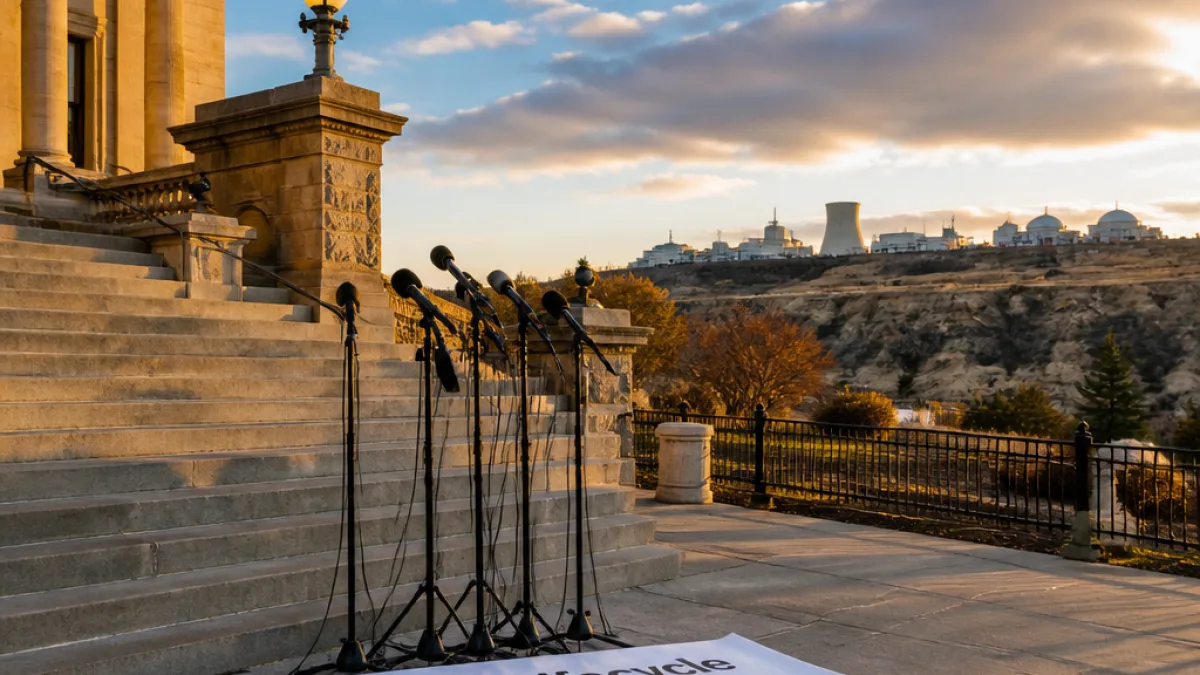
BOISE — Idaho lawmakers and nuclear industry proponents are making a public case for siting a proposed Nuclear Lifecycle Innovation Campus in the state, citing Idaho National Laboratory’s long record in nuclear research and safety as a central advantage.
State Sen. Dave Lent, R-Idaho Falls, pointed to what he described as a 75-year track record at Idaho National Laboratory, or INL, as evidence Idaho is uniquely prepared to host the U.S. Department of Energy project. Lent, a retired nuclear facility training manager, emphasized workforce, facilities and technical expertise already centered at INL.
“If you look at all of the aspects, and that includes the workforce, the location, facilities and expertise, we are a standout (potential host site) there,” Lent said in an interview with the Idaho Capital Sun.
What the campus would mean for Idaho
Federal officials will decide which states — up to three — will be selected to host the campuses. If Idaho is chosen as one of those states, it would carry responsibilities that critics warn are substantial: accepting and storing spent nuclear fuel and radioactive waste from reactors around the country.
State Rep. Monica Church, D-Boise, who has publicly opposed the proposal, has highlighted figures circulated in discussions about the plan: if three sites are selected, each host state could be asked to take on roughly 33,000 tons of spent nuclear fuel and radioactive waste.
Supporters counter that INL staff already work on many aspects of the nuclear lifecycle — from taking spent fuel to research on reprocessing and creating new fuel forms — which they say positions Idaho to advance nuclear innovation while managing associated risks.
Local leaders, statewide debate
Gov. Brad Little has been engaged in the negotiations and has said protection of the Snake River aquifer is “nonnegotiable,” according to reporting from the Idaho Capital Sun. The campus discussions are unfolding amid competing priorities: economic development, energy policy, environmental safety and local public concern about long-term waste storage.
The controversy has attracted attention across the state. Proponents emphasize job creation, research funding and the continuation of INL’s existing work. Opponents point to the scale of possible waste storage commitments and potential consequences for Idaho’s environment and water resources.
- Proponents’ points: INL’s long experience, existing workforce, technical facilities and potential economic benefits.
- Opponents’ points: The requirement to accept and store large quantities of spent nuclear fuel and radioactive waste; risk to aquifers and local environments.
Numbers and context
Public accounts of the proposal emphasize the scope of the federal project. The most widely cited figure in current debates is the approximate 33,000 tons of spent fuel and radioactive waste that each host state might accept if three campuses are chosen. Advocates stress that INL already conducts much of the research and testing across the nuclear lifecycle, which they argue reduces the incremental risk of adding the campus here.
| Item | Detail |
|---|---|
| INL track record | 75 years of research, safety and innovation |
| Potential waste per host state | Approximately 33,000 tons if three states are selected |
What comes next
The story is part of a three-part examination by the Idaho Capital Sun of the proposal. Earlier reporting focused on Gov. Little’s role and priorities; a concluding installment will examine opponents’ concerns in more depth. Federal decision-making timelines and the terms of any campus agreements will shape whether Idaho ultimately becomes a host state.
For Idaho residents and elected officials, the conversation centers on whether the state’s history of nuclear work at INL justifies accepting the responsibilities tied to hosting a federal nuclear lifecycle campus — and whether safeguards proposed by state leaders will be adequate to protect Idaho’s water and communities.
State lawmakers and executive officials say the process of informing and consulting with the public will be essential as negotiations continue.
This reporting relied on interviews and public statements by state lawmakers and reporting from the Idaho Capital Sun.
















