
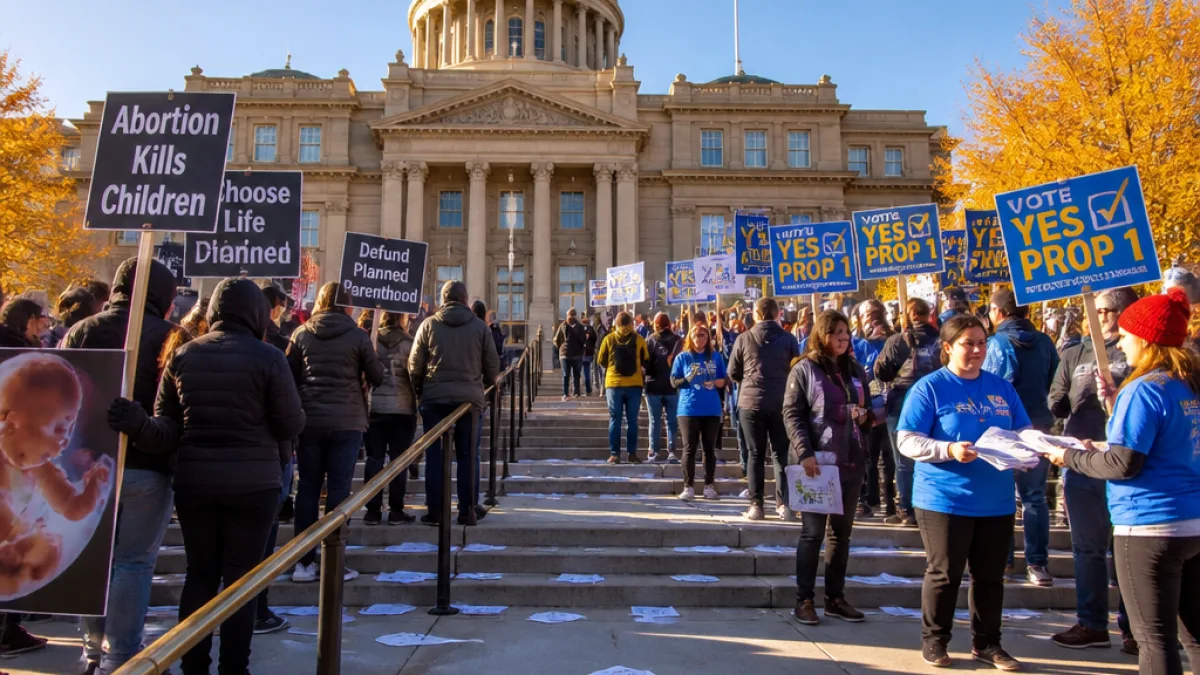
As Idaho heads into the Nov. 3 election, abortion policy has become a central issue for statewide voters. The state currently enforces one of the country's strictest abortion laws, allowing the procedure only when the pregnant person's life is at risk or when the pregnancy is the result of rape or incest. A citizen-initiated measure on the ballot this fall seeks to change that framework, putting the candidates' positions under close scrutiny.
Where the top contenders stand
Gov. Brad Little, the Republican incumbent, maintains the position he formalized as governor: he opposes expanding abortion access beyond current exceptions. In 2020, Little signed legislation that effectively banned most abortions in Idaho, preserving only exemptions for life endangerment, rape and incest. His view aligns with the state's current restrictive legal regime.
Terri Pickens, the Democratic challenger and an attorney, supports broader abortion access and has said the state should not tell medical professionals how to manage family planning. On her campaign website she framed the issue as a matter of personal autonomy and medical decision-making:
"women, not the government, should be able to make their own choices related to family planning. The state has no business telling doctors what to do."
John Stegner, running as an independent and a retired Idaho Supreme Court justice, also supports expanding access. Stegner explicitly backs Proposition 1, the citizens' initiative that would constrain state regulation of abortion until after fetal viability and protect care in medical emergencies.
What Proposition 1 would do
The ballot measure at the center of debate would largely restrict the state's ability to regulate abortion before a fetus is viable, while still permitting regulation afterward except in situations that threaten the patient’s health. Supporters say the change would restore access curtailed by recent state laws; opponents argue it would roll back protections for unborn life.
- Election date: Nov. 3
- Current Idaho law: Abortion banned except to save the life of the pregnant person or when pregnancy resulted from rape or incest
- Ballot question: Proposition 1 seeks to limit state regulation of abortion until fetal viability and to preserve exceptions for medical emergencies
How candidates’ stances could affect voters
Abortion access has emerged as a mobilizing issue for Idaho voters on both sides. For proponents of expanded access, the governor's office can shape how state agencies implement health policy and defend or challenge ballot measures in court. For opponents of expanded access, the governor can sign or veto legislation and direct how strictly state law is enforced.
Because Idaho’s current law is among the nation's most restrictive, a statewide shift through Proposition 1 would represent a substantial legal and practical change for providers and patients. The measure's outcome could influence future litigation and regulatory decisions in Idaho.
Quick comparison
| Candidate | Party | Position on abortion access |
|---|---|---|
| Brad Little | Republican (incumbent) | Opposes expanding access; signed 2020 law limiting abortions to life-threatening cases and rape/incest |
| Terri Pickens | Democrat | Supports expanding access; emphasizes patient and doctor decision-making |
| John Stegner | Independent | Supports Proposition 1 to broaden access; favors limiting pre-viability regulation |
What voters should know
Idaho voters casting ballots on Nov. 3 will not only choose a governor but will also decide whether to amend the state's approach to reproductive health through Proposition 1. The measure's passage or failure will have immediate legal and medical implications across the state. Voters looking for more information should consult official election materials and read the full text of the initiative to understand specific language and exceptions.
As the campaign enters its final weeks, candidates are framing the contest not only as a standard partisan race but also as a referendum on the role of state government in personal medical decisions. How Idahoans respond at the ballot box will shape reproductive health policy here for years to come.
















