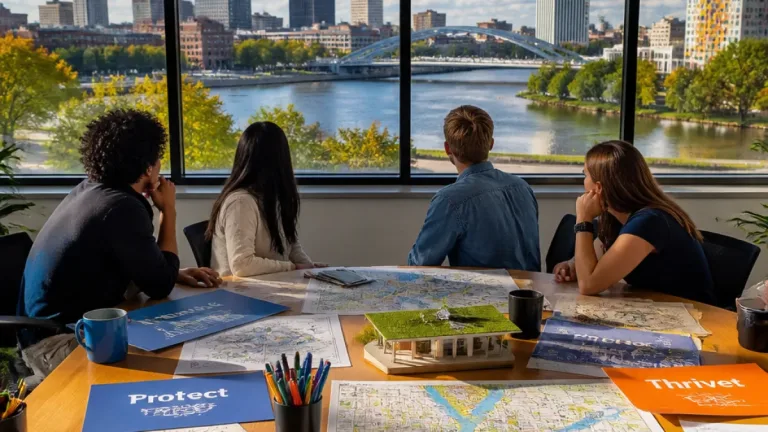
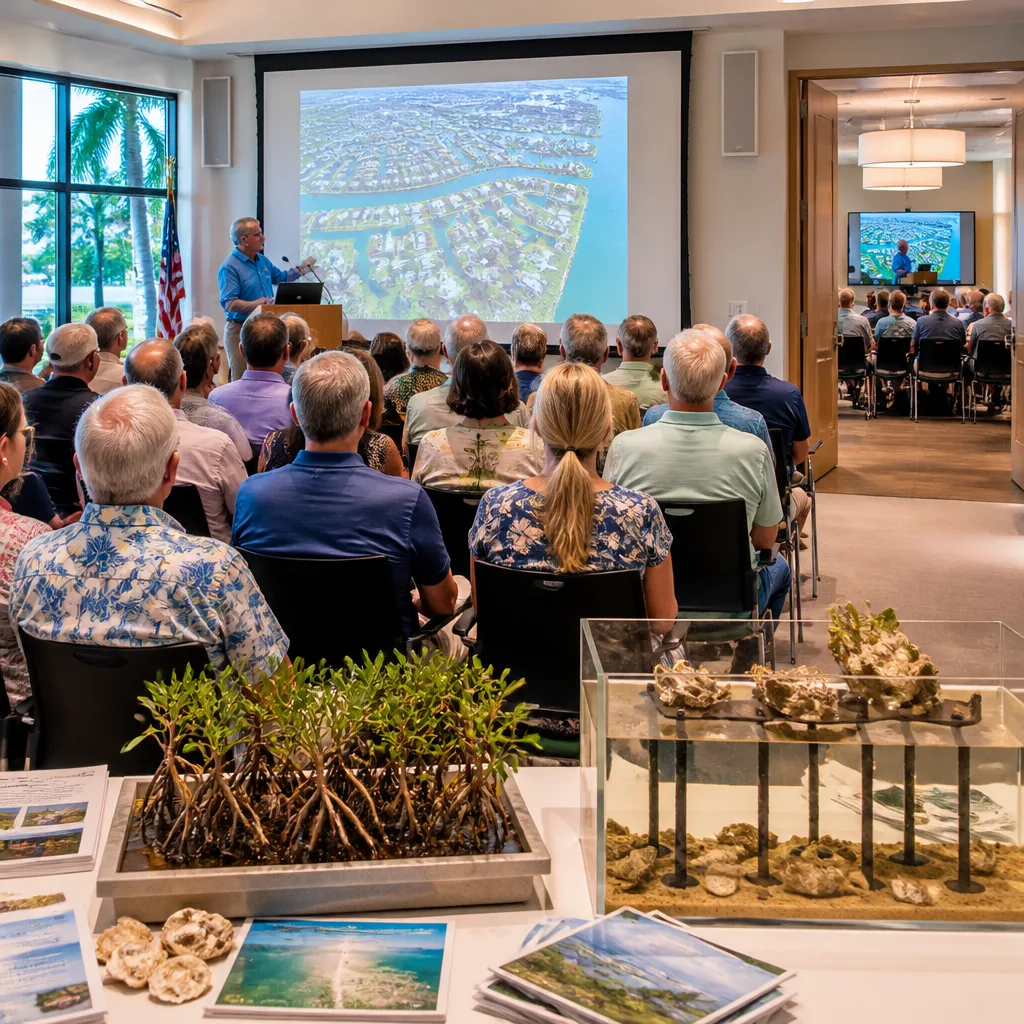
More than 200 people attended a symposium on canal science in late August that aimed to translate research into local action to address water-quality and habitat concerns in Southwest Florida’s dense network of residential canals.
Symposium drew academic and community experts
The Coastal Habitat and Water Quality Initiative, known as C-HAWQ, convened the session at the Collier County Public Library Marco Island Branch on Aug. 28, where overflow guests were routed to a sister site with a live stream. Organizers said the event sought to close knowledge gaps and promote science-based, nature-focused approaches to improving waterways that frame much of the region’s developed shoreline.
Seven presenters and panelists represented a mix of universities, research reserves and local extension services:
- Dr. Holden Harris, University of Florida
- Dr. Christopher Stallings, University of South Florida College of Marine Sciences
- Dr. Mauricio Arias, University of South Florida Department of Civil and Environmental Engineering
- Dr. David Kaplan, University of Florida Department of Environmental Engineering Sciences
- Logan Davies, C-HAWQ team
- TJ Snopkowski, Friends of Rookery Bay National Estuary Research Reserve
- Mike Sipos, marine extension agent, Florida Sea Grant UF/IFAS/Collier County Extension
Local context: an extraordinary density of canals
C-HAWQ Vice Executive Director Emily Begin opened the program with data intended to underscore the scale of the problem and the need for coordinated research and management. According to the figures presented, Florida has roughly 4,500 miles of residential canal shoreline. Marco Island — where the symposium was held — accounts for 119.6 miles of that shoreline, with more than 70 miles of canal waterways cutting through the city’s developed areas.
“Southwest Florida has the highest concentration of residential canals on Earth,”
Begin framed C-HAWQ as a nonprofit founded to advance scientific understanding of residential canals and to support local governments in seeking solutions that balance development, habitat and water quality.
Goals: education, research priorities and nature-based strategies
Organizers said the meeting was designed to inform residents and officials about what is known — and not known — about how canals affect coastal ecosystems, water chemistry and neighborhood resilience. Presentations covered scientific studies, engineering perspectives and restoration approaches from universities and regional research organizations.
Attendees also were offered local refreshments, including coffee from a community roaster, and the event included opportunities to ask questions of the panelists and to learn about next steps for applied work in the region.
| Metric | Value |
|---|---|
| Florida residential canal shoreline | 4,500 miles |
| Marco Island residential canal shoreline | 119.6 miles |
| Marco Island canal waterways | over 70 miles |
Speakers included faculty from the University of Florida and the University of South Florida, representatives of the Rookery Bay research reserve, and extension staff with Florida Sea Grant — a mix intended to bridge basic research, applied engineering and community outreach.
The symposium illustrates how coastal communities are increasingly seeking localized scientific guidance to manage altered shorelines and degraded water quality. By bringing experts and residents together, C-HAWQ aimed to build momentum for targeted studies and for implementation of nature-based solutions to improve canal health and resilience.
Organizers indicated the meeting was the start of ongoing efforts to map knowledge gaps and support local governments as they evaluate remediation and restoration options for the densely canalized parts of Southwest Florida.