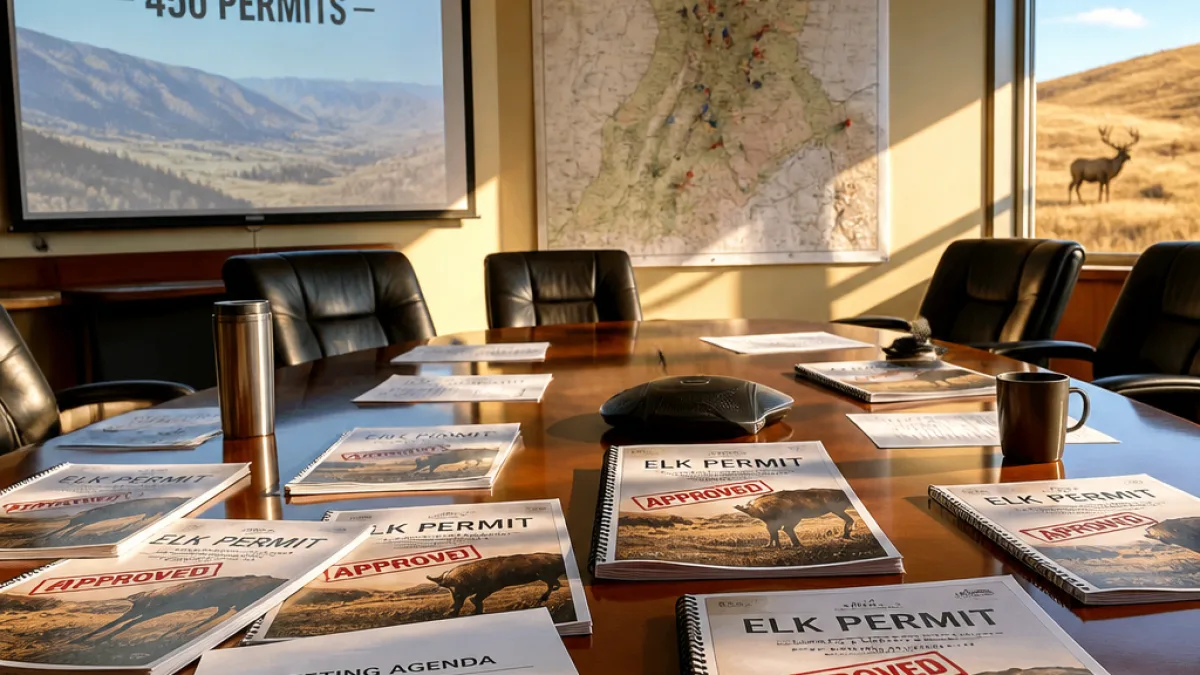
The Utah Wildlife Board unanimously approved 450 additional elk hunting permits during its Aug. 20 meeting, a move officials say is aimed at easing pressure on rangelands and reducing the risk of starvation and conflict as the state endures an intense drought.
Why officials expanded permits
State wildlife managers told the board the decision is a conservation response to reduced forage availability statewide. With reservoir storage at about 32% of typical levels, vegetation productivity across many elk ranges has declined, leaving less food for large herbivores that rely on seasonal growth to survive.
Mike Wardle, big game coordinator for the Division of Wildlife Resources, framed the permit increase as a way to be “responsive to those changing conditions” and to work cooperatively with state land managers and private landowners who are managing impacted landscapes.
"In years like this, where we have severe drought and it reduces forage availability, we want to be responsive to those changing conditions so that we're being good partners with the state agencies and the land owners that are really managing these landscapes," said Mike Wardle.
Where elk numbers are above objectives
Wildlife officials base permit decisions on annual population objectives — estimates of how many animals the land and communities can sustainably support. This year several management units exceed those objectives, prompting the extra tags.
| Management Area | Estimated Elk | Over Objective |
|---|---|---|
| Nebo | 2,750 | 550 |
| Wasatch West | — | 400 |
Officials said those estimates indicate more animals are occupying certain ranges than managers consider sustainable under current conditions.
Scientific context and management tradeoffs
Wildlife researchers say permit adjustments during dry years are a common tool. David Stoner, a wildlife extension specialist and associate professor at Utah State University, told the board managers weigh two central questions when setting harvest levels: "How many elk can we grow?" and "How many elk is society willing to tolerate before the conflicts become too much?"
Stoner also emphasized a basic ecological reality: wild ungulates depend entirely on available vegetation. In prolonged drought, reduced plant growth leads to poorer nutrition for cows and calves, increasing the likelihood of calf mortality and broader population declines.
Earlier research by Stoner and colleagues found drought in the Western U.S. diminished good habitat by roughly 10–18%, a decline that translates directly into less forage and fewer viable seasonal habitats for elk and other species.
Local impacts and tensions
Expanding permits can reduce the number of elk that rely on limited forage, which in turn can lessen competition for food and lower the risk of widespread malnutrition. It also addresses conflicts that arise when elk congregate near agricultural lands, private property and residential areas in search of food.
- Landowners and farmers may see fewer crop losses and less property damage if herd sizes drop.
- Hunters receive more opportunity in affected units, though the increase is targeted to areas where populations exceed objectives.
- Wildlife managers hope to avert a larger-scale die-off that would have long-term ecological and economic consequences.
Officials cautioned that recent monsoon moisture has provided some relief, but they stressed that short-term precipitation does not erase the multi-season impacts of drought. The Division of Wildlife Resources will continue monitoring herd condition and habitat trends and adjust management actions as needed.
What hunters and the public should know
The newly approved permits are additional to previously issued tags and are intended to be applied where populations clearly exceed management goals. Hunters should consult the Division of Wildlife Resources for details on which units received extra tags, applicable season dates and specific rules or restrictions.
For landowners, the division encourages reporting of conflict situations and continued cooperation with wildlife staff as officials implement adaptive management strategies to balance animal health, public safety and habitat sustainability.
As Utah faces continued arid conditions, wildlife managers say such permit adjustments will remain one of several tools used to respond to changing landscape conditions and to try to maintain resilient wildlife populations in a warming, drying West.
Spencer Holloway is a state correspondent covering natural resources and public policy for WE NEWS.