
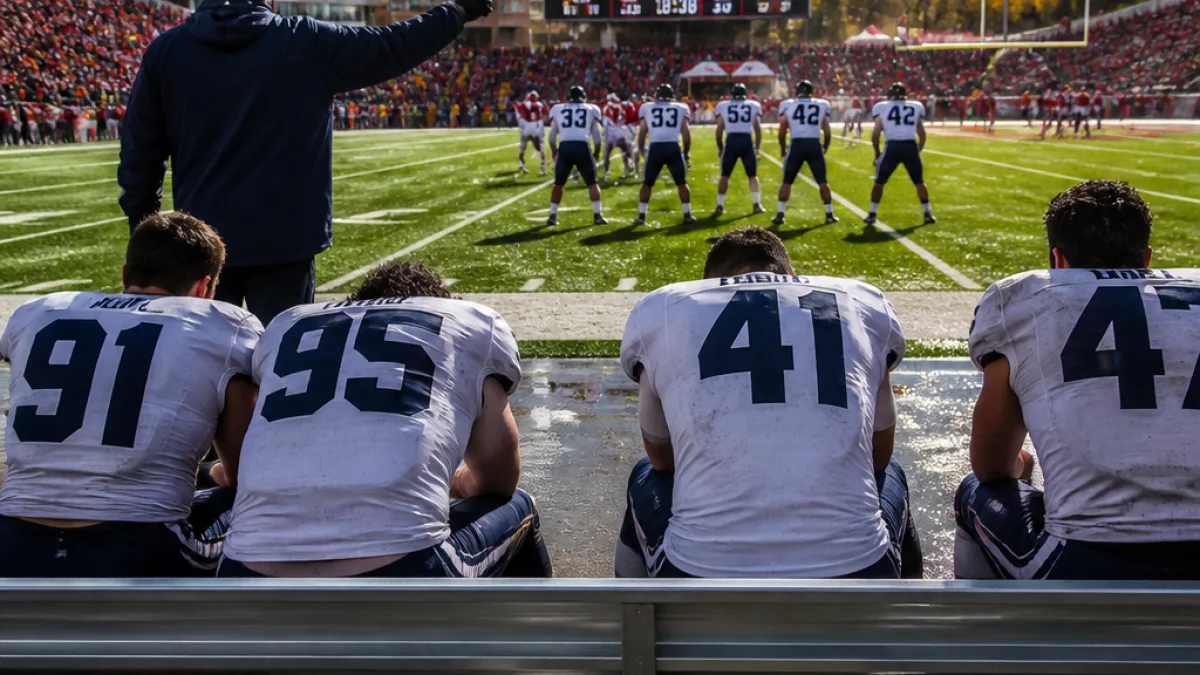
LOGAN — Utah State’s offensive woes deepened Saturday as the Aggies were blanked 33-0 by Utah, a defeat that underscored lingering problems at quarterback, along the offensive line and in the ground game.
Conservative game plan, costly execution
Throughout the contest, Utah State repeatedly opted for field-position decisions rather than aggressive attempts to sustain drives. The Aggies faced fourth-and-manageable between Utah’s 35- and 45-yard lines on three occasions and punted each time. Late in the game, on fourth-and-1 at the Utah 7, coach Bronco Mendenhall elected to go for it; the play lost a yard and turned the ball over on downs.
"I thought their defense was playing really well," Mendenhall said. "Their offense is super dynamic, and there’s a team that could score from anywhere super fast, so I chose to play field position, and I believe it was the right call for our team at this time today against that team."
Mendenhall defended his choices as attempts to limit Utah’s explosive scoring potential, saying the team was attempting to win by preventing big plays rather than matching them offensively.
Quarterback and turnover issues
The Aggies’ two primary signal-callers this season have yet to find a reliable rhythm. McCae Hillstead, who was named starter in April but missed Utah State’s Week 2 game, returned to availability after missing time. The staff started Grady Brosterhous against Utah after his strong effort the previous week, according to Mendenhall.
Combined, Hillstead and Brosterhous have accounted for only four touchdowns and thrown eight interceptions so far this season. That turnover margin has placed additional strain on a Utah State offense that has struggled to sustain drives and generate consistent scoring opportunities.
Running game and line play
Beyond quarterback inconsistencies, Utah State has been unable to establish a meaningful rushing presence. The lack of a true running game amplified pressure on the offense to convert in short-yardage situations and to overcome a Utah defense the coaching staff described as opportunistic and fast to close down space.
Mendenhall pointed to the defensive performance as a reason for conservative choices on fourth downs, but the Aggies’ inability to move the chains also limited his options.
Early-season context and outlook
Saturday’s loss follows a difficult start to the season for Utah State, coming after a defeat to Idaho State and other early tests that have exposed roster weaknesses. The team entered the schedule knowing it would face challenging opponents, but the manner of the losses — especially a shutout at home to a rival — has raised concerns among supporters about how quickly the offense can recover.
Looking ahead, Mendenhall signaled the quarterback situation remains fluid. He noted McCae Hillstead is now available and suggested the staff will evaluate options moving forward.
Key game figures
- Final score: Utah 33, Utah State 0
- Quarterback TD-INT (combined): 4 TDs, 8 INTs
- Critical fourth-down choices: Three punts on fourth-and-manageable in opponent territory; failed fourth-and-1 at the 7-yard line in the fourth quarter
| Area | Issue |
|---|---|
| Quarterback play | Inconsistent, multiple interceptions |
| Running game | Unable to establish yardage; limited production |
| Coaching decisions | Conservative fourth-down strategy; late failed attempt at goal-line |
The loss leaves Utah State searching for answers on offense as the season progresses. If the Aggies are to salvage their early slate, they will need cleaner execution from the quarterbacks, improved protection from the offensive line and a more consistent rushing attack that can change the calculus on fourth down and relieve pressure on the passing game.
For now, the stark 33-0 margin serves as a reminder of how quickly a season can be tilted by turnovers and missed opportunities, and it gives the coaching staff a short list of priorities to address before the next game.

















