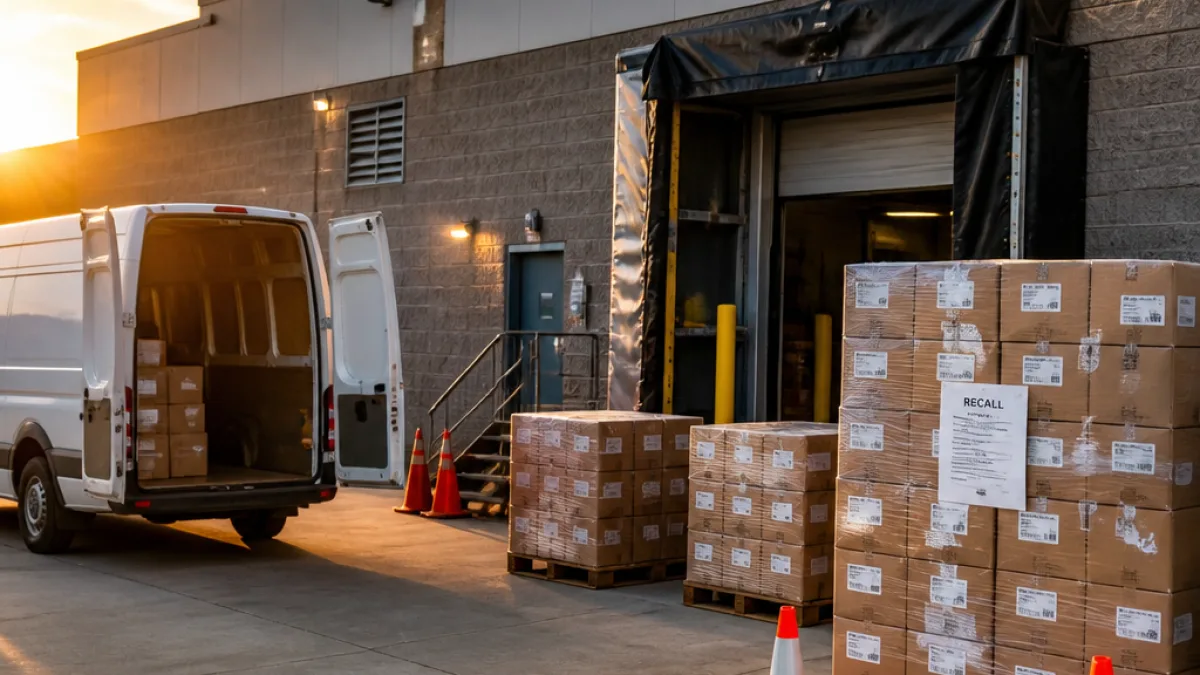
MARION, N.C. — Baxter Healthcare on Aug. 25 initiated a voluntary recall of two lots of 0.9% sodium chloride injection manufactured at its North Cove facility just outside Marion after the company and federal regulators identified possible particulate contamination in the solutions.
Health risk and regulatory notice
The Food and Drug Administration cautions that particulate matter in injectable solutions can be dangerous. The agency has warned that particulates introduced into the bloodstream can contribute to clotting and may cause severe organ injury or death in patients who receive contaminated products.
“Particulate matter in injectable products can cause blood clotting, which can lead to permanent organ damage or death.”
Baxter said it launched the recall in coordination with the FDA after identifying potential fiberglass particulates in the affected lots. As of Sept. 1, the manufacturer had not received reports of adverse events tied to the recalled shipments.
Scope of distribution and product details
The recalled saline was packaged in 500 mL VIAFLEX plastic containers, with 24 units per case. According to the FDA notice, the lots were shipped to health-care providers between July 31 and Aug. 3, 2026, and were distributed across the Carolinas and Georgia as well as Florida, Illinois, Indiana, Louisiana, Maryland, New Jersey, Nevada, New York, Ohio, Texas and Virginia.
| Product code | Description | Lot number | Expiration date | NDC |
|---|---|---|---|---|
| 2B1323Q | 0.9% Sodium Chloride Injection, USP, 500 mL VIAFLEX | Y495523 | Oct. 31, 2027 | 0338-0049-03 |
| 2B1323Q | 0.9% Sodium Chloride Injection, USP, 500 mL VIAFLEX | Y495523A | Oct. 31, 2027 | 0338-0049-03 |
Guidance for health-care providers and facilities
Hospitals, clinics and other health-care facilities that received the affected lots have been instructed to stop using the product immediately and to follow their established recall procedures for return and disposal. Baxter has provided a customer service line for provider questions and coordination:
- Baxter Healthcare Center for Service: (888) 229-0001
- Hours: 7 a.m. to 6 p.m. Central daylight time, Monday–Friday
Health-care purchasers should check inventory against the lot numbers listed in the FDA advisory and segregate any units until they can be returned or appropriately destroyed under institutional protocols. Facilities that suspect they have administered product from the recalled lots should follow internal incident reporting procedures and notify their state health department as required.
Local manufacturing site and broader context
The North Cove manufacturing campus, located near Marion in McDowell County, produces a range of intravenous solutions and other medical supplies. The flash recall underscores how a problem at a regional production facility can ripple outward across many states because of the centralized distribution network hospitals rely on for essential fluids.
Particulate contamination of injectables is a recognized safety concern. Even small particles such as fiberglass can present hazards when delivered directly into a patient’s bloodstream, potentially blocking small vessels or triggering inflammatory responses. The FDA reviews recalls and works with manufacturers to determine root causes and corrective actions; at this stage, Baxter and the agency are focused on containment and notification.
What patients should know
Patients who received intravenous saline in a hospital or clinic between July 31 and Aug. 3 should not assume they were exposed to the affected lots; facilities keep lot-level records and can confirm what was used during care. Anyone who believes they experienced an unexpected or unexplained reaction after receiving IV fluids should contact their health-care provider promptly.
Local and regional providers will continue to monitor the recall and the company’s follow-up actions. WE NEWS will update this report if Baxter or the FDA releases new information regarding the investigation, additional affected lots, or reports of adverse events.
Latoya Simmons is the state correspondent for WE NEWS covering health and regulatory developments in North Carolina.