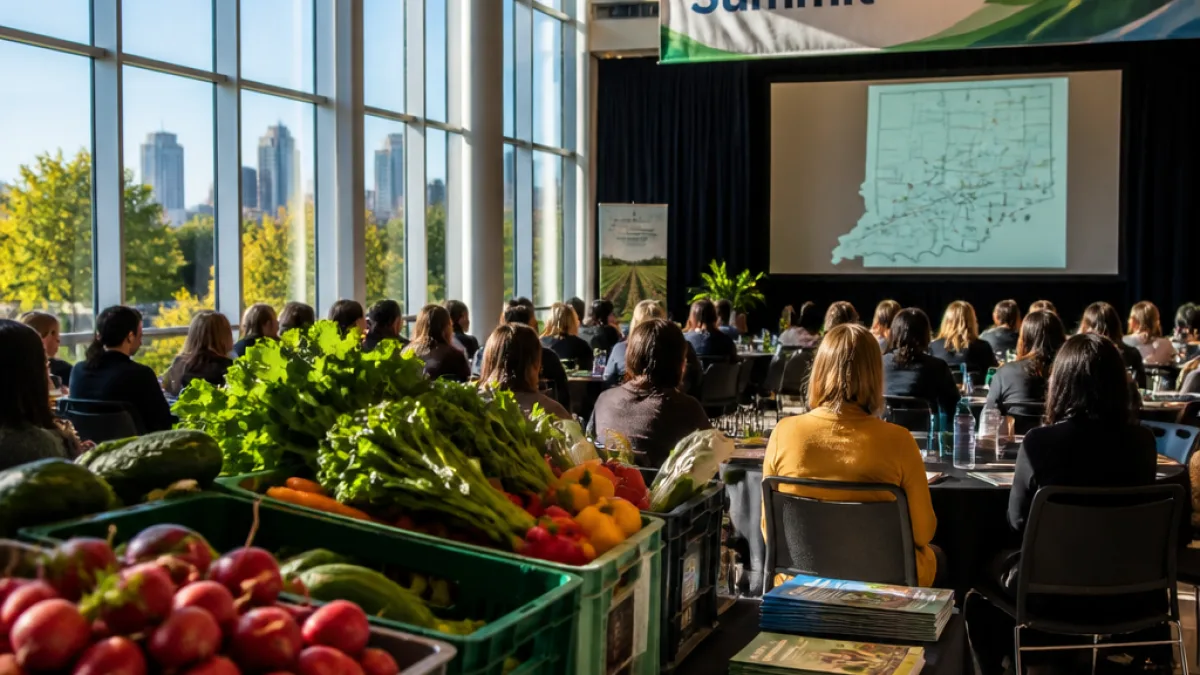
INDIANAPOLIS — State leaders, nonprofit directors, farmers and faith-based organizations convened Wednesday for the second annual Indiana Hunger Summit to confront a growing problem affecting roughly 1 million Hoosiers.
Cross-sector approach aims to strengthen food system
The summit took place simultaneously in Indianapolis, Fort Wayne and Evansville, with participants emphasizing that addressing hunger requires action across the full food chain — from production to last-mile distribution. Organizers said the goal is to move beyond conversations and toward coordinated, measurable solutions that reach all of the state’s roughly 7 million residents.
Speakers represented a range of sectors including agriculture, business, education, health care and faith communities. They highlighted the need to coordinate resources, reduce waste, and expand access to nutritious food for families, seniors and children who are food insecure.
Farmers and food producers play a central role
Eric Pfeiffer, president of agricultural media network Hoosier Ag Today, stressed the centrality of farmers in the fight against hunger. He called on producers to contribute when possible, whether through donated produce or financial support tied to acreage.
"It all starts on the farm. That is where our food is made, grown. And it starts with the farmer," Pfeiffer said.
Pfeiffer noted that small contributions — such as dedicating an acre, donating imperfect produce, or redirecting proceeds — can be converted into protein and other staples distributed by food banks and pantries.
Removing stigma and connecting people to help
Heidi Spahn, founder of the Indiana Hunger Summit, said stigma can prevent people from seeking help and urged easier access to assistance. "Whatever the situation may be, nobody should ever feel ashamed to reach out and get help," she said, pointing to the network of food banks, pantries and community organizations across the state.
Faith-based organizations and community centers described the importance of trusted local partners in identifying need and delivering aid. Mark Hiehle of the Shepherd Community Center in Indianapolis said cooperation among groups multiplies impact.
"There are a lot of people that care and are wanting to work together to make a difference," Hiehle said. "As we do work hand in hand with each other, we can really make a difference in people's lives."
Practical strategies discussed at the summit
Participants discussed a range of practical measures intended to strengthen the food system and improve access:
- Encouraging farmer donations of surplus or cosmetically imperfect produce
- Redirecting proceeds from small acreage donations to purchase protein and other staples
- Expanding partnerships between producers and last-mile distributors such as food pantries
- Reducing stigma around using assistance programs and improving outreach
Organizers said success depends on turning the ideas raised at the summit into sustained programs and measurable outcomes, noting that short-term donations alone will not solve structural food insecurity.
Where the numbers stand
Organizers framed the summit as a statewide response to a persistent problem. The following table summarizes the key figures and focal points discussed by attendees.
| Metric | Detail |
|---|---|
| Hoosiers affected | Nearly 1,000,000 |
| State population referenced | About 7,000,000 |
| Summit locations | Indianapolis, Fort Wayne, Evansville |
Next steps and local impact
Speakers called for continued collaboration — especially between farmers and distribution networks — and said they will pursue pilot projects to test the most promising ideas. Expanding donor relationships, improving supply-chain logistics, and crafting targeted outreach to vulnerable populations are among the priorities mentioned.
For Hoosiers seeking assistance, organizers reiterated that local food banks and pantries remain available resources and that reaching out is encouraged. Summit leaders said they plan to publish follow-up materials outlining specific initiatives and metrics to track progress.
Addressing food insecurity in Indiana will require sustained commitment from public, private and nonprofit sectors. The summit underscored that while charitable donations remain important, long-term solutions depend on systemic improvements that ensure nutritious food reaches households across the state.