GARY — Ten days after violent storms swept through northwest Indiana on Aug. 11, thousands of residents in Gary remain without power, and frustration is mounting as families struggle to cool homes, preserve medicine and access basic supplies.
Widespread outages and mounting needs
Electricity has been out across much of Gary since the storms knocked down trees and power lines, leaving large parts of the city in darkness. The regional utility, Northern Indiana Public Service Co., said Friday that 43,400 of its customers were still without service, down from more than 300,000 in the immediate aftermath.
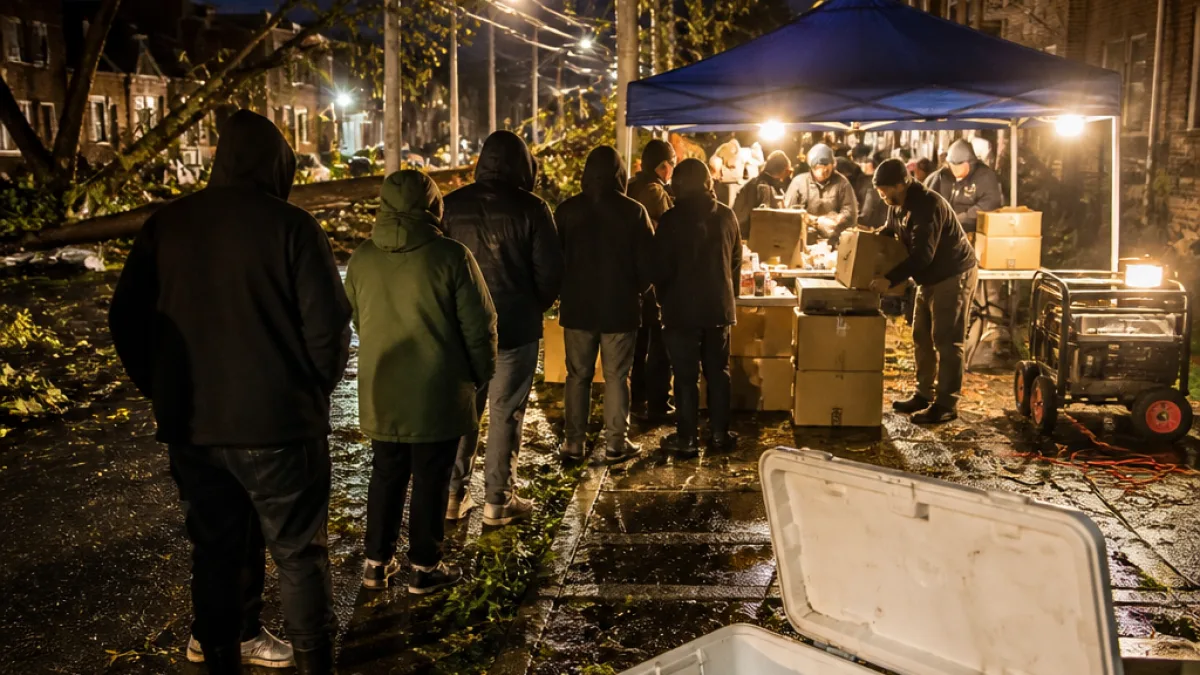
Residents described scenes of scarcity and distress. Grocery shelves have been empty for days, parents reported children missing school for more than a week, and people who rely on oxygen or refrigerated medicine said they were in dire circumstances.
“Every day I’m crying,”
said Renita Theus, 41, standing outside her darkened apartment where her car remained trapped beneath a fallen tree. “It’s hot in the house. I toss and turn and can’t sleep. I walked to the dollar store, and they’re all out of candles and batteries.”
Officials describe extensive damage, ask for expanded help
Local officials and state leaders say the scale of destruction is overwhelming crews working to restore service. Gary officials cautioned that cleanup could take months.
“It’s just widespread devastation throughout the city of Gary,” said Larry E. Tillman, chief of the fire department.
Gov. Mike Braun said he requested an expedited major disaster declaration from the Federal Emergency Management Agency to enable more federal resources and assistance to flow into the state. Earlier, the White House granted an emergency declaration for Indiana counties affected by the storms.
The state has activated a relief fund to provide emergency aid grants of up to $5,000 for affected residents.
Utilities promise continued work; timeline for restoration
NIPSCO acknowledged the scale of the task and said crews were working continuously but are still overwhelmed by damage. The company estimated that service would be restored to Gary by Tuesday, though pressure on available resources and additional weather could complicate that timeline.
| Metric | Figure |
|---|---|
| Customers without power (peak after storm) | More than 300,000 |
| Customers still without power (as of Friday) | 43,400 |
| State emergency grant amount | Up to $5,000 |
| Storm date | Aug. 11 |
Humanitarian impacts
The power loss has had immediate public-health ramifications. Insulin and other temperature-sensitive medicines have spoiled in warm refrigerators. People who depend on electrically powered oxygen systems reported being unable to refill or operate equipment, raising urgent health concerns.
Low-income neighborhoods in Gary are especially vulnerable: roughly one-third of residents live in poverty, which limits access to backup resources such as generators, hotel rooms or alternative transportation to reach cooling and charging centers.
- Food and water supplies are strained as local stores run low on essentials.
- Some families report missing school because buildings remain without power.
- Donations and relief supplies are arriving from outside the city, including private-sector contributions.
Private-sector and community response
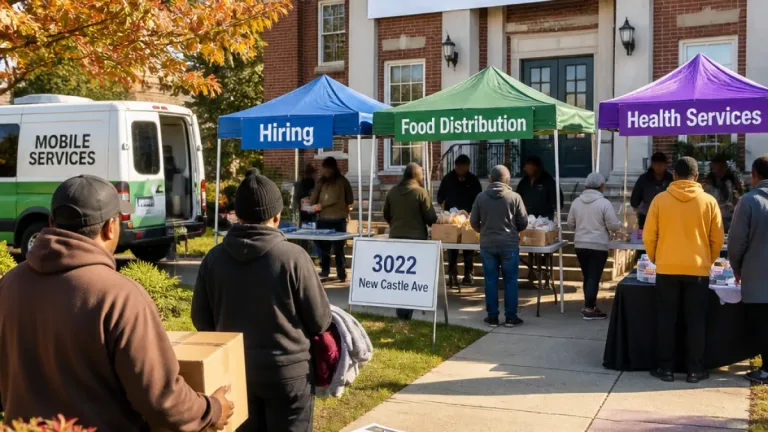
Donations of money and supplies have been directed to Gary from people and organizations outside the city. Retailers and contractors have mobilized to help with cleanup and relief; reports noted that a national chain, Lowe’s, had sent at least one truck to assist with the recovery effort.
Despite incoming aid, city leaders cautioned that the combined tasks of clearing fallen trees, repairing downed lines and restoring full service to affected neighborhoods is a large-scale operation that will take time.
What residents should know
Officials urged residents to follow updates from NIPSCO and local authorities, conserve battery power for medical devices if possible, and seek assistance from relief organizations and the state relief fund if their households qualify. Those dependent on life-sustaining medical equipment should contact local emergency services for guidance.
As crews continue restoration work, many in Gary remain in limbo — waiting for power, for cooler temperatures and for normal life to return. The coming days will test the speed of the coordinated response from utilities, local government and federal partners.
Trevor Lindqvist is the state correspondent at WE NEWS.