
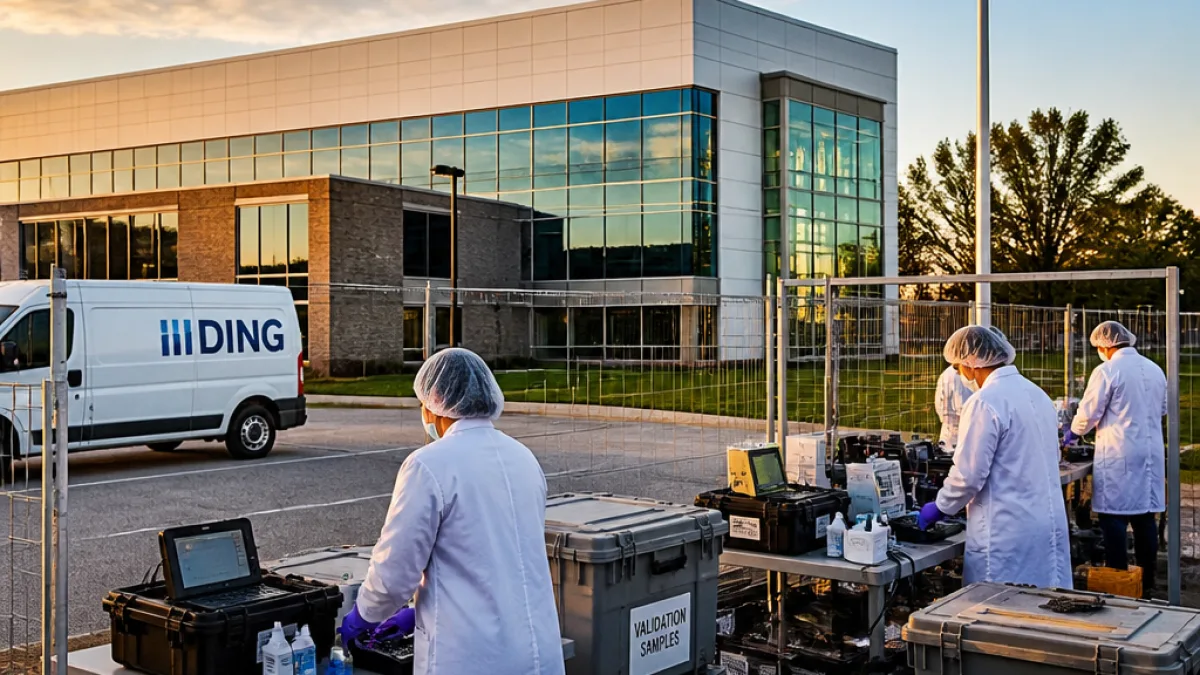
INDIANAPOLIS — The Defense Innovation Networking Group (DING), an Indiana nonprofit, was selected by two U.S. military programs to lead a national biotechnology validation effort, officials announced Monday.
What was chosen and why it matters
The effort is called the Validation of Emerging Defense & Detection Equipment for Readiness, or VEDDER. According to the announcement, DING will serve as lead for the initiative, coordinating work aimed at validating emerging technologies and detection equipment relevant to defense readiness.
The selection places an Indiana organization at the center of a federal effort to vet and accelerate biological detection and related technologies for military use — a role that could influence how new tools move from research labs to operational settings.
Scope and likely activities
The public description of VEDDER frames the effort around validation — a process that typically includes independent testing, performance benchmarking and assessment of equipment under conditions representative of intended use. While the announcement did not list specific projects or firms that will be involved, validation work generally helps decision-makers in government assess whether new systems meet standards for reliability, safety and effectiveness.
- Coordinate testing and evaluation of emerging detection equipment
- Provide independent validation to inform acquisition and deployment decisions
- Facilitate collaboration between technology developers, operators and government stakeholders
Those are common objectives for validation programs, and they underscore the potential value of a centralized initiative focused on defense-relevant biotechnology.
Local implications for Indiana
Bringing a federal validation program leadership role to an Indiana entity may have several local implications. For area entrepreneurs and research institutions, it could mean increased access to federal testing and evaluation pathways. For the broader innovation ecosystem, having a nonprofit positioned as a national convener can raise the profile of local bioscience and defense-adjacent firms.
Officials did not disclose details on funding, staffing or specific test sites in the announcement, so the timeline and scale of activities remain undefined. Additional information about partners, contracts and operational plans typically follows such selections as the program moves into implementation.
How validation fits into defense acquisition
Validation programs like VEDDER are meant to reduce risk in procurement and deployment. By producing independent evidence about a technology’s performance, validation can speed up adoption by giving military program managers and acquisition officials greater confidence in capability claims. That process also helps identify limitations or integration challenges that must be addressed before fielding.
| Organization | Role |
|---|---|
| Defense Innovation Networking Group (DING) | Lead organization for VEDDER |
| VEDDER | Validation initiative for emerging defense & detection equipment |
For Indiana stakeholders, the selection highlights the state’s growing involvement in national conversations about biotechnology, national security and technology transition. The full impact will depend on how DING structures partnerships with universities, private firms and federal labs and whether testing work is conducted within Indiana or at distributed facilities.
Officials from DING and the two military programs announced the selection Monday; further details are expected as the initiative moves from planning into operational phases. Communities and companies that follow federal research and development programs will likely watch for requests for proposals, calls for collaborators and public reporting on validation results.
This selection aligns with broader federal efforts to accelerate technology maturation and reduce barriers between innovators and users within the Department of Defense. For now, the announcement places an Indiana nonprofit on a national stage in an area — biotech for defense and detection — that has drawn heightened attention in recent years.
















