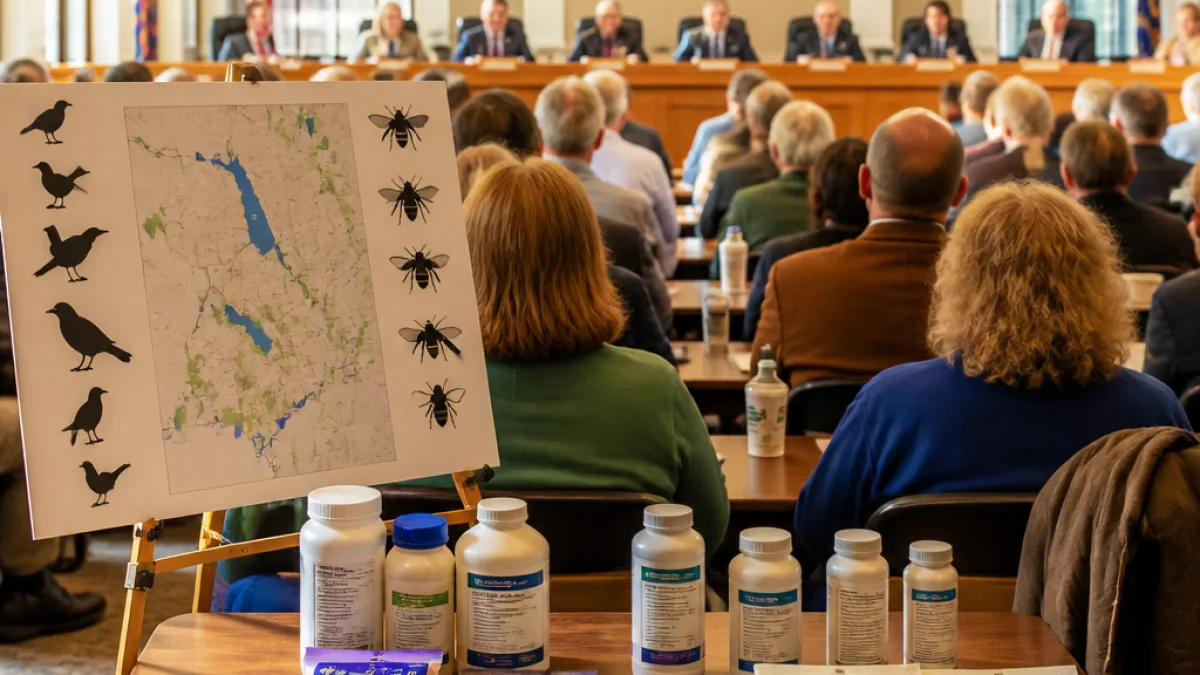
CONCORD — The New Hampshire Pesticide Control Board voted Monday to launch a formal rulemaking process that would impose stricter limits on two classes of pesticides — neonicotinoids and certain rodenticides — citing concerns about harm to birds, pollinators and aquatic ecosystems.
Board moves forward after public pressure
Board members' decision follows months of advocacy and scientific concern about the effects of these chemicals on biodiversity. Neonicotinoids, commonly called neonics, are systemic insecticides often applied to soil or used as seed coatings. Conservationists and some scientists say exposures can reduce bird body weight, impair reproduction and disorient animals, disrupting migratory patterns and food webs.
Wildlife protection advocates packed the meeting to hear the board's proposed rule language, according to attendees. The proposal stops short of some of the stricter measures advanced earlier this year in the Legislature, but it would add regulatory controls beyond the status quo.
“It’s a step in the right direction, but I don’t think it should be the last step,”
said Serena Chenery, advocacy coordinator with the American Bird Conservancy and a Baltimore-based attorney. Chenery also urged stronger protections for lakes, noting concern about pesticide runoff into waterways.
Context: bills, delays and the path ahead
Earlier in 2026, the Legislature referred House Bill 1431-FN — sponsored by Wolfeboro Republican Rep. John MacDonald — to interim study rather than enacting immediate restrictions. That legislative action laid groundwork for the board's proposed rules, though the board's current plan does not adopt every provision that HB 1431-FN originally sought.
Under the board’s process, the next steps include drafting specific regulatory language, public notice and further public comment before any final rule is adopted. The board has not set a final timeline for when a revised rule would go into effect.
Why advocates want change
Neonicotinoids are persistent in the environment and can move through runoff into lakes and wetlands, where they may affect aquatic insects and the birds that feed on them. When birds ingest neonic-treated seeds, advocates say, the consequences can include behavioral disorientation and physiological harm that reduce survival and reproductive success.
Chenery and other advocates emphasized that state-level action is more feasible than waiting for federal restrictions, which can be slow and politically fraught. They framed the board’s vote as an important incremental move toward what they called “common sense pesticide policy.”
What the proposal would cover
Board members signaled their intent to address two categories of chemicals. While the precise regulatory language is pending, the focus is on limiting where and how neonics are applied and tightening controls on certain rodenticides that pose secondary poisoning risks to wildlife.
| Chemical class | Primary concern |
|---|---|
| Neonicotinoids | Harm to pollinators, birds; runoff into lakes and wetlands |
| Rodenticides | Secondary poisoning of raptors and other predators |
Impacts and practical information for residents
For farmers, landscapers and homeowners who use pest-control products, proposed changes could affect application methods, timing and allowable locations. The board’s process will include opportunities for public comment and stakeholder input, and officials have said they intend to work through municipalities and agricultural groups as they draft rules.
Advocates who attended Monday’s meeting called for further limitations, including restricting applications near water and curbing treatments during sensitive periods for pollinators. State regulators have not yet specified whether the rule will ban certain uses entirely or instead require buffer zones, labeling changes or other controls.
- Board voted to begin rulemaking on neonics and rodenticides.
- Proposal builds on, but is narrower than, an earlier legislative bill (HB 1431-FN).
- Next steps include drafting language, public notice and comment before any final rule.
The Pesticide Control Board's action reflects a growing string of state-level efforts across the country to address chemicals shown to harm wildlife. In New Hampshire, the debate now moves into rule-drafting and public hearings, where farmers, municipal officials, conservation groups and residents will have the opportunity to weigh in.
Authorities have not announced a schedule for publication of proposed rules or the dates for upcoming hearings. Residents interested in the process can follow announcements from the New Hampshire Department of Agriculture or the Pesticide Control Board for formal notices and comment periods.
— Bethany Sokolov, State Correspondent