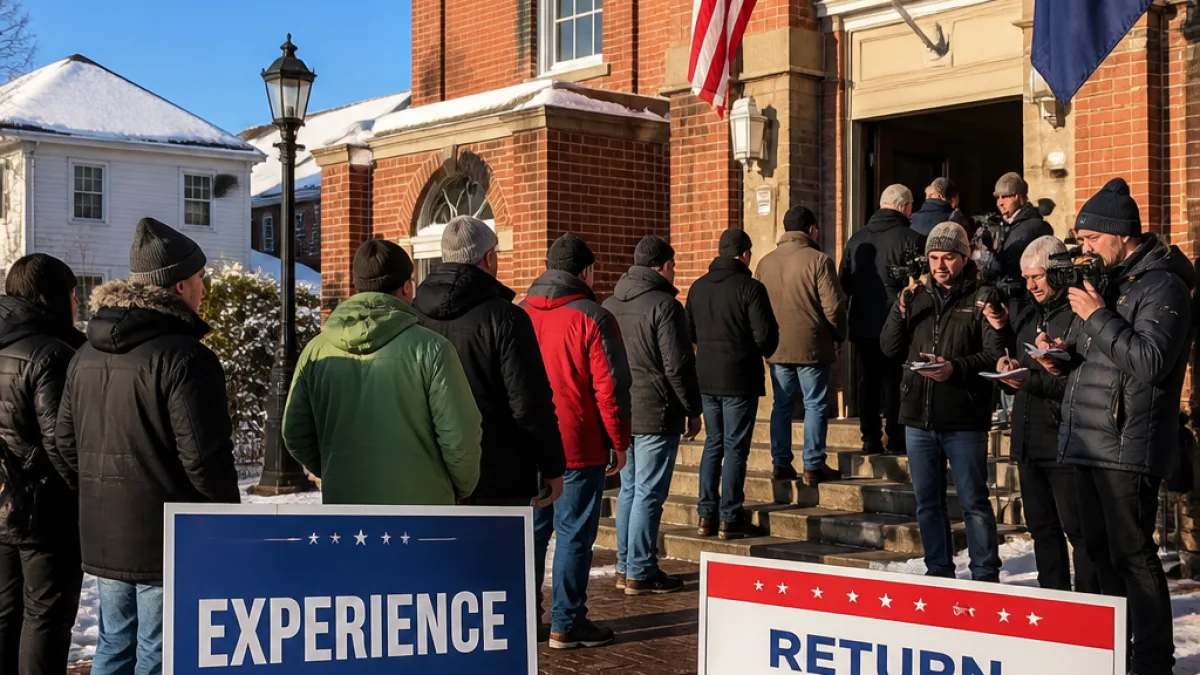
BERLIN, N.H. — New Hampshire Republican voters entered the primary this week faced with a choice between two veteran officeholders, a scenario that underscores the state's unusual tilt toward political experience in 2026.
Back-to-the-future GOP field
On the ballot in the eight-candidate Republican primary for U.S. Senate are a pair of comeback hopefuls whose names will be familiar to many Granite State voters: John E. Sununu and Scott Brown. Both men served in the U.S. Congress years ago and are courting support from primary voters who say stability and proven leadership matter more than fresh faces.
Voters in Berlin and elsewhere described a desire for representatives who can work across divides and restore a sense of competence in Washington. Paul Martino, a 57-year-old voter from North Hampton, told reporters he backed Sununu because he appears "smart, honest and civic-minded," adding that the state needs leaders who seek common ground rather than exploit differences.
"We need more people who try to find commonalities we can work off of versus differences we can use to be divisive," said Paul Martino.
How this race differs from national trends
While other parts of the country have seen insurgent candidates and anti-establishment rhetoric gain traction, New Hampshire's GOP primary has tilted toward experienced officeholders. That contrast will become sharper in November if Democrats nominate a younger or more progressive challenger, setting up a general election battle between generations and political styles.
Sununu, who will turn 62 this week, served three terms in the U.S. House and one term in the Senate before his 2008 defeat by Democrat Jeanne Shaheen. He has not been on a ballot in 18 years. The candidate’s return has drawn attention in part because of the recent popularity of his younger brother, Chris Sununu, who served two terms as governor and remains a well-known political figure in the state.
Brown, likewise, is a familiar name to voters; he served in the U.S. Senate previously and has positioned himself as a steady, experienced option for Republicans seeking a tested hand in Washington.
Comebacks are common this year
This contest is part of a broader pattern in which former members of Congress have attempted returns to elected office. Nationwide, 27 former members of Congress mounted comeback campaigns this cycle; only nine advanced to the general election. New Hampshire’s Republican primary reflects that trend but stands out because its leading contenders have been out of electoral politics for a longer span than many of the other comebacks.
| Statistic | Number |
|---|---|
| Former members who ran comeback campaigns (nationwide) | 27 |
| Those who advanced to general election | 9 |
| Candidates in NH GOP primary for U.S. Senate | 8 |
What voters are weighing
Supporters of the veteran candidates say name recognition and experience with legislative processes matter in a polarized Congress. They argue that former lawmakers bring relationships and institutional knowledge that can translate into results for New Hampshire.
Other Republicans in the state, however, continue to push for new leadership and different approaches, a dynamic that ensures the primary remains competitive despite the prominence of familiar names. The state GOP electorate will ultimately decide whether they prefer the familiarity of Sununu and Brown or a fresh face who promises to shake up the status quo.
Implications for the general election
The outcome of the GOP primary has implications beyond party lines. Incumbent Democratic Sen. Jeanne Shaheen’s retirement has opened a rare open-seat contest in New Hampshire — a state that often produces tight races deciding control of the Senate. The general election match-up could present a stark contrast if Democrats nominate a younger or more progressive candidate, setting up a contest over experience versus change.
- Primary dynamic: Two well-known former senators are the frontrunners.
- Voter preference: Many GOP voters expressed comfort with experienced candidates.
- Statewide impact: The primary winner will face a likely competitive general election for an open U.S. Senate seat.
Polling and turnout in the primary will be closely watched by national and local observers. For New Hampshire voters, the decision marks a clear choice about the direction they want their party to take in a pivotal midterm year.
— Bethany Sokolov, State Correspondent, WE NEWS