
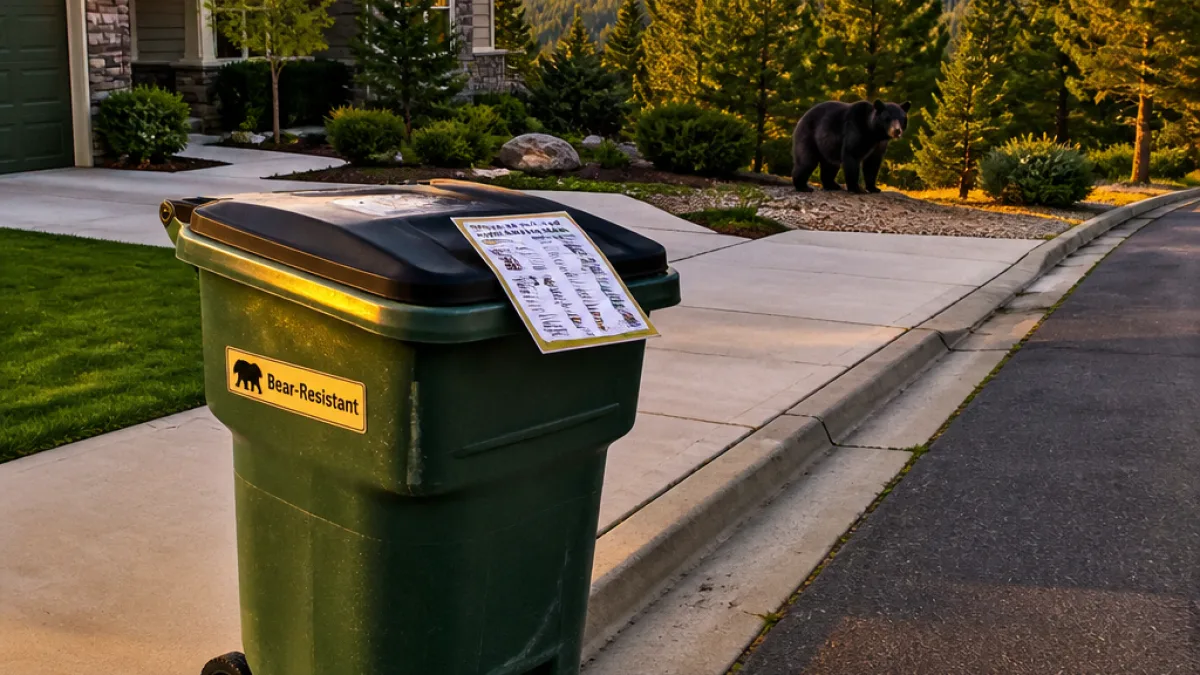
The City of Reno, in partnership with the Nevada Department of Wildlife (NDOW), this week rolled out the Bear-Resistant Cart Rebate Program, an effort aimed at reducing human–bear conflicts by limiting access to household garbage and other attractants.
Program details and who can apply
Under the program, the first 120 eligible City of Reno residents to register will receive a bear-resistant trash cart and will qualify for quarterly rebates applied to their Waste Management bill for one year. Residents may sign up through the City’s Bear-Resistant Cart Rebate Program registration page.
City officials are encouraging households in neighborhoods that have reported frequent bear or other animal activity to apply. The initiative is intended both to protect residents and to discourage bears from becoming food-conditioned, a common precursor to more dangerous interactions and potential removals of problem animals.
Where bear activity is most common in Reno
NDOW and city officials identified several areas of Reno that have experienced high levels of bear activity in recent months. Those areas include Caughlin Ranch; along the Steamboat, Last Chance and Lake ditches; south Reno west of Virginia Street; and along Mt. Rose Highway.
- Caughlin Ranch — residential neighborhoods near open space and drainage corridors.
- Steamboat, Last Chance and Lake ditches — riparian and ditch corridors that can funnel wildlife through populated areas.
- South Reno west of Virginia Street — expanding residential zones adjacent to natural habitat.
- Mt. Rose Highway corridor — interface between mountain habitat and suburban development.
| Neighborhood/Area | Noted for |
|---|---|
| Caughlin Ranch | Frequent bear sightings near residential lots |
| Steamboat, Last Chance, Lake ditches | Wildlife corridors passing through developed areas |
| South Reno (west of Virginia St.) | Increasing interactions as development expands |
| Mt. Rose Hwy corridor | Proximity to mountain habitat |
"According to NDOW, more than 90% of bear-related calls involve unsecured garbage and other household attractants."
Why the city is acting now
City and wildlife managers say preventing bears from accessing easy food sources is the most effective strategy for reducing dangerous encounters. NDOW statistics cited by the City show that unsecured refuse and other household attractants are involved in a majority of bear-related calls.
By subsidizing bear-resistant carts and offering rebates on waste collection bills, the City hopes to remove a primary attractant and thereby lower the number of human–wildlife conflicts. The assistance is focused on the first 120 qualifying applicants to allow the program to be distributed quickly to areas with the most pressing need.
What residents should do now
Officials advise residents in targeted and adjacent neighborhoods to:
- Sign up on the City’s Bear-Resistant Cart Rebate Program registration page to be considered for one of the initial 120 carts and rebates.
- Secure trash cans and other attractants such as pet food, birdseed and compost, especially on nights when bears are active.
- Report sightings and conflicts to local authorities and NDOW so patterns of activity can be tracked.
The program is one piece of the City’s ongoing efforts to balance residential growth with wildlife presence in Reno. Officials say the combination of targeted equipment subsidies and public education aims to protect both residents and wild animals while reducing costly and dangerous encounters.
Details on eligibility and enrollment are available on the City of Reno website and the Bear-Resistant Cart Rebate Program registration page.
















