
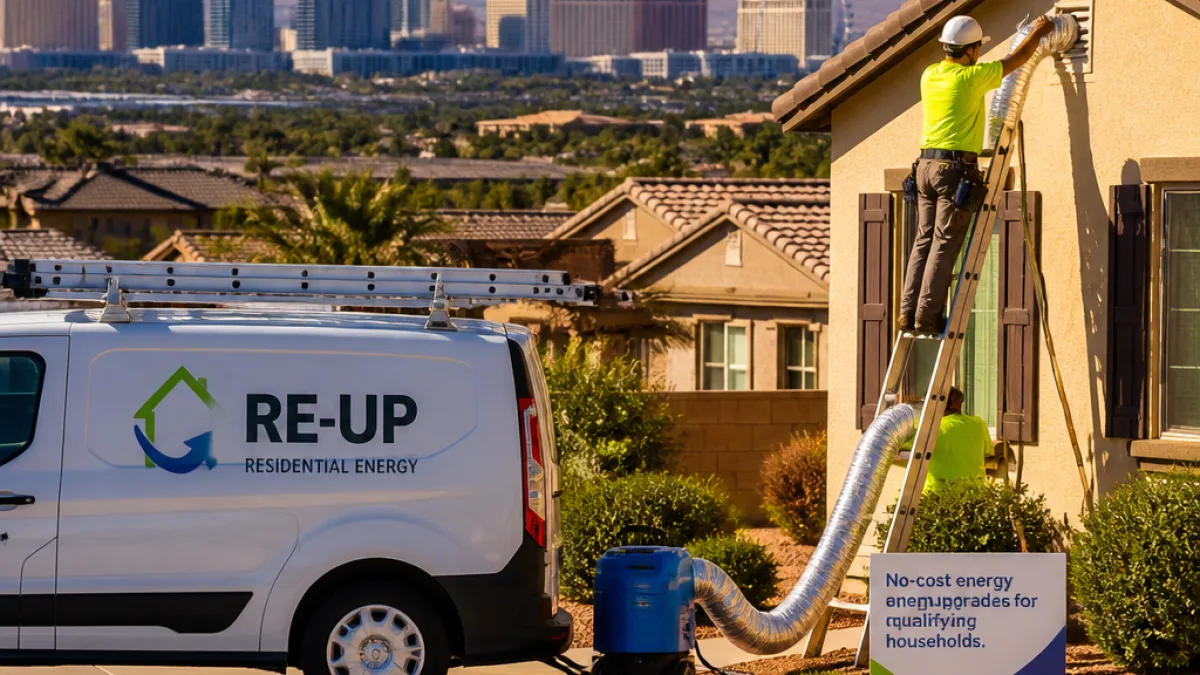
Google pledged $10 million on Tuesday to support energy innovation and affordability in Nevada, announcing an eight-figure Energy Impact Fund that will be split between immediate home‑upgrade programs and later investments the company said will be disclosed in late 2026.
Funding split, program focus
Under the plan, $5 million will go to the Nevada Clean Energy Fund to establish the Residential Energy Upgrade Program, known as RE‑UP. The remaining $5 million will be disbursed in late 2026; Google has not yet specified how that second tranche will be used.
RE‑UP is designed to provide no‑cost energy upgrades to households that fall into a coverage gap — those who earn too much to qualify for traditional weatherization assistance but lack resources to retrofit and modernize heating and cooling systems, insulation and other efficiency measures.
What the upgrades may include
The Nevada Clean Energy Fund and Google outlined a range of potential improvements that RE‑UP could deliver to eligible homes, including:
- Insulation and sealing of cracks and ducts
- Window replacements
- Air conditioning and heating system replacements
- Weatherization and pre‑weatherization work
- Critical health and safety upgrades
“Through this partnership with the Nevada Clean Energy Fund, we are helping put critical home upgrades within reach for more households, lowering energy costs, improving health and safety, and ensuring more communities share in the benefits of Google’s long‑standing commitment to Nevada,”
said Amanda Peterson Corio, Google’s global head of energy and power, in the company announcement.
Why Nevada matters to Google
Google has maintained a growing physical presence in Nevada in recent years, operating a data center in Henderson since 2019 and another in Storey County since 2021. The company framed its investment as part of a broader effort to be a “good neighbor” and to ensure local communities receive direct benefits from its operations in the state.
The Nevada Clean Energy Fund, created by legislation in 2017 to serve as the state’s green bank, will administer the RE‑UP program with the Google contribution. NCEF’s mission is to deploy capital and programs that accelerate clean energy adoption across the state.
“Nevada’s climate can be unforgiving. Whether it’s extreme summer heat in the south or harsh winter conditions in the north,”
said Kirsten Stasio, CEO of NCEF. She emphasized that outdated systems and leaky homes can strain household budgets and harm family well‑being, particularly among vulnerable populations.
Targeted households and local impact
NCEF officials say RE‑UP will prioritize low‑ and moderate‑income households that fall into the so‑called “missing middle” — people who do not meet income thresholds for traditional weatherization programs but nonetheless face high energy costs and unsafe systems. By bringing modern, efficient equipment and sealing improvements, the program aims to reduce utility bills and improve indoor comfort and safety.
While the initial $5 million will establish and seed RE‑UP, further details on eligibility criteria, application processes and rollout timing have not been released. NCEF and Google are expected to provide operational guidance and program specifics as they finalize partnerships and implementation plans.
What to watch next
Residents, community groups and local officials will be watching for announcements about when the RE‑UP program will accept applications and which contractors or community organizations will be enlisted to deliver upgrades. The second $5 million Google pledged for late 2026 could expand the program or fund complementary initiatives in energy innovation or affordability, but no commitments have been made public yet.
| Item | Amount |
|---|---|
| Google Energy Impact Fund for Nevada | $10,000,000 |
| Initial contribution to NCEF RE‑UP | $5,000,000 |
| Second tranche (timing unspecified) | $5,000,000 (late 2026) |
For Nevadans coping with high cooling or heating costs and older home systems, the RE‑UP program could represent a meaningful source of no‑cost improvements. State and local partners will need to translate the funding into concrete application procedures and outreach to reach the households the program targets.
Additional information and announcements will likely come from the Nevada Clean Energy Fund and Google as the organizations finalize details and launch the program.
















