
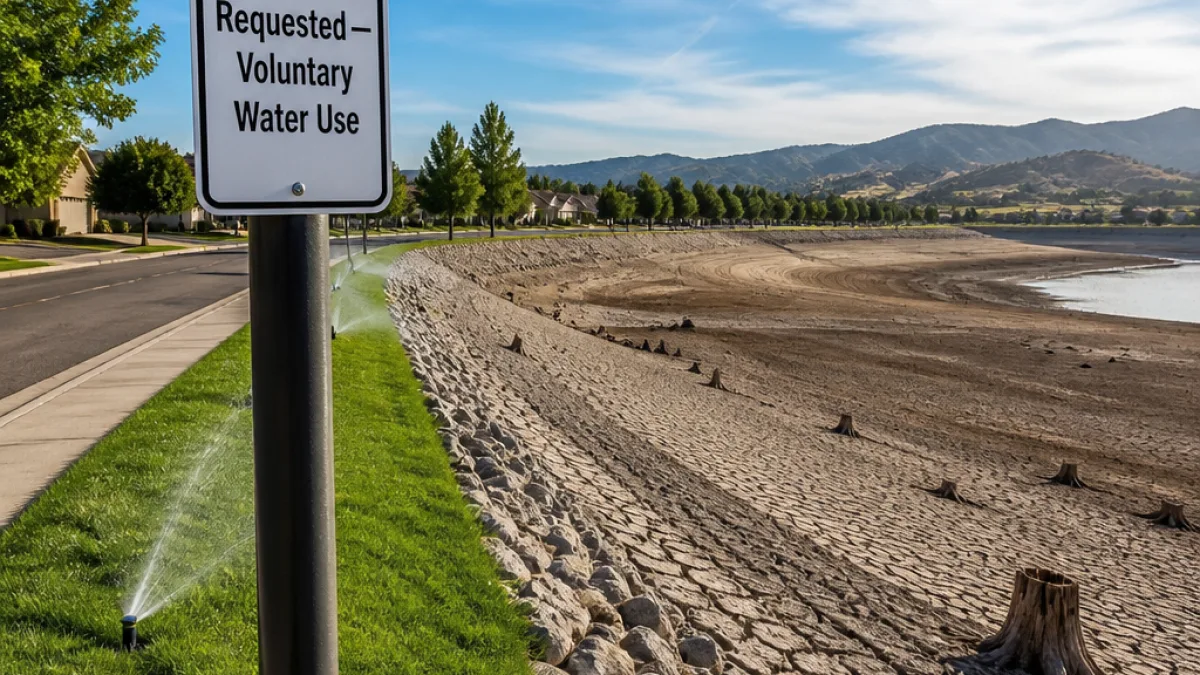
Colorado is experiencing widespread and intense drought conditions even as many of the state’s largest population centers have stopped short of imposing mandatory water-use limits.
Different rules across the Front Range
Federal monitoring shows nearly the entire state in drought this summer, with the urban corridor and mountain headwaters hit particularly hard after a winter with record-low snowpack. The dry winter translated into low streamflows, moisture-sapped soils and depleted reservoirs that supply cities across the state.
Yet water-use policy varies widely. Of Colorado’s 25 largest cities and towns, 13 have not implemented additional mandatory drought restrictions, including the cities of Fort Collins, Pueblo and Boulder. Those communities, combined, represent more than 1.5 million people — roughly a quarter of the state’s population.
“Every district and provider is different; they have different water rights and storage rights, so you’re going to see vast differences from community to community,”
said John Thornhill, director of community development in Windsor, explaining why local rules diverge.
Why the patchwork exists
Colorado’s complex web of water rights, differing source portfolios and varying storage capacities means some systems are better positioned to withstand drought. Communities that draw water from multiple sources, hold senior water rights or manage larger reservoirs generally have more flexibility before declaring mandatory curbs.
“Those differences can be confusing to customers who see headlines about extreme drought, shrinking reservoirs, other cities’ mandatory restrictions and the imperiled Colorado River system,” said Kim Hutton, Boulder’s water resources manager, highlighting the communication challenge that variable local policies create.
Where limits exist and where they don’t
Some of the state’s largest suppliers have already moved to mandatory restrictions. Denver Water and Aurora Water, as well as many jurisdictions on the Western Slope, have adopted binding drought rules designed to cut consumption and preserve reservoir levels. Other towns have relied on voluntary appeals.
Below is a summary based on available reporting:
| Category | Examples mentioned |
|---|---|
| Largest towns without mandatory restrictions | Fort Collins, Pueblo, Boulder |
| Suppliers with mandatory limits | Denver Water, Aurora Water, many Western Slope towns |
What officials are asking residents to do
Where mandatory rules are not in place, utilities have issued voluntary conservation requests. Those appeals typically ask customers to reduce outdoor irrigation, shift watering to cooler hours, and avoid nonessential uses, but the degree of emphasis and enforcement varies by provider.
- Limit lawn watering, especially during midday evaporation peaks.
- Fix leaks and upgrade inefficient irrigation systems where possible.
- Follow local utility guidance on permissible watering days and times.
Practical implications for residents
Confusion can arise when neighboring towns with similar climates and river basins adopt different rules. Residents who travel across jurisdictions or use water delivered through regional systems should check their specific water provider’s website or notices to confirm current guidance and any potential penalties.
Water managers caution that voluntary measures can help if widely adopted, but mandatory restrictions are typically more effective at producing significant, measurable reductions in demand.
Longer-term stakes
The current drought underscores broader concerns about the resilience of Colorado’s water supplies amid a warming climate and continued population growth. Reservoirs that feed cities and agriculture are interconnected with larger river systems, including the Colorado River, which has suffered long-term declines.
Decisions made now — whether to conserve voluntarily or to shift to mandatory curbs — will affect reservoir levels and downstream water users. For many communities, the calculus will be shaped by available water rights, storage, and the legal and institutional frameworks that govern water delivery across the state.
As Colorado moves through this hot, dry summer, utilities and municipal officials say they will continue to monitor conditions and adjust policies as needed to protect supplies and meet essential needs.


















