
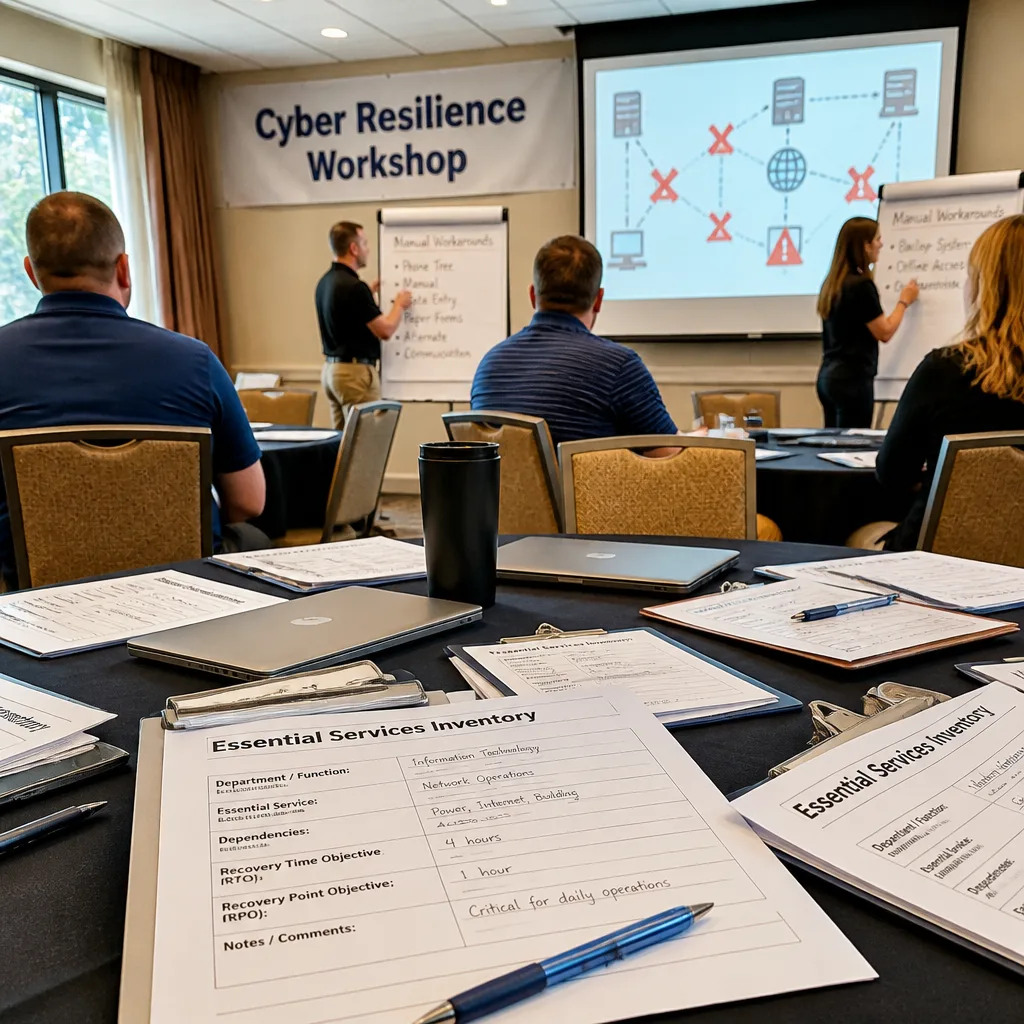
The Iowa Cyber Resilience Initiative, led by Iowa State University’s Center for Cybersecurity Innovation and Outreach, will offer free training to city administrators, county officials and school leaders to develop contingency plans for technology outages, officials announced.
Practical preparedness for digital disruptions
Funded by a grant from the U.S. Department of Homeland Security, the program will guide participants through exercises that identify which essential services rely on technology, catalogue existing cybersecurity measures and develop practical workarounds for extended outages.
“Technology is wonderful and it works for the most part, but sometimes it doesn’t,” said Doug Jacobson, director of the center, noting the need for organizations to be able to function without digital systems. “No matter what the cause, you need to be ready to function without it.”
“We all know that IT will work hard to get things back and running, but during that time basically most everything you have is gone.”
Jacobson emphasized the exercises are not solely focused on cyberattacks. Participants will also plan for natural disasters — including tornadoes, floods and derechos — that can render electronic systems inoperable.
Why the training matters
Recent incidents have illustrated why local governments and schools need contingency plans. In July, more than 30 municipal water systems in Minnesota reverted to manual operations after a cyberattack. In May, a cloud-based platform used to manage grades and assignments for thousands of U.S. schools was hacked, forcing some institutions to cancel final exams.
Those events highlighted how deeply routine public services and school operations are entwined with digital systems. Jacobson pointed to everyday school activities — lesson plans, grades, attendance tracking — that are typically handled electronically and urged educators to consider how they would continue teaching and administering classes without those tools.
What participants will do
The ISU-led exercises will move participants through a sequence of planning steps intended to produce actionable preparedness plans. Key components include:
- Listing essential services that depend on technology at the city, county or school level.
- Assessing current cybersecurity measures and points of failure.
- Designing practical manual or alternative procedures to maintain operations during outages.
Jacobson said the goal is to prompt organizations to prioritize functions and rehearse operating without their usual digital infrastructure, rather than assume rapid restoration of IT systems will eliminate disruption.
| Focus area | Intended outcome |
|---|---|
| Service inventory | Determine which operations are critical and technology-dependent |
| Cybersecurity review | Identify protections in place and potential vulnerabilities |
| Continuity planning | Create manual workarounds and prioritize tasks during outages |
Broader implications
As local governments and schools increasingly rely on cloud services and interconnected systems, the consequences of outages can extend beyond temporary inconvenience. Water treatment operations, educational administration and emergency services can all face operational strain during prolonged disruptions, raising public-safety concerns.
By training municipal and education leaders to anticipate technology loss and practice manual operations, the initiative seeks to reduce the period of functional paralysis that often accompanies cyber incidents or disaster-related failures. The program also aims to foster discussion among administrators and staff about priorities and decision-making during degraded operations.
Registration details and schedules for the free exercises are being managed by Iowa State University’s center. Officials encourage local leaders to participate so their organizations can better withstand both digital attacks and natural disasters that compromise technology.
This report is based on material provided by Iowa State University and related news disclosures.















