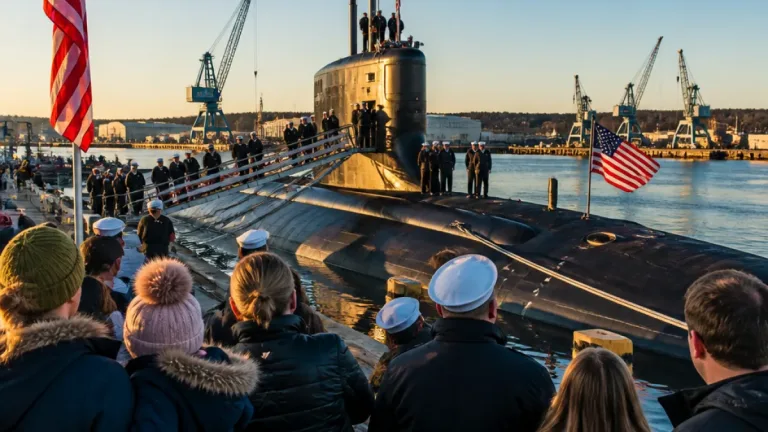
Democratic lawmakers intensified pressure on the Trump administration and the Department of Defense Sunday as reports emerged of mounting morale and mental-health concerns aboard the aircraft carrier USS Abraham Lincoln, which has been at sea for nearly nine months in support of U.S. operations against Iran.
Lawmakers seek answers as deployment stretches past 200 days without a port visit
Sen. Ruben Gallego, D-Ariz., said on ABC's This Week that problems aboard the Lincoln have continued to accumulate and attributed responsibility to what he described as the administration's failure to plan for, or exit from, the conflict that began in February. Gallego, a retired Marine, warned that public comments from Defense Secretary Pete Hegseth and former President Trump disputing the severity of the situation could discourage service members from reenlisting.
"The deep, deep, deep problem here is that this administration did not plan for this war, did not plan how to get out of this war," Gallego said on the program.
Reported details from military-focused outlets have amplified concern. The Navy has kept the carrier at sea for nearly nine months, during which the ship reportedly has gone more than 200 days without a port call. The vessel carries roughly 5,000 sailors and Marines, and members of Congress of both parties have flagged low morale and stressful living conditions as the deployment has stretched on.
Conflicting accounts from Pentagon and former president
Defense Secretary Hegseth has called the reporting on conditions aboard the Lincoln "completely misrepresented," while Trump has minimized the deployment's length, stating it is "not nearly long enough." Those remarks have drawn criticism from Democrats who say they risk undermining trust and retention among service members enduring prolonged time at sea.
Independent military publications including Navy Times and Stars and Stripes have reported multiple attempts by sailors to jump overboard, describing mounting mental-health stressors tied to extended time aboard. In response, several Democratic lawmakers have asked the Pentagon to investigate conditions and to hold officials accountable for management of the deployment.
- Duration: Nearly nine months at sea
- Time without port call: More than 200 days
- Ship complement: About 5,000 sailors and Marines
| Metric | Reported Figure |
|---|---|
| Deployment length | Nearly nine months |
| Days without port call | 200+ |
| Personnel aboard | ~5,000 |
Democrats argue the extended mission reflects broader policy failures tied to the U.S. military campaign against Iran, which began in February, and say the administration's handling of the conflict has left naval forces overstretched. They are calling for a formal inquiry into living conditions, mental-health support and decision-making that led to the prolonged deployment.
Asked about the reports, Pentagon officials have pushed back against some of the published accounts. The ongoing dispute between lawmakers, military publications and administration statements raises questions about oversight, troop welfare and how civilian and military leaders are coordinating extended deployments in the Middle East.
As pressure mounts on the Pentagon to provide explanations, lawmakers will likely pursue additional oversight steps, including requests for briefings, internal assessments and potential hearings. For service members aboard the Lincoln, the immediate consequences center on morale and mental-health support while the ship continues to operate far from home ports.
The situation underscores broader tensions in Washington over how to manage protracted military operations and the ripple effects of extended deployments on the force's readiness and retention.