
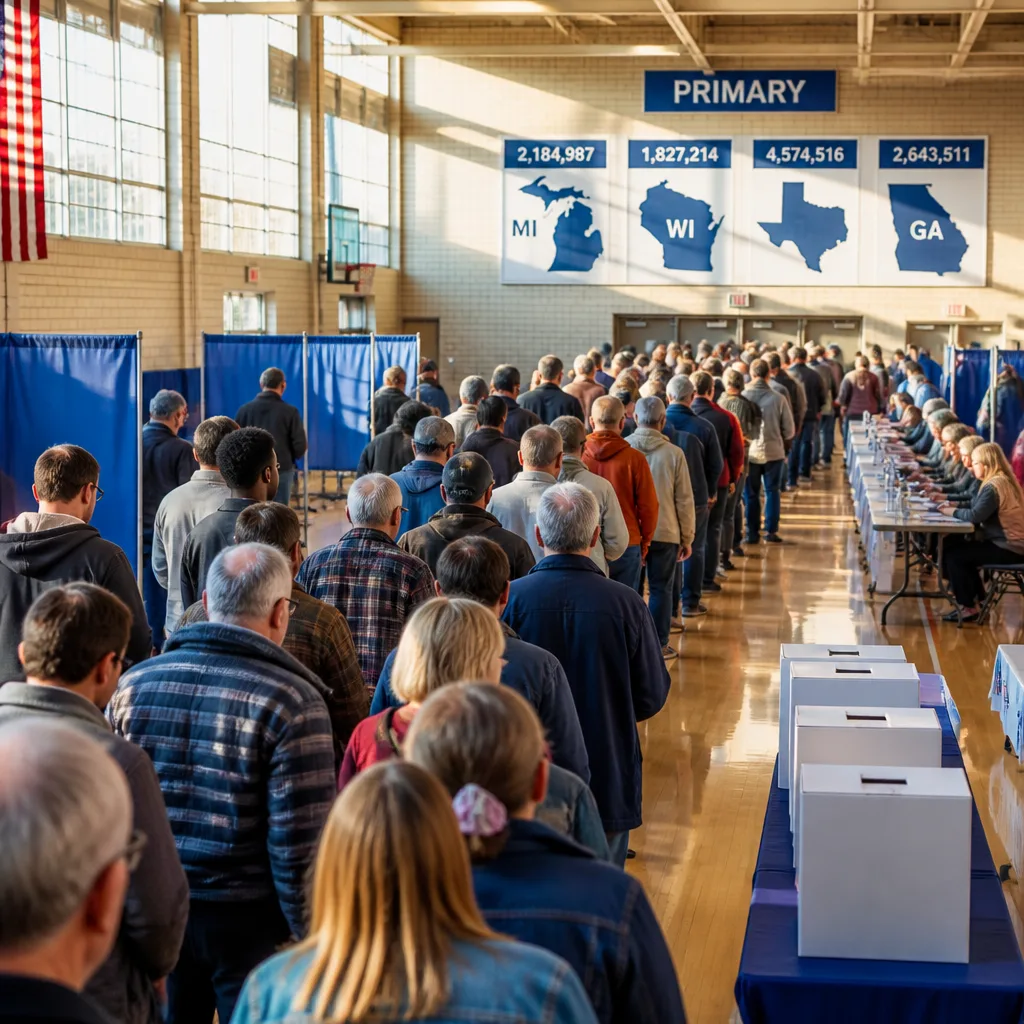
Democratic voters turned out in large numbers this summer, posting midterm records in some states and setting the party’s strategists on edge and optimistic as they look toward November contests for control of Congress.
Turnout spikes in the Midwest and beyond
In recent primary contests, Democratic participation surged in multiple jurisdictions. Michigan Democrats cast approximately 1.5 million ballots in the state’s primary — a record for a midterm cycle — while Wisconsin Democrats registered nearly 800,000 ballots, the state’s largest midterm Democratic total in more than two decades. Officials and analysts say similar enthusiasm appeared earlier this year in Texas and Georgia, states that will be closely watched in the fall.
The turnout pattern is particularly notable because the president’s party often faces a disadvantage in midterm elections. The strong Democratic primary participation is being framed by party operatives and some outside observers as a counterweight to typical midterm dynamics.
“The big news is that Democrats are getting huge turnouts,” said David Axelrod, who served as a senior adviser to President Barack Obama.
Why the surge matters
Democratic organizers argue that the high primary participation can translate into improved performances in competitive House and Senate races if the energy sustains into the general election. Turnout advantages in primaries can help parties identify and mobilize voters, sharpen voter files and test messaging ahead of November.
Observers cite a cluster of factors that may be fueling Democratic enthusiasm this year: low presidential approval ratings for Donald Trump, persistent inflation and an unpopular war with Iran. Those dynamics, party officials contend, give Democrats an opening to compete in districts and states that might otherwise be difficult in a midterm cycle.
- Michigan: about 1.5 million Democratic voters in the primary — a midterm record.
- Wisconsin: nearly 800,000 Democratic primary ballots — the highest midterm total in more than 20 years.
- Texas and Georgia: earlier surges in Democratic participation, with both states expected to have competitive Senate contests in November.
| State | Democratic primary turnout | Notable detail |
|---|---|---|
| Michigan | ~1.5 million | Midterm record |
| Wisconsin | ~800,000 | Highest midterm Democratic total in 20+ years |
While the numbers present cause for party optimism, analysts caution that high primary turnout does not guarantee general-election success. Primaries draw a different mix of voters than November contests do; in some places, intense primary battles can also leave nominees weakened heading into the fall. Nonetheless, the magnitude of participation this year is changing the calculus for both parties as they prepare for a cycle in which control of the House and Senate is at stake.
Campaign and party officials will now focus on whether the energy evident in primaries translates into sustained organization, increased voter contacts and turnout operations across battleground states. If Democratic mobilization sustains, it could help blunt historical midterm headwinds that usually affect the president’s party.
Political strategists on both sides will watch the coming months for signs that the primary surge broadens to suburban and swing voters and for evidence that independent and moderate voters respond similarly in the general election. The next tests will include early fall fundraising, message testing and ground operations in the states where the turnout spikes were strongest.
For now, Democrats are buoyed by the figures and are working to convert primary enthusiasm into the kind of organized turnout that decides close midterm races.