
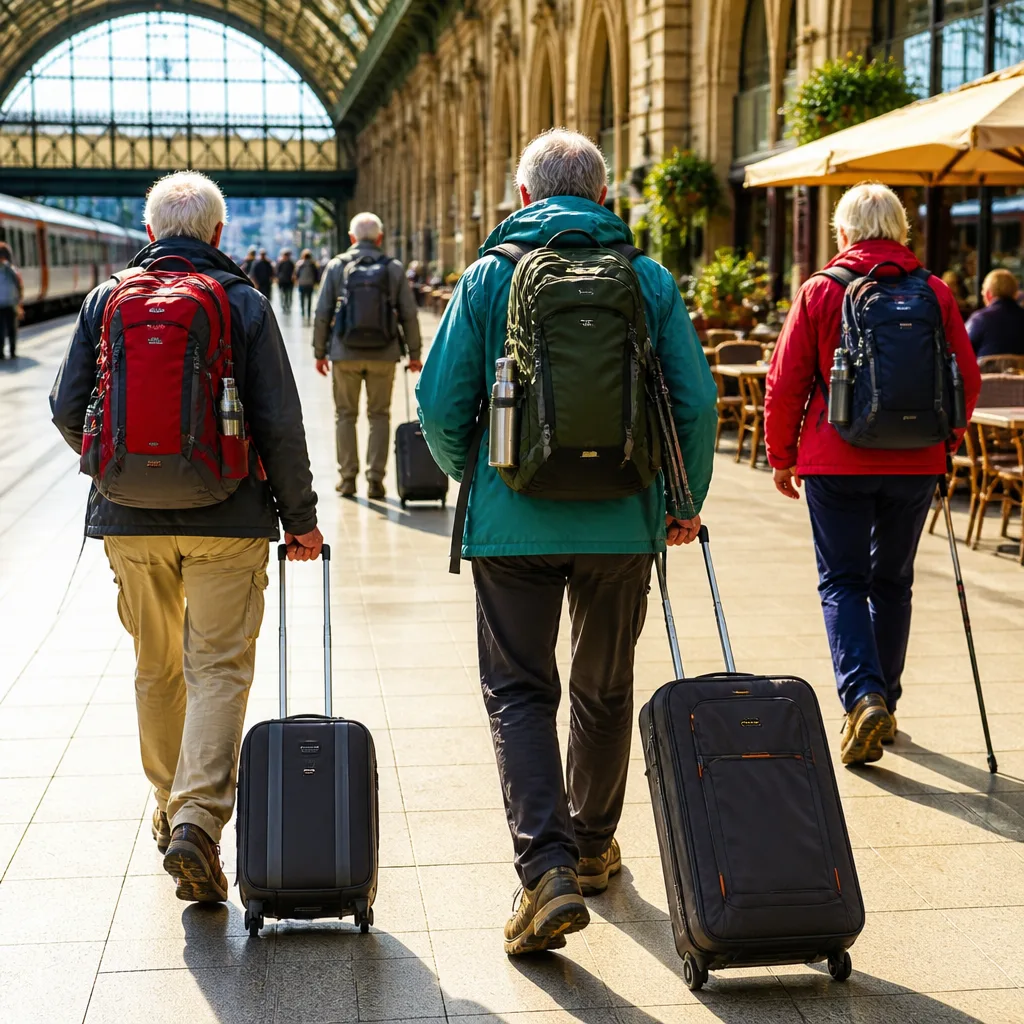
An image and short thread shared on X showing older Europeans moving independently with luggage has prompted renewed discussion about how diet, daily activity and social factors affect mobility and independence in later life.
Observation on the move
The post, by an account identified as @Kavitastocks, included a photograph of older travellers in Europe carrying backpacks and pulling suitcases. The author said many appeared to be in their 70s or 80s but were travelling alone and walking long distances without assistance.
“These are the 'old people' I keep seeing while travelling in Europe, and many of them are well over 70 or even 80, travelling alone, carrying their own suitcases, walking everywhere, and looking incredibly fit.”
In the same thread the poster questioned whether differences in lifestyle — particularly diet and physical activity — might explain why many older Indians seem less mobile or rely more on wheelchairs at airports.
Public reaction and themes
Responses on social media were mixed but clustered around several recurring points. Supporters argued that regular physical activity and different dietary patterns in some European countries help maintain strength and independence with age. Others pointed to wider social and economic factors that shape health outcomes.
- Diet: Some contributors suggested that European meals often include more protein and fibre, while a number of Indian households have carbohydrate-heavy diets because of cost and cultural norms.
- Daily activity: Observers noted that walking for transport and independence in routine tasks can preserve mobility into older age.
- Inequality and household dynamics: Several replies highlighted how intra-household food distribution and socioeconomic inequality can affect older adults’ nutrition and health.
Why the conversation matters
The discussion goes beyond a travel anecdote. As populations age across the globe, maintaining independence becomes a central public-health goal, not only to extend lifespan but to preserve quality of life. The original poster framed the issue plainly: fitness should enable people to enjoy extra years by remaining self-sufficient.
"The real goal of being fit isn't just to live longer. It's to stay independent enough to enjoy those extra years,"
That sentiment reflects a shift in thinking in gerontology and public policy: successful ageing is increasingly measured by functional ability — the capacity to carry out everyday tasks — rather than raw longevity alone.
Context and limits of a single snapshot
It is important to treat a viral photograph and comments as a starting point for discussion rather than definitive evidence. Cross-national differences in older adults’ mobility will be shaped by a complex mix of factors including lifetime access to healthcare, economic security, urban design, social support, lifelong physical activity patterns, and diet. The post and many replies flagged inequality as a central influence — an older person’s ability to remain active into their seventies and eighties is not purely a matter of personal choice.
| Observed factor | Possible implication |
|---|---|
| Independent travel by older adults | Suggests preserved mobility and confidence in public spaces |
| Higher visible use of wheelchairs at airports (per poster) | May indicate mobility limitations among some travellers or differing airport assistance practices |
| Dietary differences raised by respondents | Could influence muscle mass, energy and long-term health |
Researchers and policymakers rely on population-level surveys and longitudinal studies to untangle these relationships. Anecdotal comparisons can spark useful public debate, but they do not replace systematic evidence about why people age differently across countries and communities.
For individuals, the discussion highlights practical, evidence-backed steps that support independence with age: maintaining regular physical activity, including strength and balance exercises; eating a balanced diet with adequate protein and fibre; and attending to long-term management of chronic conditions. At a societal level, it signals the importance of policies that reduce inequality in nutrition, healthcare and opportunities for active living.
Whether inspired by a single image or a broader body of research, the conversation underlines a shared aim: enabling people to keep moving and remain independent as they grow older.