
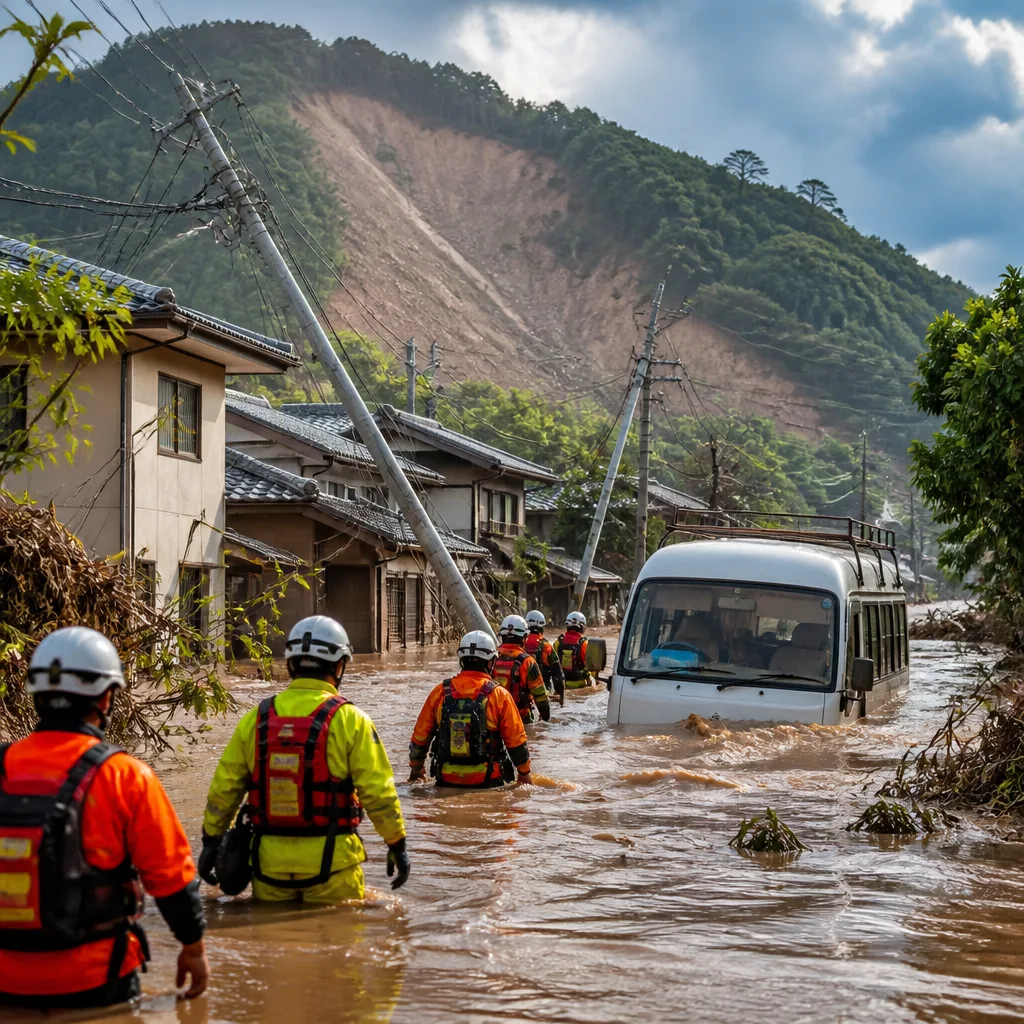
What to expect and what to do: emergency agencies in eastern Japan are urging residents to remain alert for further flooding and landslides despite a downgrade of the highest-level alert. Rescue teams and the Self‑Defence Forces are engaged in transport and evacuation efforts. If you are in affected areas, follow local evacuation orders, avoid swollen rivers and unstable slopes, and use multiple ways of receiving updates — radio, official websites and local authorities — while power is restored.
Record rainfall, rapid impact
Japan’s meteorological agency issued a Level 5 Emergency Warning on Thursday after an intense downpour struck the capital region and neighbouring Chiba prefecture. The alert was reduced to Level 4 by Friday morning, but officials warned that the situation remains dangerous because rivers are swollen and the ground is saturated.
- Deaths: 4 people confirmed dead.
- Rainfall intensity: more than 100 mm per hour recorded in parts of Chiba.
- Power outages: over 20,000 households lost electricity in the prefecture.
- Stranded: thousands of passengers left at Tokyo’s Narita airport; about 1,800 people spent the night at the Chiba Prefectural Government building.
Response and immediate consequences
The unusually heavy rainfall halted rail, bus and taxi services and prompted deployment of the Self‑Defence Forces to assist with moving stranded people, including those stuck at stations. Local officials and emergency services are prioritising rescue and recovery. Power cuts have left households and businesses without electricity, affecting communications and commercial activity in parts of the prefecture.
| Impact | Reported figure |
|---|---|
| Fatalities | 4 |
| Peak rainfall rate | >100 mm/hour |
| Households without power | >20,000 |
| People sheltered at prefectural building | 1,800 |
Officials describe event as ‘extremely unusual’
“This case was an extremely unusual situation, even by Japan's historical weather standards,” Chiba Governor Toshihito Kumagai said, adding that he had “never experienced a case like this.”
Governor Kumagai said saving lives remains the priority and that rescue and recovery operations would continue. Local residents described the intensity and suddenness of the rain. One woman in Ichikawa told national broadcaster NHK she was surprised by how quickly the deluge began and expressed concern about power outages affecting her ability to reopen her business.
Context and risk
Authorities said the hourly rainfall rate equated to roughly three times the average for August in the region, and that the volume recorded represented the highest on record for the country. Saturated soil and elevated river levels increase the likelihood of landslides and flash flooding in the coming hours and days; officials are therefore keeping warnings active even after the emergency level was reduced.
Transport disruption around Tokyo — particularly at Narita airport and on local rail networks — is likely to continue while infrastructure is inspected and power is restored. Residents and travellers should check with carriers and local authorities for the latest travel and safety information.
Practical advice
- Follow instructions from local emergency services and evacuation orders immediately.
- Keep away from riverbanks, waterways and steep slopes; these can fail without warning after heavy rain.
- Prepare for prolonged power outages: have torches, batteries, charging options and essential supplies ready.
- Use official channels for updates — meteorological agency bulletins, local government announcements and emergency services — and maintain redundancy in how you receive alerts.
Authorities continue to monitor the situation and provide updates as rescue operations proceed and infrastructure assessments are carried out. The priority across affected areas remains protecting life and ensuring people displaced by the storm are safely sheltered and supported.









