
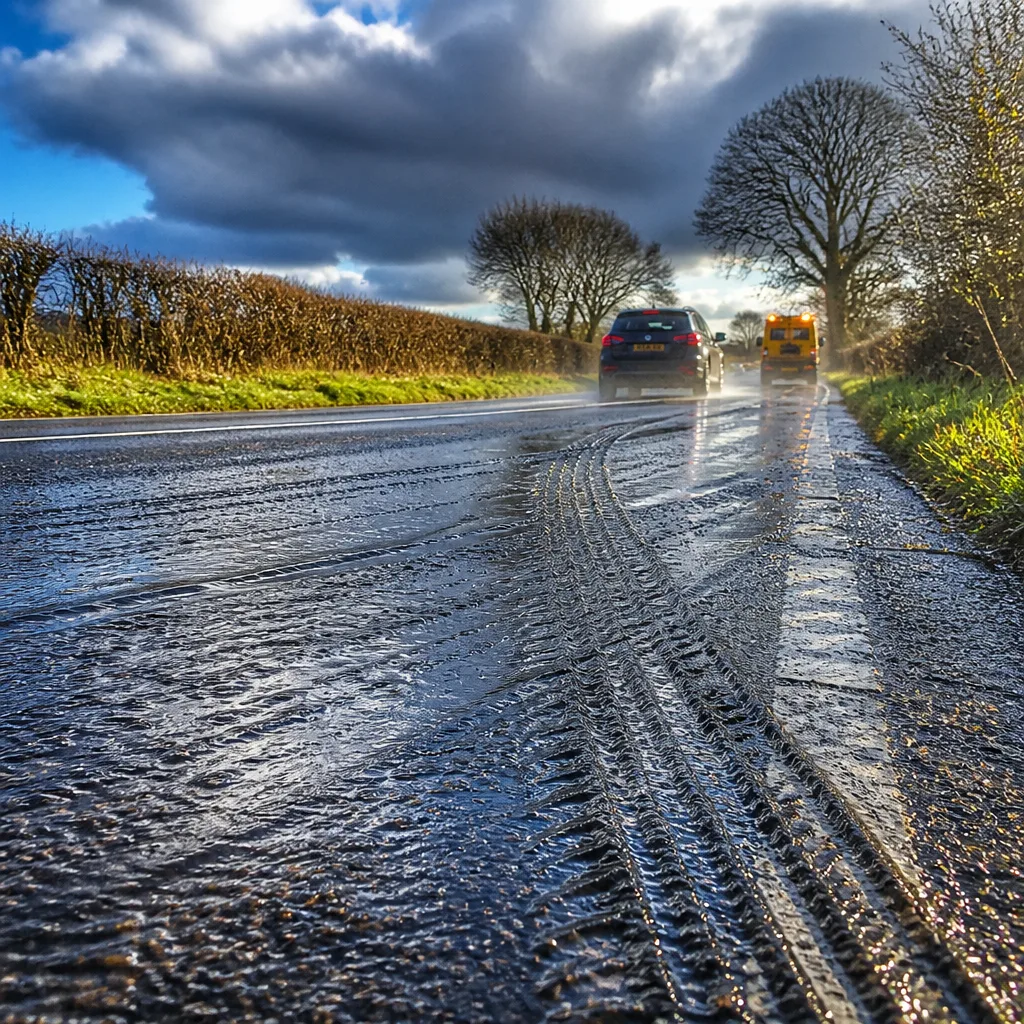
Heavy downpours and thunderstorms are expected across Northern Ireland today and tomorrow after a warm few days, and motoring experts are warning that roads may be unusually hazardous when rain follows prolonged heat. The combination of summer heat and sudden wet weather can reduce grip on carriageways, increasing the risk of loss of control and accidents.
What’s happening and why it matters
Warm conditions earlier in the week can affect the surface of asphalt. High temperatures soften the bitumen — the black binder in road surfacing — and a build-up of road grime such as rubber and oil accumulates during dry spells because there is no rain to wash it away. When a heavy shower or thunderstorm then soaks the road, these factors combine to create a film that can make surfaces unexpectedly slippery.
Experts say this is a distinct hazard that can be as severe as winter black ice for drivers who do not adjust their speed and following distance. With storms forecast for the next 48 hours, the risk will be highest in the periods immediately after rain begins.
Practical advice for drivers
Road safety and motoring specialists recommend straightforward, precautionary measures to reduce risk. Key steps include:
- Slow down on wet roads, particularly in the first minutes after rain starts.
- Increase following distance to allow more time to brake safely.
- Check tyre condition and pressure — adequate tread and correct inflation are essential for grip.
- Be cautious after prolonged dry spells when oil and rubber deposits may have built up on the surface.
- Avoid sudden steering or braking that could provoke a skid on treated or contaminated surfaces.
“Roads can be exceptionally slippery when they get wet after a summer heatwave, and they can be just as treacherous as frozen highways in winter,”
said Graham Conway, Managing Director at Select Car Leasing, urging drivers to ensure tyres have appropriate tread depth and are correctly inflated.
Local authority measures and scientific context
The Road Surface Treatments Association has previously advised that some councils may apply grit or other treatments during heatwaves to improve skid resistance, the same principle used in winter maintenance. Such steps are intended to mitigate the short-term loss of friction when surfaces become contaminated and then wet.
Academic analysis supports the link between prior dry spells and increased crash risk in subsequent rain. Research cited from 2003 examining over a million fatal crashes across 48 US states found that the chance of an accident on a rainy day can be up to 10% greater when a longer dry period precedes it. This suggests the observed hazard is not merely anecdotal but has measurable effects on road safety.
| Hazard | Cause | Practical response |
|---|---|---|
| Reduced surface grip | Bitumen softening, oil and rubber accumulation | Slow down; increase following distance |
| Sudden skids after downpours | Heavy rain mobilising road grime | Check tyres; avoid abrupt manoeuvres |
How to plan journeys
Plan for slower travel times where storms are expected. If journeys are not essential, consider delaying travel until surfaces have had time to wash clean, particularly after intense localised showers. Where travel is necessary, leave extra time and take the safest route available — main roads typically receive more maintenance and are less likely to be heavily contaminated than quieter routes.
Forecasters continue to monitor the situation and will update warnings for the affected areas if the risk profile changes. Confidence in the forecast of heavy showers and thunderstorms over the next 48 hours is sufficient for authorities and drivers to act on the precautionary advice above.
Simple adjustments — lower speed, greater following distance, and ensuring tyres are roadworthy — will significantly reduce the potential for slips and skids as the weather changes.









