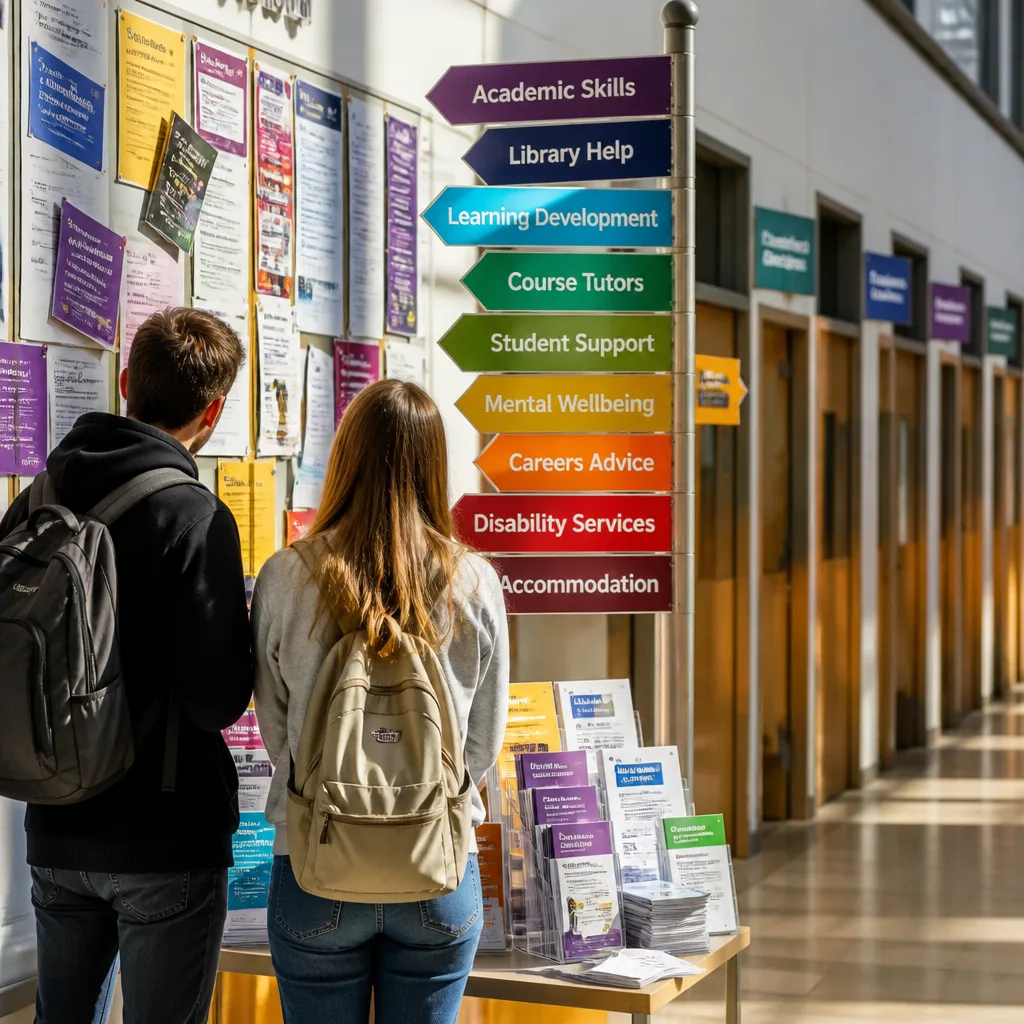
Widening participation in higher education in the 1990s and 2000s brought a sustained expansion of student support services, producing a sprawling array of provision for academic skills. As a result, a single university campus may now host multiple teams and individuals who give formal and informal guidance on study techniques, writing, numeracy and how to navigate the unwritten rules of higher education.
Growth of the support ecosystem
The expansion in access has not just increased numbers: it also broadened the kinds of support students need to make a successful transition into university life. Support extends beyond subject teaching to include help with academic writing, research methods, mathematics for courses that require it, and the so-called “hidden curriculum” — the conventions and expectations of higher education that are not always explicitly taught.
That growth has created overlap. Multiple roles can end up addressing the same student need, which risks producing mixed messages and unnecessary duplication of effort unless institutions take steps to coordinate provision.
Who typically provides academic skills help?
Several distinct players commonly contribute to academic-skills development on campus. Their remits often overlap, but each group tends to bring a different emphasis.
- Course teams — academic staff within degree programmes are central to teaching subject-specific skills and may incorporate scaffolded academic development across units or levels of study. Some courses have dedicated academic-skills units embedded in the curriculum.
- Integrated foundation years — where present, these are designed specifically to support transition into higher education and to teach core academic practices.
- Personal academic tutors — tutors meet with allocated tutees periodically, either one-to-one or in small groups, and are frequently approached for guidance on study and assessment matters as students progress through their programmes.
- Learning developers — these staff act as educational bridges, commonly supporting academic writing, study strategies and numeracy. Their role is to help students develop the independent learning skills required by higher education.
- Librarians and information specialists — librarians focus on information literacy. Using models such as the SCONUL seven pillars, they teach how to identify information needs, use library discovery tools and reading-list platforms, construct effective searches, evaluate sources and apply correct citation and referencing practices, alongside issues such as copyright compliance.
Because these different teams may all be asked similar questions by students, institutions face practical challenges in ensuring coherent support.
Consequences of a fragmented approach
Where roles are not clearly defined or coordinated, students can encounter inconsistent advice — for example, differing expectations about academic conventions or conflicting guidance on referencing and research methods. Duplication of provision also risks wasting scarce staffing hours and can make it harder for students to find the right help at the right time.
Clear channels of communication between course teams, tutors, learning developers and library staff are therefore essential. Institutions that map provision and responsibilities can reduce overlap and present a simpler navigational picture to students, though specific coordination strategies were not detailed in the source material.
Roles and remits at a glance
| Provider | Typical focus |
|---|---|
| Course teams | Subject-specific skills; embedded scaffolded development |
| Integrated foundation years | Transition to HE; core academic practices |
| Personal academic tutors | Ongoing pastoral and academic guidance; assessment support |
| Learning developers | Academic writing, study skills, numeracy support |
| Librarians | Information literacy; searching, evaluating and citing sources |
For students and staff alike, the practical question is not only what support exists but how it is presented and accessed. Simplifying pathways to help and clarifying who does what can prevent confusion and ensure that limited resources are used efficiently.
Institutions expanding their intake must therefore consider not only the volume of support services but also the coherence of their offer. Where multiple teams engage with the same skills, transparent coordination and clear student-facing communication will be essential to turn a complex ecosystem into an effective system of help.