
Herefordshire Council has confirmed it will deploy a Department for Education capital grant of more than £9 million to increase special educational needs and disabilities (SEND) provision across the county, responding to what it describes as a steady rise in demand since the pandemic.
Local expansion to bring more places closer to home
The funding is earmarked for a flexible programme of building and adaptation work designed to create additional specialist places and support bases within mainstream schools. Council leaders say the aim is to enable more children and young people with SEND to be educated nearer to their communities rather than travelling long distances to out-of-county provision.
Proposals set out by the council include:
- establishing specialist support bases within mainstream settings;
- expanding existing specialist facilities at maintained schools;
- acquiring, adapting or refurbishing buildings or land to deliver extra capacity.
Any scheme will need to satisfy Department for Education conditions and pass through standard checks on feasibility, procurement, affordability and statutory approvals before work begins, the council said.
Rising need traced back to pandemic years
Herefordshire Council traces increased pressure on local SEND services to trends that became apparent during the COVID-19 pandemic. As long-term effects on pupils’ development and on demand for specialist support emerged, the authority estimated in 2023 that it would need to secure around 150 specialist school places between 2023 and 2027 to meet anticipated needs.
Cabinet member for children and young people, Councillor Ivan Powell, underlined the local authority’s determination to bolster provision.
“Demand for SEND provision continues to grow both nationally and locally, and we are committed to strengthening local provision so that more children and young people with SEND can access the right support, in the right place,”
He described the DfE grant as a “significant” contribution that will allow planning and delivery of additional capacity across the county.
How the money might be used — staged and conditional
Council officers emphasised the capital allocation will be used as a flexible pot rather than funding a single project. Steps required before projects proceed include site availability checks, detailed feasibility work and securing final cost certainty. This staged approach is intended to manage risk and ensure that expansion is sustainable.
| Planned use | Examples |
|---|---|
| New specialist bases | Dedicated rooms or units within mainstream schools for targeted SEND support |
| Expansion of specialist facilities | Increasing capacity at existing specialist schools or units |
| Acquisition/refurbishment | Buying or converting buildings or land to create additional places |
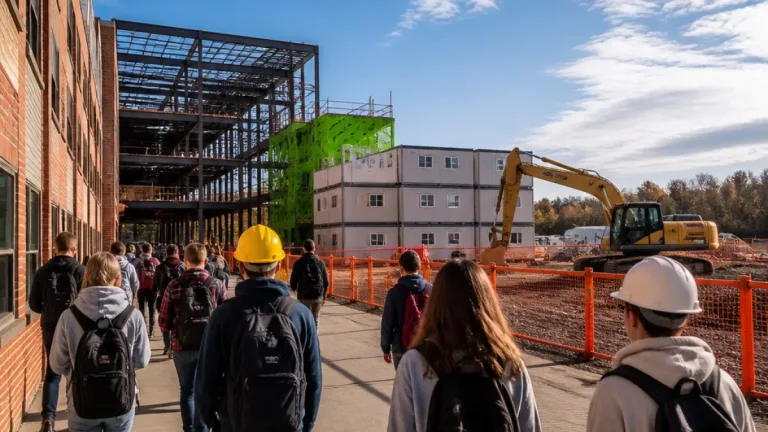
Existing capital programmes are also being reviewed to identify opportunities to add specialist capacity. Westfield School is already benefiting from the Department for Education’s School Rebuilding Programme, and the council said it is in discussion with the DfE to see whether further SEND capacity could be achieved through those works.
Context and consequences for families and schools
The injection of capital is intended to tackle both immediate shortages of specialist places and the longer-term requirement to provide more inclusive local provision. For families, availability of closer provision can reduce travel time and help children remain part of their community. For mainstream schools, creating enhanced support bases can improve access to specialist expertise without full-time specialist placement.
But capital investment alone will not resolve all pressures. Expanding physical capacity must be matched by workforce planning: recruiting and retaining specialist teachers and support staff, providing training, and securing revenue funding for day-to-day running costs. The council’s conditional approach to approving schemes — requiring feasibility, procurement and statutory approvals — reflects those practical constraints.
As local authorities across England face similar increases in need, the Herefordshire package will be watched by other councils and by parents seeking assurances that national funding programmes translate into usable, local places for children with complex needs.