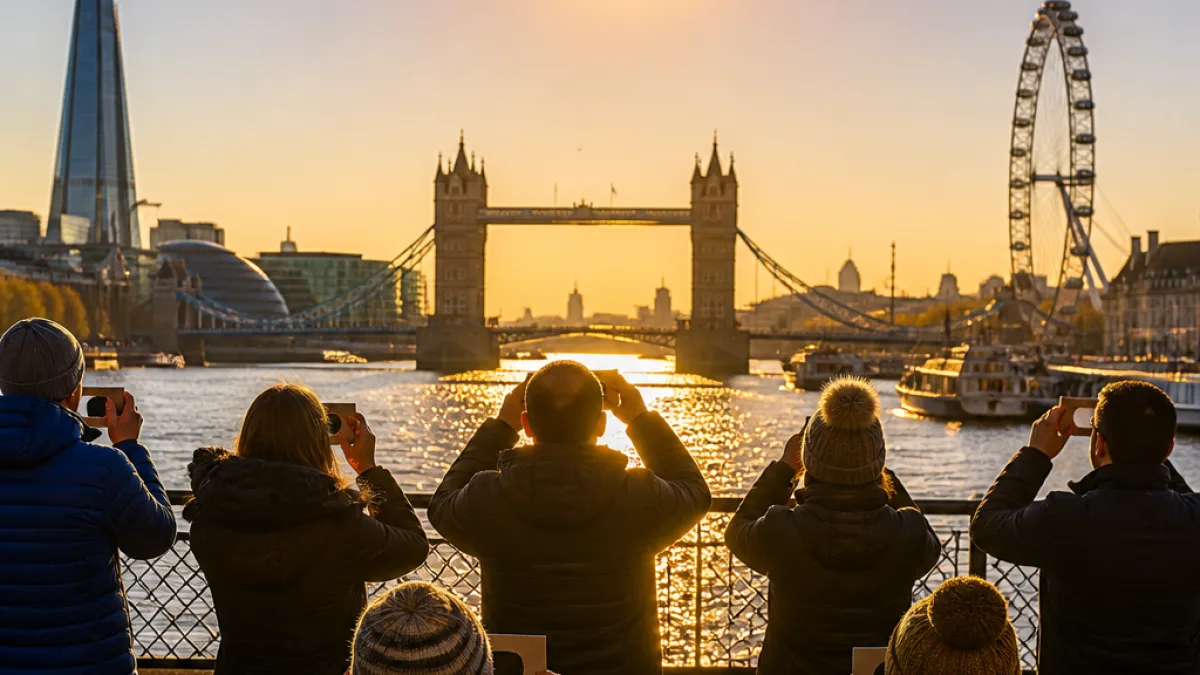
Londoners are being urged to prepare for a rare celestial event on Wednesday evening when the Moon will pass between the Earth and the Sun, producing a dramatic partial solar eclipse visible across the capital.
What will London see?
The eclipse is expected to be one of the most complete visible from Britain in more than a quarter of a century. Observers in the capital can expect roughly 90% of the Sun to be covered by the Moon at the peak of the event, creating a striking dimming of daylight.
According to published timings for the UK, the sequence in London will be:
| Event | Time (BST) |
|---|---|
| Start of partial eclipse | 6.17pm |
| Height (maximum coverage) | 7.13pm |
| End of eclipse | 8.06pm |
Other UK locations will see slightly different start times: Manchester and Liverpool will notice the eclipse from 6.13pm, while parts of Scotland will begin to observe it nearer 6.08pm. Some European territories, such as Greenland and Iceland, will experience a total eclipse.
Why this eclipse matters
Partial eclipses are comparatively rare in terms of how much of the Sun is obscured from a particular location. The last total solar eclipse visible from the UK occurred in 1999, and forecasters say there will not be a better eclipse for most of Britain until 2090 — making tomorrow's event especially notable for skywatchers.
Safety: why you cannot look unprotected
Medical and astronomical authorities stress that partial solar eclipses pose a specific danger: even when the Sun looks mostly covered, the remaining exposed parts still emit intense visible and invisible radiation that can injure the eyes. During a partial eclipse it is never safe to look at the Sun without proper protection.
- Only use solar viewing glasses that comply with international safety standard ISO 12312-2.
- Do not substitute sunglasses, smoked glass, exposed film or CDs — these do not provide adequate protection.
- Children should be supervised and taught not to look at the Sun directly.
- Alternatively, use indirect viewing methods such as a pinhole projector to project the Sun’s image onto a surface.
Local authorities and schools have previously used ISO-compliant eclipse glasses for student viewings, and organisers say these remain the recommended option for direct observation. If you plan to watch with others in a public space, bring approved eyewear for everyone.
Practical tips for watching in the capital
For Londoners planning to step outside during the event, consider these practical points:
- Arrive at vantage points early to avoid crowds and reduced visibility caused by tall buildings on the horizon.
- Check the weather: cloud will obscure the eclipse, but thin cloud can still create dramatic lighting if the Sun is partially visible.
- Use safe, approved equipment or opt for indirect methods rather than improvised filters.
- Be mindful of traffic and road safety if viewing near busy streets — dusk will fall during the event and light conditions will change rapidly.
For many residents this will be a rare chance to witness a major astronomical event without travelling abroad. Community groups and amateur astronomy clubs often host public viewings and may provide supervised demonstrations and approved eyewear; contact local councils or clubs for details if you want to attend an organised event.
Final word
The eclipse presents a memorable spectacle, but safety must come first. Even when the Sun appears largely hidden, its remaining crescent can cause permanent damage if observed without certified protection. With correct planning and equipment, Londoners can enjoy one of the most remarkable sky shows the country will see for decades.