The European Space Agency (ESA) has selected three mission concepts to progress to the next preparatory phase of its Earth Explorer 12 competition, signalling a push to fill longstanding observational gaps in climate and upper-atmosphere science.
Three concepts advance after community review
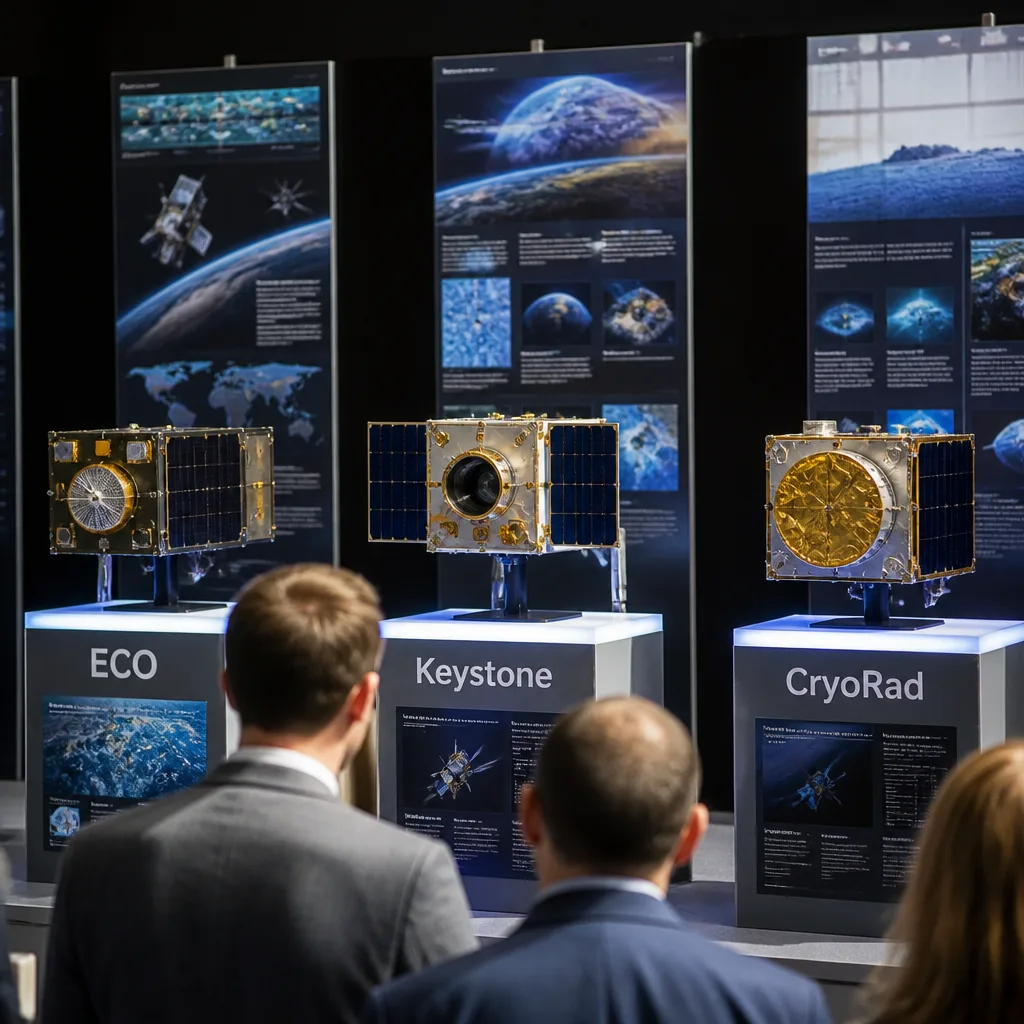
At a programme board meeting on 25 September 2026, ESA decided that the concepts known as ECO, Keystone and CryoRad will be taken forward for more detailed study. The move follows a User Consultation Meeting in July at which four candidate concepts were scrutinised by the scientific community. Based on that review, the Advisory Committee for Earth Observation (ACEO) ranked the proposals in the following order: ECO, Keystone, CryoRad, Hydroterra+.
"ECO would target global mean Earth Energy Imbalance (EEI), the most fundamental climate variable, and widely recognised as the most important longstanding knowledge gap in quantifying ongoing climate change and would assess the effectiveness of climate mitigation measures." — Rene Forsberg, on behalf of the ACEO
What each concept would aim to measure
All three concepts address different but complementary gaps in Earth system observations:
- ECO: Designed to measure the global mean Earth Energy Imbalance (EEI), a central metric for understanding net heat uptake by the planet and a key indicator of ongoing climate change and the effectiveness of mitigation efforts.
- Keystone: Would provide first-of-its-kind global direct observations of atomic oxygen along with co-located temperature, wind and other atmospheric constituents in the 50–250 km altitude range, addressing a poorly observed region of the upper atmosphere. It would also detect metal from space debris as it enters the atmosphere.
- CryoRad: (Details released by ESA were limited in the announcement) — selected to proceed alongside the other two candidates, indicating perceived scientific or programmatic value in advancing studies of cryospheric and radiative processes.
Ranking and next steps
ESA’s advisory process placed ECO at the top of the list, reflecting the ACEO’s view that the mission targets a fundamental climate variable. The programme board’s decision allows all three to enter further preparatory activities where feasibility, technical risk and programme considerations will be assessed in greater depth.
A simple summary of the ACEO ranking is shown below:
| Ranking | Mission concept |
|---|---|
| 1 | ECO |
| 2 | Keystone |
| 3 | CryoRad |
| — | Hydroterra+ (not advanced) |
Why this matters
The ACEO’s endorsement of ECO highlights a consensus among experts that the planetary energy imbalance — the difference between incoming and outgoing radiation — is a principal unknown constraining confidence in projections of near-term climate change. Direct, high-precision measurements of EEI would sharpen detection of changes in Earth’s heat content and improve evaluation of the real-world impact of emission reductions and other mitigation measures.
Keystone addresses another frontier: the 50–250 km band of the atmosphere is poorly monitored by existing satellite systems but plays an outsized role in coupling lower-atmosphere weather and climate with space-weather phenomena and in mediating the entry and ablation of orbital debris. Observations of atomic oxygen and accompanying state variables would inform both fundamental atmospheric science and practical concerns such as space situational awareness.
ESA’s decision to let three concepts proceed preserves scientific ambition while recognising the considerable technical challenges ahead, particularly for highly demanding measurements such as EEI. The preparatory phase will test whether instrument concepts can meet the precision and stability requirements demanded by these questions, and whether missions can be delivered within acceptable programme constraints.
Further decisions will follow the preparatory studies. Only one concept will ultimately be selected as the Earth Explorer 12 mission, but the current step represents an important narrowing of options based on peer review and strategic priorities.
This phase of ESA’s Earth observation programme underscores the agency’s continuing focus on filling critical observation gaps that underpin climate science and atmospheric physics — and on doing so with missions designed to provide the kind of long-term, high-quality data required to reduce uncertainty in models and policy-relevant assessments.