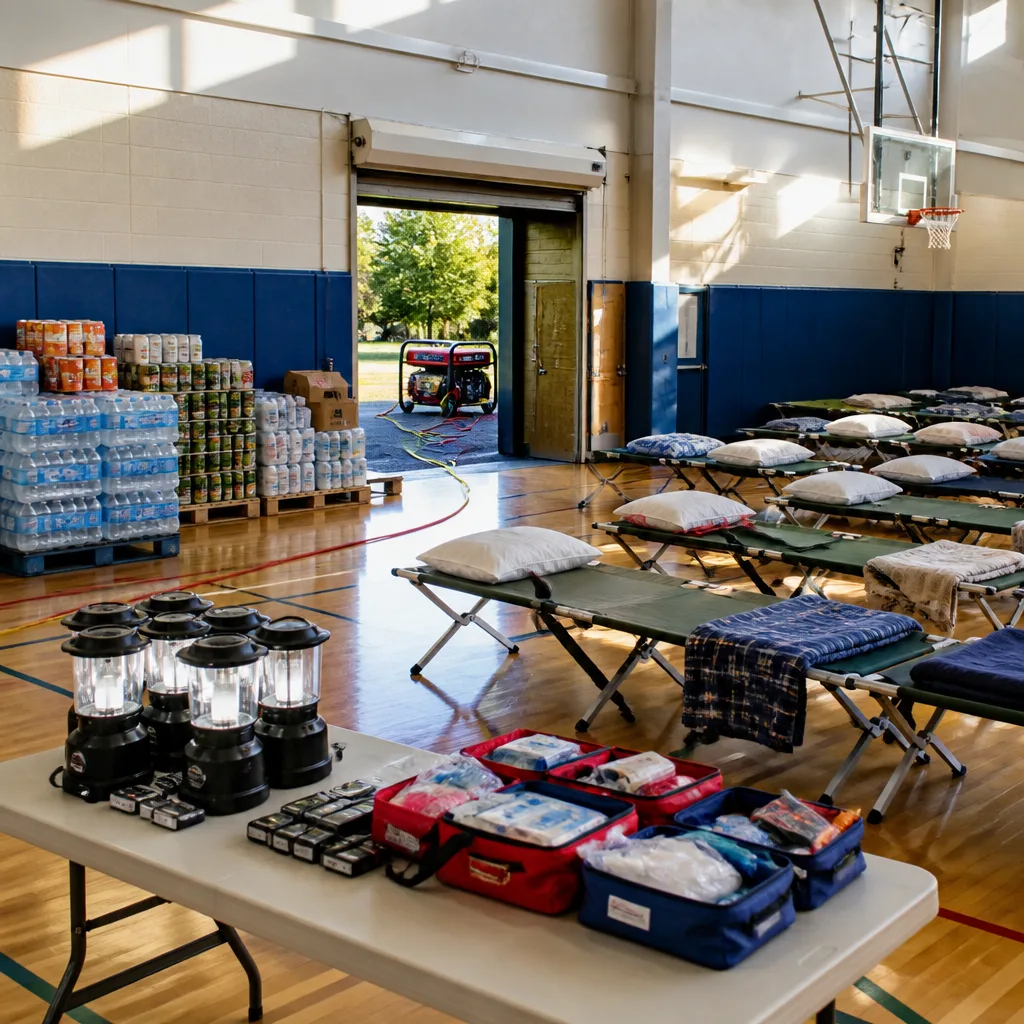
The Ministry of Education and Science has circulated recommendations aimed at keeping educational establishments operational and safe in the event of power cuts and other crisis scenarios. The guidance, issued for institutions at all levels, emphasises preparations for sustained loss of electricity and the practical measures needed to protect pupils, staff and the wider school community.
Priorities and core requirements
The Ministry tells schools and other educational bodies to establish and maintain backup power supplies and reserves of essential resources. The list of suggested provisions includes generators and fuel, sources of drinking and technical water, and long‑term food stores. Institutions categorised as critical infrastructure, specialised establishments and those providing round‑the‑clock care are singled out for priority action.
Officials also advise routine, unscheduled inspections of shelters to determine whether they are ready to receive people for 48 hours without electricity, and to ensure the functioning of so‑called Points of Invincibility — designated locations intended to provide basic services during outages.
Practical measures and staff briefing
Alongside physical preparations, the Ministry recommends comprehensive explanatory work with staff, pupils and other participants in the educational process. Guidance should cover:
- behaviour in cold conditions and measures to prevent hypothermia and frostbite;
- basic first aid in the absence of usual facilities;
- procedures during an air raid alert when electricity is unavailable.
These steps aim to equip communities to respond safely when core life‑support systems—lighting, heating, ventilation, water and sanitation—are disrupted.
Specific guidance for preschool settings
For kindergartens, the Ministry leaves key decisions to the head of the institution, who must assess safety and welfare conditions on the ground. The recommendation lists factors to be checked before continuing normal operation: availability of electricity or backup power, lighting, access to drinking water and sanitation, acceptable indoor temperatures, capacity to provide safe food, ventilation and access to a shelter.
If one or more of these conditions cannot be met safely, the guidance allows a kindergarten to:
- shorten hours;
- end the day early;
- temporarily stop admitting new children; or
- relocate children to a safer room within the facility.
In cases where there is an immediate threat to life or health, the document states that evacuation is provided for.
| Measure | Target |
|---|---|
| Backup power and fuel reserves | All educational institutions, priority for round‑the‑clock and critical facilities |
| Shelter readiness checks | Assess capacity for 48‑hour occupancy without electricity |
| Points of Invincibility | Ensure operational status |
| Staff and pupil briefings | All institutions: cold‑weather safety, first aid, air‑raid procedures |
Context and consequences
The guidance reflects a pragmatic approach to continuity planning: conserve life‑support functions where possible, prioritise high‑risk and round‑the‑clock institutions, and prepare the community to manage for at least two days without mains electricity. Schools and early years settings are often hubs of local support; ensuring their resilience reduces pressure on emergency services and helps families cope during crises.
Operationalising the recommendations will demand resources and logistics: acquiring and maintaining generators, securing fuel supplies, retrofitting shelter spaces, and conducting inspections. The Ministry’s document places the responsibility for day‑to‑day safety decisions with local heads, who must weigh the real‑time conditions within their buildings against the welfare of children and staff.
Taken together, the measures are intended to make educational establishments more self‑reliant in the short term and safer for occupants when central infrastructure fails. The advice is detailed and procedural, reflecting an expectation that power interruptions may be prolonged and that care settings must be prepared to sustain people until regular services are restored.
Implementation will be the next test: the recommendations set a clear standard, but meeting that standard depends on funding, supply chains and the capacity of individual institutions to act rapidly in adverse conditions.