
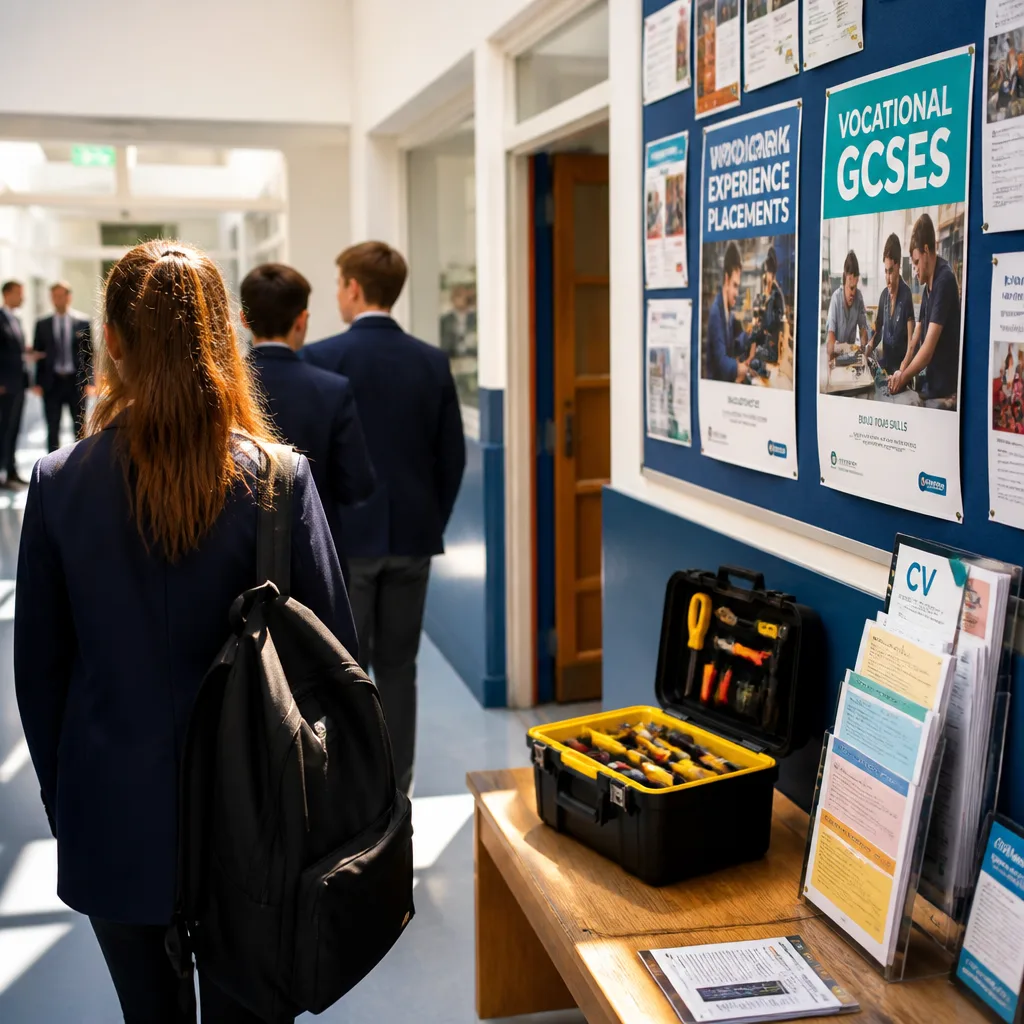
The Government has announced a package of reforms designed to raise the status of technical education for secondary school pupils in England, including a new suite of Vocational GCSEs and a national drive to increase work experience opportunities.
What the changes include
The new vocational qualifications will sit alongside traditional GCSEs and, according to ministers, be the same size as a GCSE and nationally set. They are due to be available to some 14‑year‑olds from as early as September 2029 and will eventually replace existing Technical Awards. The Government has stated that assessment and grading for the new qualifications will be regulated by Ofqual to ensure parity with academic GCSEs.
“We’ve all heard someone say ‘school wasn’t really for me’ because they were not given the chance to study vocational courses as well as traditional subjects,” said Prime Minister Andy Burnham.
Education Secretary Lucy Powell emphasised the demand from young people, parents and employers for schools to do more to prepare pupils for future jobs, saying the reforms respond to that pressure. Ministers also announced a national mission on work experience, asking employers to provide an additional 200,000 placements for pupils aged between 14 and 16.
Policy aims and context
The announcement is part of a wider government drive to achieve “parity of esteem” between vocational and academic pathways. Officials framed the changes as offering pupils a clearer route into technical careers and as a response to concerns over youth unemployment and disengagement. Government statements linked the reforms to efforts to tackle the number of young people not in education, employment or training (NEET), a figure the announcement noted exceeds one million.
Under the proposals pupils would still be expected to study core academic subjects. Ministers also said there will be a greater practical emphasis and assessment in a number of existing GCSE subjects including physical education, drama, design and technology, food and nutrition, music and computing.
- Core requirements: English, Maths and Science GCSEs will still be expected of pupils.
- New offerings: Vocational GCSEs available from age 14 in some subjects from September 2029.
- Work experience: Drive to secure an extra 200,000 placements for 14–16 year‑olds.
Potential consequences for schools and pupils
Introducing nationally regulated Vocational GCSEs could require changes to school timetables, staffing and resources if schools are to offer the new routes alongside the existing range of GCSEs. The Government’s emphasis on Ofqual regulation seeks to address concerns about consistency and comparability of standards between vocational and academic offerings.
Advocates of vocational reform have argued that earlier access to technical qualifications can help pupils who do not thrive in a purely academic setting to engage more fully with education and develop employable skills. Critics have in the past warned that vocational routes must avoid becoming a lower‑status option for disadvantaged pupils. The government’s assertion that the new qualifications will be equal in size and regulated aims to counter that risk.
| Measure | Detail |
|---|---|
| Availability | From September 2029 for some 14‑year‑olds |
| Regulation | Assessed and graded by Ofqual |
| Work experience | Additional 200,000 placements for 14–16 year‑olds |
| NEET context | More than one million young people currently not in education, employment or training |
Schools, employers and careers advisers will be watching closely as ministers develop the specifications for the new qualifications and the mechanisms for delivering the promised work placements. Practical considerations — from teacher training to employer engagement and safeguarding during placements — will determine how quickly and effectively the reforms translate into classroom practice and meaningful opportunities for young people.
Any shift that places practical skills and vocational pathways on a more equal footing with traditional academic routes would be significant for the education landscape. But the success of such change will hinge on detailed policy design, reliable assessment, and the capacity of schools and businesses to deliver the expanded offer to young people.











