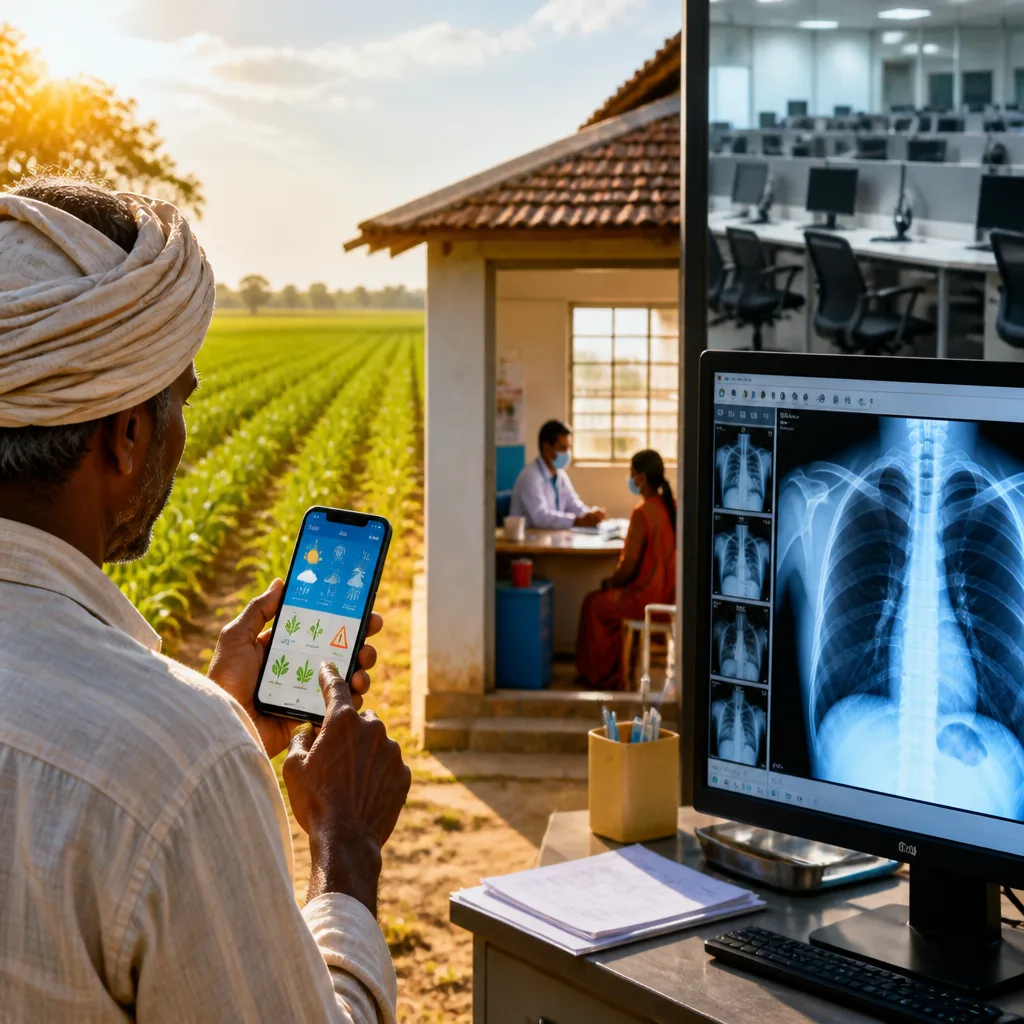
Artificial intelligence is already delivering measurable benefits in India’s agriculture and health sectors, the World Bank said in its World Development Report 2026, while warning that automation could put pressure on business-process outsourcing jobs such as call-centre and back-office roles.
Practical gains in farming and health
The report presents India as a prominent testing ground for cost‑effective AI tools that address everyday problems. It cites an AI weather forecasting system deployed in Telangana that helped small farmers adapt behaviours to specific risks; some farmers increased spending on inputs by about one‑third, while others recorded net savings up to $560 per farmer, the World Bank said.
India’s agricultural advisory programme Ama Krushi — which became Krushi Samruddhi after moving into government ownership in 2022 — is highlighted as an example of scaled AI integration. The scheme expanded from roughly three million farmers before the transition to more than seven million, and a 2025 evaluation cited in the report found improved practices, higher yields and reduced severe crop losses with benefit–cost ratios reported between 9:1 and 15:1.
The report also noted digital grievance and advisory tools such as Kisan e‑Mitra, an agricultural chatbot offering replies in 11 Indic languages. After adding advanced AI capabilities, the chatbot handled about 2.7 million queries in 186 days — nearly seven times the volume that manual processing would have managed, according to the World Bank.
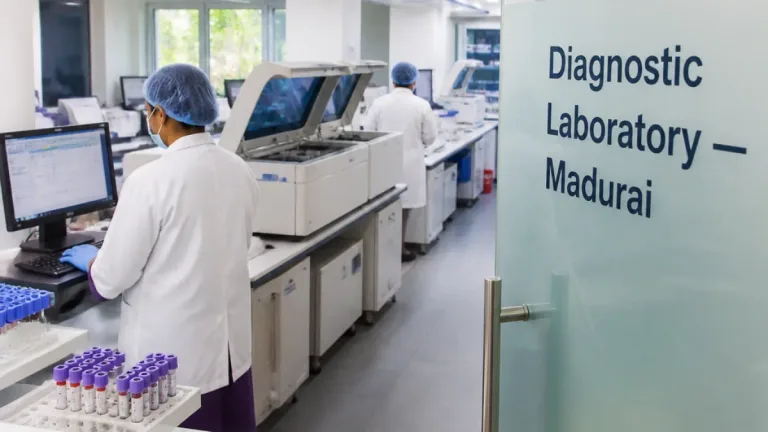
On health, the World Bank said AI is being used to screen patients for tuberculosis, illustrating the technology’s potential to expand access to diagnostic support where clinical resources are limited. The report framed such applications as part of a broader set of gains for developing economies that adopt practical AI solutions.
Jobs: risk and enhancement
While the report emphasises opportunities, it also cautioned about labour market effects. Countries that rely heavily on business‑process outsourcing may face pressure as conversational and back‑office tasks become more automatable.
| Metric | Report finding |
|---|---|
| Susceptibility to AI automation | Fewer than 1 in 10 jobs in developing economies |
| Susceptibility in high‑income countries | More than one‑third of jobs |
| Jobs that could be enhanced | About 16.2% |
“Developing economies should tune out much of this noise,”
That line from the report encapsulates its central policy message: while fears of wholesale white‑collar displacement dominate public debate in wealthier countries, many lower‑income settings may see far more augmentation of work than replacement.
- Ama Krushi / Krushi Samruddhi: AI advisory expansion from ~3 million to >7 million farmers with high benefit–cost ratios.
- Kisan e‑Mitra: Multilingual AI chatbot handling 2.7 million queries in 186 days after upgrades.
- Telangana weather AI: Farmers reported increased investment and savings up to $560.
- Tuberculosis screening: AI tools used to assist patient screening where clinical workforce is constrained.
Policy implications and public health outlook
The report’s findings carry several implications for Indian health and agricultural policy. First, targeted AI tools can extend diagnostic reach and advisory services at scale, particularly in under‑resourced districts. Second, multilingual, low‑cost chatbots and decision‑support systems can improve service responsiveness and reduce administrative backlogs. Third, labour‑market shifts will require active policies to retrain and redeploy workers where routine tasks are automated.
For health planners, the World Bank framing reinforces the value of integrating digital detection aids into existing screening programmes — notably for diseases such as tuberculosis, where early identification and linkage to care are crucial. At the same time, the report underlines the need for careful validation, oversight and alignment with public health protocols when deploying AI in clinical pathways.
Readers are reminded that AI tools are adjuncts to, not substitutes for, clinical judgment. For individual medical concerns, consult a qualified healthcare professional. The World Bank report provides an evidence base for scaling practical AI solutions while urging governments to manage workforce transitions and regulatory safeguards.