Vizhinjam International Seaport in Kerala has commenced full-fledged export-import (EXIM) operations, a shift that allows the facility to handle cargo directly destined for or arriving from India rather than only serving as a transshipment node, officials reported. The development could reduce the share of Indian container traffic routed through foreign ports and shorten supply chains for south Indian industry.
What has changed
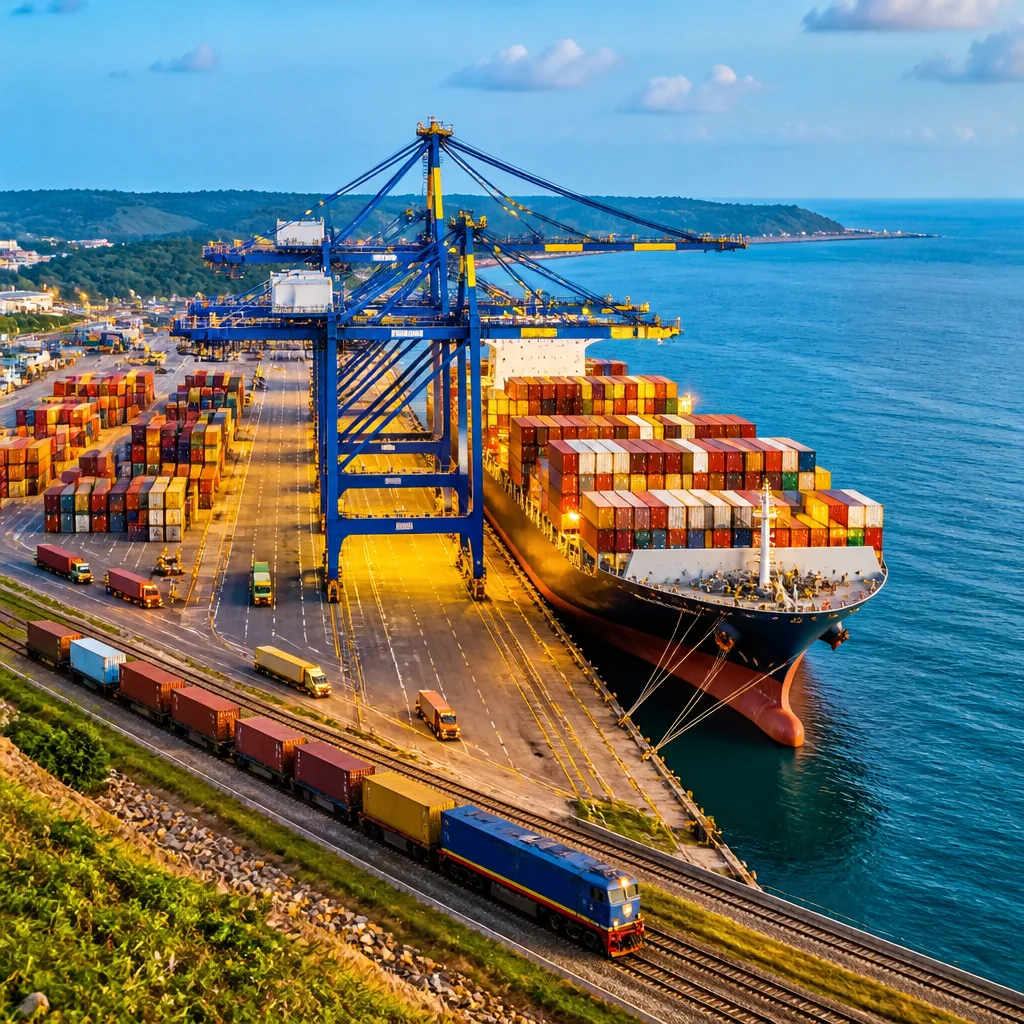
Located roughly 10 nautical miles from major east-west shipping lanes and endowed with a natural draft of 18–20 metres, Vizhinjam can accommodate some of the largest container vessels in operation, including Ultra Large Container Vessels (ULCVs). The port began commercial operations on 3 December 2024 and has already handled more than 2.28 million TEUs, according to the reporting.
Why it matters for India
- India currently routes over 75% of its container transshipment through foreign hubs, adding cost and transit time to trade chains.
- With EXIM capabilities, Vizhinjam can directly load and discharge Indian export and import containers, potentially reclaiming a portion of that traffic to domestic soil.
- Industries in Kerala, Tamil Nadu and Karnataka — notably manufacturing and export centres such as Bengaluru, Coimbatore and Tiruppur — stand to gain faster and more direct connectivity to global shipping networks.
For exporters and importers, handling a larger share of cargo at an Indian port may reduce dependence on overseas transshipment hubs, which often results in additional handling, longer lead times and incremental freight costs.
Economic ripple effects
Expansion of EXIM services at Vizhinjam is expected to create demand for logistics and ancillary services along the supply chain. These include:
- Warehousing and distribution centres near the port and along inland corridors;
- Freight-forwarding and customs-clearing services tailored to export-oriented manufacturers;
- Increased need for last-mile connectivity — road and rail links to industrial clusters in neighbouring states.
Sectoral observers note that direct port connectivity can be particularly useful to time-sensitive exporters such as apparel and electronics, where faster turnaround and reliable schedules shave working capital costs and inventory days.
| Parameter | Reported figure |
|---|---|
| Commercial operations commenced | 3 December 2024 |
| TEUs handled so far | 2.28 million |
| Natural draft | 18–20 metres |
| Distance from major routes | 10 nautical miles |
What it means for you
For businesses in south India, the operationalisation of EXIM at Vizhinjam could translate into tangible benefits: lower transit times, fewer transshipment legs and potentially reduced logistics costs. Manufacturers in textile clusters and electronics suppliers may see improved schedule reliability, which can cut inventory holding and speed up export cycles. Consumers may observe longer-term advantages in the form of steadier availability of imported inputs and reduced delays in delivery of goods.
Policy-wise, reclaiming transshipment traffic is aligned with the government’s broader aim to develop domestic port capacity and reduce reliance on overseas gateways. The port’s depth and proximity to shipping lanes make it a strategic asset for handling large vessels and routing a greater share of India's maritime trade through domestic terminals.
However, the ultimate scale of impact will depend on how quickly hinterland connectivity, customs processes and supporting logistics infrastructure expand to absorb increased EXIM volumes. If those elements keep pace, Vizhinjam could play a notable role in improving the efficiency and cost profile of India’s external trade.